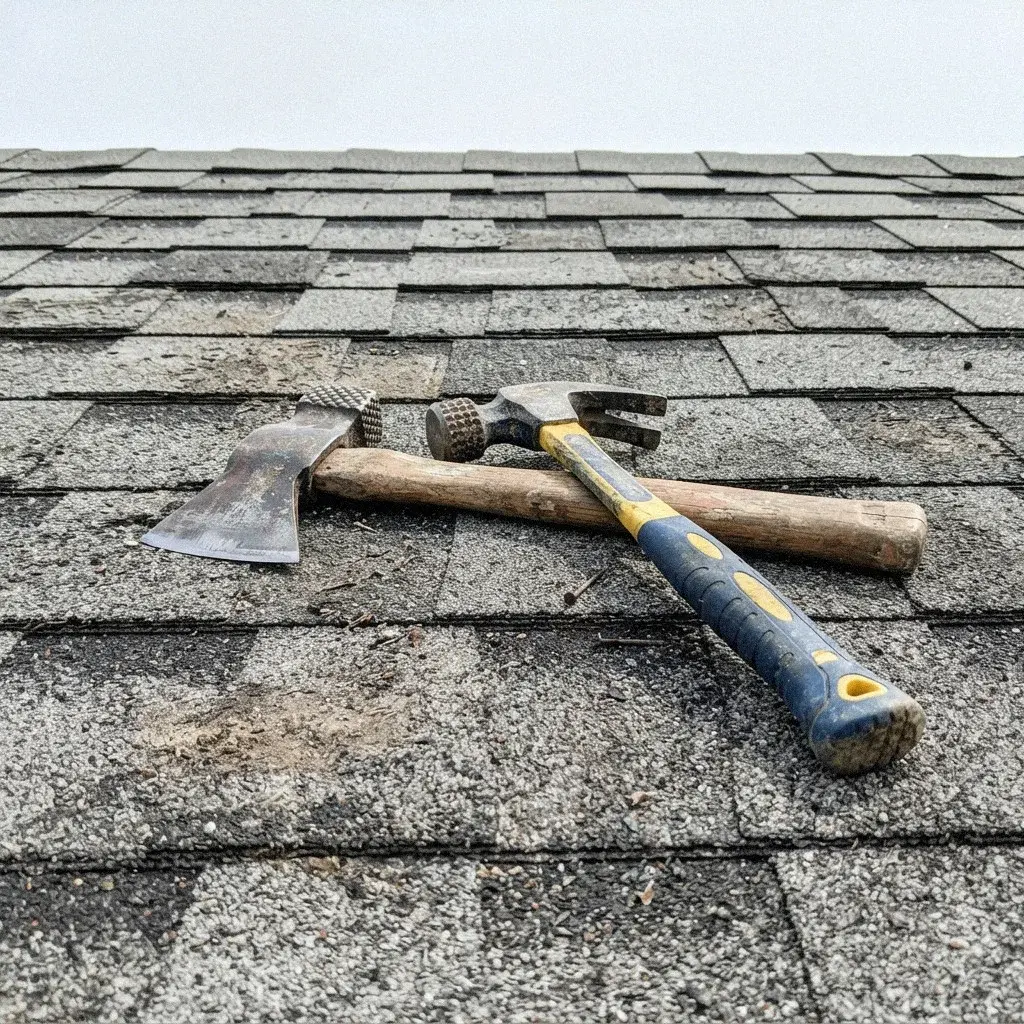
A composition shingle roof over a home near Kelsey Creek or Somerset will always shed some ceramic granules. Those granules are pressed into the asphalt mat during manufacturing to shield it from UV degradation, and a portion never fully bonds. Finding a light dusting in the gutter trough or at a downspout splash block after a new install, or after the first hard rain of the wet season, is normal. The question worth asking is how much, and whether the amount is dropping off or staying steady.
The Break-In Period Explained
New shingles shed loose granules for roughly the first year or two after a reroof, sometimes longer in a wet climate like Bellevue's. This break-in shedding comes from granules that sat on the surface without embedding into the asphalt during manufacturing. A homeowner near Bridle Trails or Wilburton who sees granule buildup after a first winter of rain shouldn't read that alone as a problem. What matters is the trend line: break-in loss tapers off, it doesn't keep climbing year after year.
When Loss Becomes Progressive
Progressive granule loss is a different pattern. It shows up on a roof that's well past its break-in years, often ten or more years old, and the volume in the gutter doesn't taper — it holds steady or grows. This usually points to the asphalt mat itself breaking down under repeated UV exposure and the wetting-and-drying cycles common on Eastside roofs from Factoria to Newport Hills. Progressive shedding is a wear pattern worth tracking over a season or two rather than reacting to after one storm.
Bald Spots And Shiny Patches
Not every trace of ceramic granule in a Bellevue gutter points to trouble. New shingles shed loose surfacing material for the first several rain cycles as the asphalt mat settles into place, and that break-in period can leave a fine grit at each downspout and splash block without meaning the roof is failing. The distinction is trend, not a single find: if the amount tapers off over a season, the roof is simply finishing its normal settling. If it keeps showing up trip after trip, something past break-in is underway.
Why One Slope Loses More
Granule loss is rarely even across a roof. South and west-facing slopes catch more direct sun over a season and tend to shed faster than north-facing slopes shaded by fir or cedar canopy common around Cougar Mountain or Bridle Trails. Valleys and low-slope sections that hold water longer after a storm can also wear differently than steep, fast-draining planes. If gutters on one side of a Bellevue home consistently collect more granules than the other, the difference in slope and sun exposure is usually the reason.
What Volume Actually Signals
A handful of granules after cleaning gutters near Enatai or Meydenbauer isn't a red flag. What matters is a comparison over time: a coffee-can amount at every cleaning, shingle exposure becoming visible from the ground, or granules showing up alongside curling or cracking. Isolated flecks are routine wear. Consistent, growing volume paired with visible bald spots is a different signal, and it's worth a closer look at the shingle mat itself rather than just the runoff collecting below.
Blistering And Surfacing Wear
Blistering happens when trapped moisture or air under the shingle surface pushes up small bubbles, and when those blisters break they release a cluster of granules at once rather than a steady trickle. This is a different mechanism than ordinary surfacing wear, which is the slow, even loss of granules across a shingle's life. A homeowner finding clumped granules rather than scattered ones near a splash block on a home off Northeast Bellevue streets may be looking at blistering rather than age-related shedding.
Checking The Downspout And Splash Block
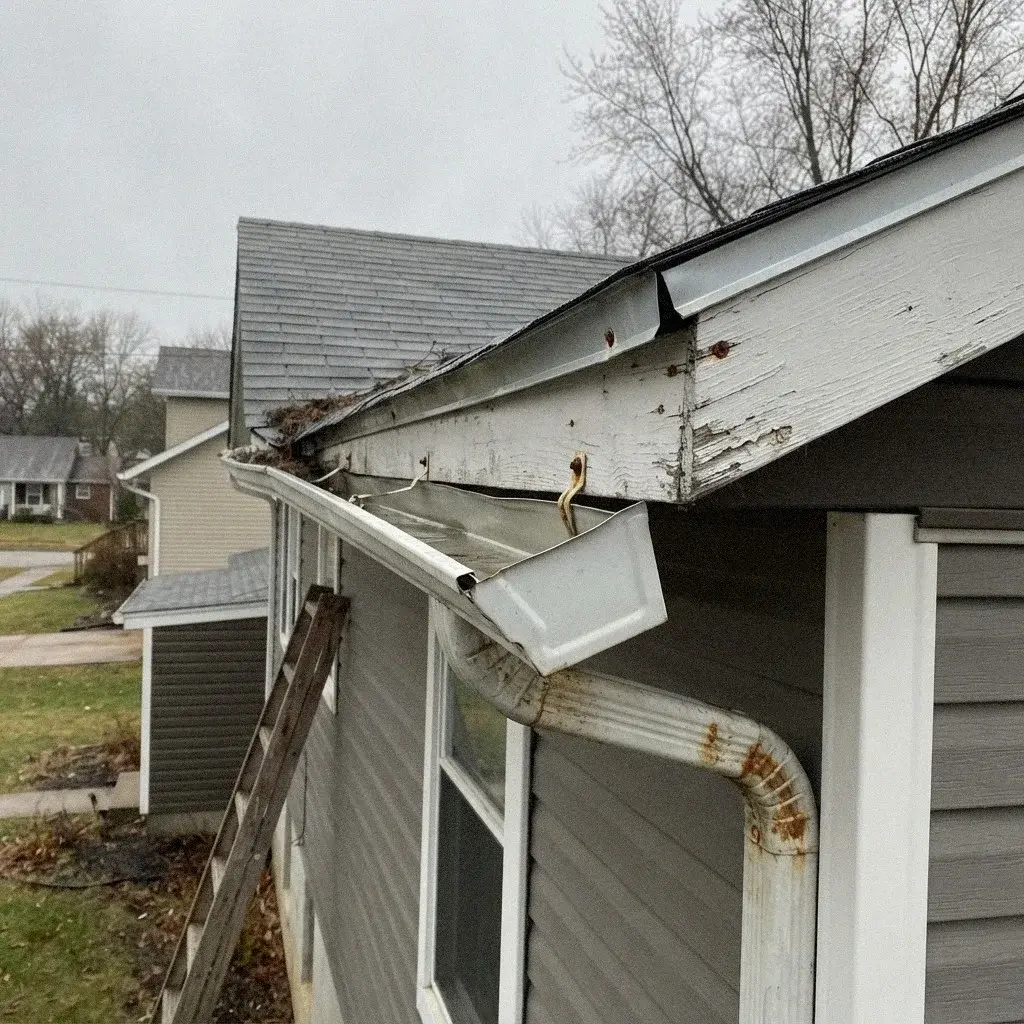
The splash block at the base of a downspout is a useful, low-effort place to check because it catches whatever the gutters funnel down during runoff. A build-up there reflects what an entire roof slope has shed over a season, not just one section. Comparing splash blocks at different downspouts around a home near Robinswood or Woodridge can show whether granule loss is roof-wide or limited to one slope, which is a faster read than climbing up to inspect shingles directly.
What Uneven Loss By Slope Means
Weather plays a role too. Bellevue's long stretch of wet months between fall and spring keeps shingles damp for extended periods, and repeated wetting and drying cycles gradually loosen the asphalt mat's grip on its granules faster than a single storm would. This is a slower, cumulative process rather than a single dramatic event, which is part of why granule loss is easy to overlook until someone actually looks in the gutter or at the splash block below a downspout.
Cedar Shake Homes And Granules
Granule loss only applies to composition shingle roofs, not the cedar shake and cedar shingle roofs still found on older homes around Clyde Hill or Medina. If a home has been converted from cedar to composition at some point, granules in the gutter are a normal byproduct of that newer roof surface rather than any leftover characteristic of the wood shake it replaced. Knowing which material is actually on the roof matters before reading anything into a gutter full of debris.
When A Closer Look Makes Sense
A gutter check on its own will not settle whether granule loss is normal wear or a sign the roof needs attention soon. Reading wear pattern, comparing slopes, and looking at the shingle surface up close is a different task than clearing a downspout, and it calls for someone who looks at roofs in Bellevue for a living. If the volume in the trough has you wondering what stage your roof is actually at, a roof inspection is the straightforward next step before guessing any further.
A Pattern Worth Watching
The most useful habit is simply checking the same spots over time rather than reacting to a single cleaning. Note what collects at the splash blocks each season, whether one slope near Somerset Hill or Forest Hill consistently sheds more than another, and whether the volume is trending down or up. Granule loss tells a story slowly, and a homeowner who tracks it across a year or two will read that story far more accurately than one relying on a single glance.
Dealing with this in your home?
Bellevue roofs age on their own schedule. Wooded lots near Bridle Trails and Somerset stay shaded long after storms pass, and conifer cover keeps surfaces from ever fully drying between fronts. Add a reroof window that tightens once summer ends, and small maintenance calls turn urgent fast. The sections below sort out timing, materials, and who actually answers for the work overhead.