A Pre-Rainy-Season Roof Checklist for Bellevue
Before the long wet season settles over Bellevue, a roof benefits from a short walkaround done in the right order. This piece lays out what to clear, what to check, and when to book it.
Read article
Targeted shingle, flashing, and valley repairs for Bellevue roofs still worth saving.
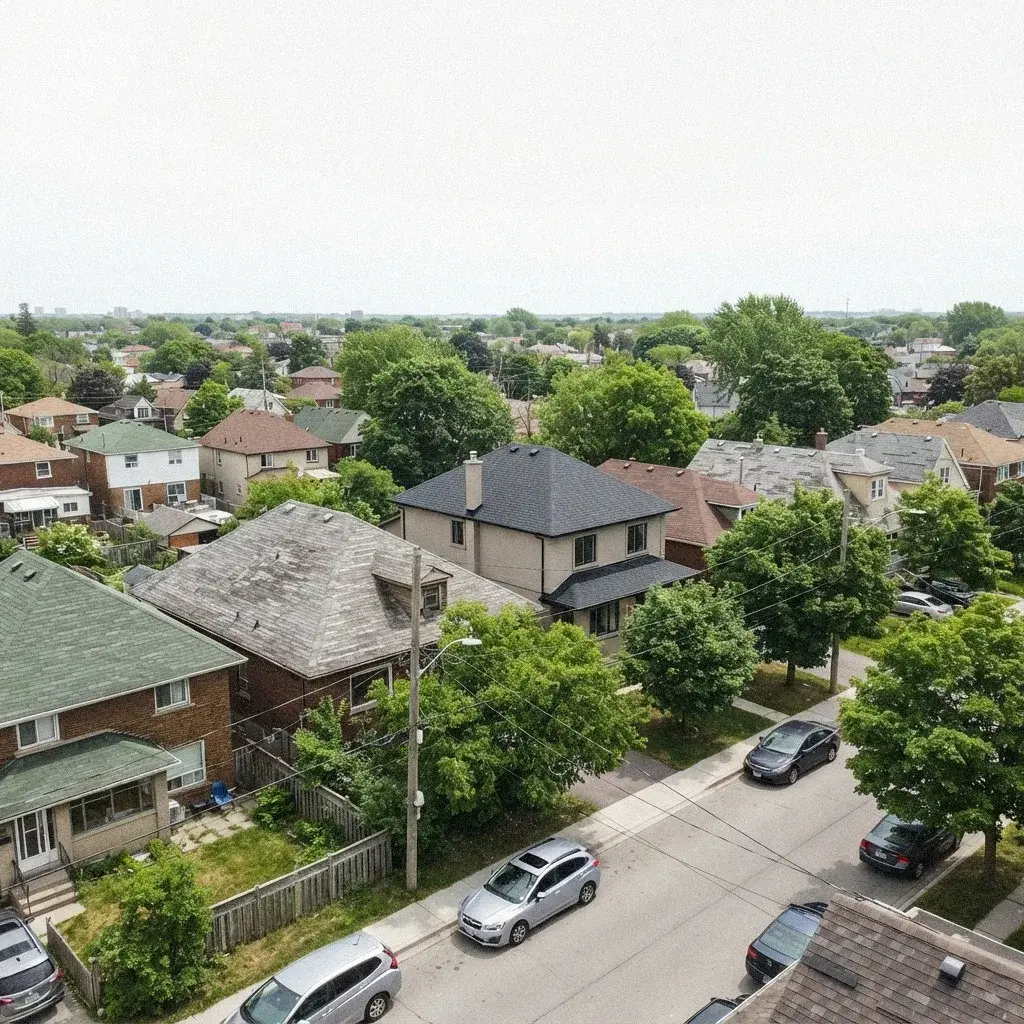
Across King County, whether you're in Crossroads, Eastgate, Factoria, or elsewhere around Bellevue, roof repair is worth arranging with somebody who works on this housing stock rather than a generic plan. Foundation type, soil and building age all change what has to happen first.
Nearly all of this work is residential: residential roofing covers the approach for houses, while commercial and multi-unit buildings are handled under commercial roofing.
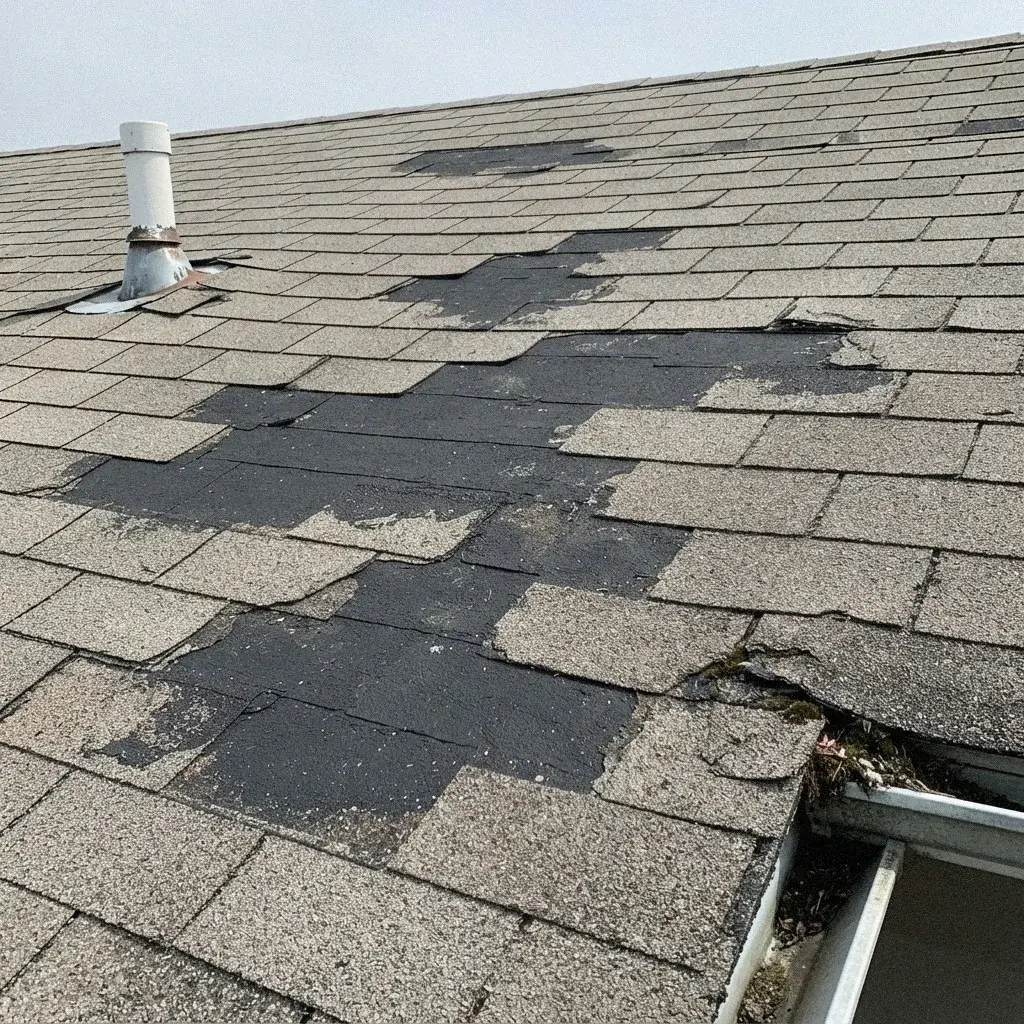
A handful of shingles curling or missing near a ridge or eave usually points to a spot repair rather than a full reroof. Bellevue roofs take the brunt of the wet season along valleys and eaves, and localized damage often stays localized if caught early. The pros will pull a few surrounding shingles to check the underlayment before quoting a patch, since a repair scoped too small just fails again next winter.
Exposed nails along a shingle course or ridge cap are a small fix with real consequences if ignored. Once a nail head sits above the shingle surface, water tracks down the shaft into the deck, and a soft spot follows. This is common on older Bellevue homes where the original nailing pattern has shifted over the years, and it is a quick item on a repair punch list rather than a reason to replace the roof.
Sealant failure around pipe boots and flashing shows up as cracked rubber collars or gaps where caulking has pulled away from metal. These are penetration points, not broad roof sections, and they age faster than the shingles around them. In Bellevue, where roofs stay damp for long stretches, a failed boot or flashing seam left through one more wet season is what turns a small repair into a rebuild.
An inspection identifies which sections are failing versus which are still sound, checking shingles, flashing, valleys, and any exposed nails before setting scope.
The repair scope gets written down: which areas, what materials, and whether shingle matching is possible, so there's no ambiguity about what's included.
The repair itself: removing and replacing damaged shingles or flashing, resealing pipe boots, and addressing any exposed nails or ridge cap issues found along the way.
The pros close with a punch list walkthrough, pointing out the repaired sections, matched shingles, and any remaining soft spots worth watching before the next Bellevue wet season arrives.
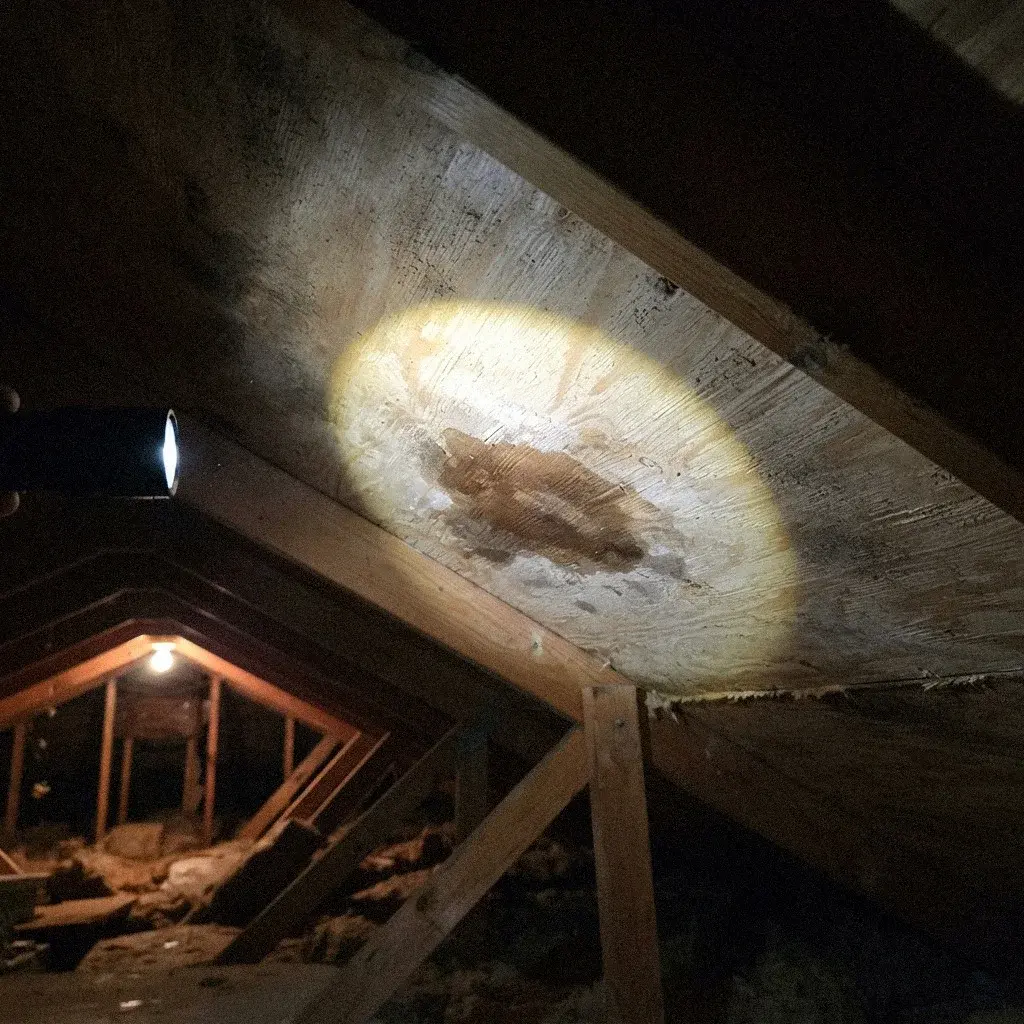
Bellevue homes see long stretches of wet weather rather than single hard storms, so damage tends to start small: a lifted shingle edge, a cracked pipe boot, a nail backing out. Repair work here is about catching those small failures before moss and standing water turn them into sheathing rot, especially on the composition shingle and cedar shake roofs common across the city's older neighborhoods.
The City of Bellevue does not require a building permit for most straightforward repair work, since a repair does not remove the whole roof covering or replace decking beyond the small thresholds set in the city's roofing policy. That said, energy code requirements can still apply if the repair opens up the roof cavity, so a contractor working near Bellevue Way or out toward Somerset should know when a repair crosses into replacement territory.
Matching shingles on a repair is harder in a city where roofs have been through a few wet seasons. Sun and moss color a roof unevenly over time, and a patch near Crossroads or Wilburton might use current-production shingles that read slightly different from a ten-year-old field. The pros will talk through that mismatch upfront rather than let a homeowner discover it from the street.
Most roof repair jobs in Bellevue fall inside these ranges. The inspection costs nothing and the exact figure is written down before any work starts.
| Material Fit | Ventilation Check | Timeline |
|---|---|---|
| Some roofing crews do one job: haul off the old layer and nail down new shingles. That works fine until flashing around a chimney or valley needs real attention, or the decking underneath turns out soft. A narrow scope means narrow answers when the job stops being simple. | Full tear-off, new decking as needed, flashing, no cleanup upsells | an estimated $280–$2090 |
| A generalist who does gutters one week and roofs the next brings less pattern recognition to a tear-off. Moss lift, failed valley flashing, and cedar shake conversions show up often enough locally that a roofing-focused crew has already seen your specific problem before. | Full tear-off, new underlayment and flashing, gutter check; no structural or deck framing repair | an estimated $400–$2860 |
| Price alone tells you little. A bid that skips proper flashing detail or ignores attic ventilation can look cheaper up front and cost more within a few wet seasons. The lower number and the better roof are not always the same roof. | Multi-layer tear-off, sheathing swap, new flashing, ridge and valley work | an estimated $520–$3960 |
| A crew that only reroofs sees the same failure points repeatedly: lifted moss-damp shingles, rusted gutters, undersized downspouts. That repetition is worth something. It means fewer surprises mid-job and a bid that already accounts for what's usually hiding under the surface. | Whole-roof reroof: tear-off, moss-damaged sheathing swapped, flashing and valleys redone | an estimated $720–$5720 |
A lower bid that separates labor from materials to shrink the taxed amount is not a discount — it is a miscalculation the state can still collect on later. The licensed pros we connect you with quote one number that already accounts for it correctly.
The pros we connect you with set repair scope by walking the roof and checking what's failed against what's still sound: shingle replacement where mats are cracked or granules are gone, flashing repair at chimneys and walls, and pipe boots that have hardened and split. A Bellevue roof rarely fails all at once, so the scope is usually a handful of specific spots, not the whole field.
Matching shingles gets harder the longer a roof has weathered, since sun and moss change color unevenly across a Bellevue roof over the years. The pros we connect you with try to source a close match, sometimes pulling from a less visible slope to patch the visible one, but on an older roof some difference in tone at the repair line is normal and worth expecting going in.
Exposed nails usually mean the shingle above has lifted, curled, or been blown back, often from moss holding water at the tab edge or age making the mat brittle. Left alone, that nail head becomes a direct path for water. It's a small fix on its own, but it's the kind of thing worth checking for on any Bellevue roof past its middle years.
It depends on the roof's age and how the damage sits. A spot repair covering a few shingles, a valley, or a pipe boot near Crossroads or Wilburton usually makes sense on a roof with years of remaining service life. Once flashing failures, moss lift, and soft decking show up in multiple spots, matching shingles gets harder to find and a rebuild costs more than a straight repair, and reroofing is worth pricing instead.
Sealant failure at pipe boots and other roof penetrations is one of the more common repair calls in Bellevue, since the rubber or plastic collar around a vent stack hardens and cracks faster than the shingles around it. Valley repair comes up for a similar reason, since valleys carry more running water than any flat section of roof and any small gap shows up fast.
The pros we connect you with typically back their repair work with a workmanship warranty covering their labor, separate from whatever manufacturer coverage remains on the shingles themselves. Ask for the specific terms and length in writing before work starts, and get a written punch list of exactly what was repaired so there's a record if anything in that area needs attention again.
A recover skips a permit under a set weight-increase threshold, and a full replacement stays permit-free only if the sheathing swapped out is limited. Cross either line and Bellevue wants a permit. Multi-unit buildings carry their own enclosure requirements too. Ask the contractor which category your job falls into before work starts, not after.
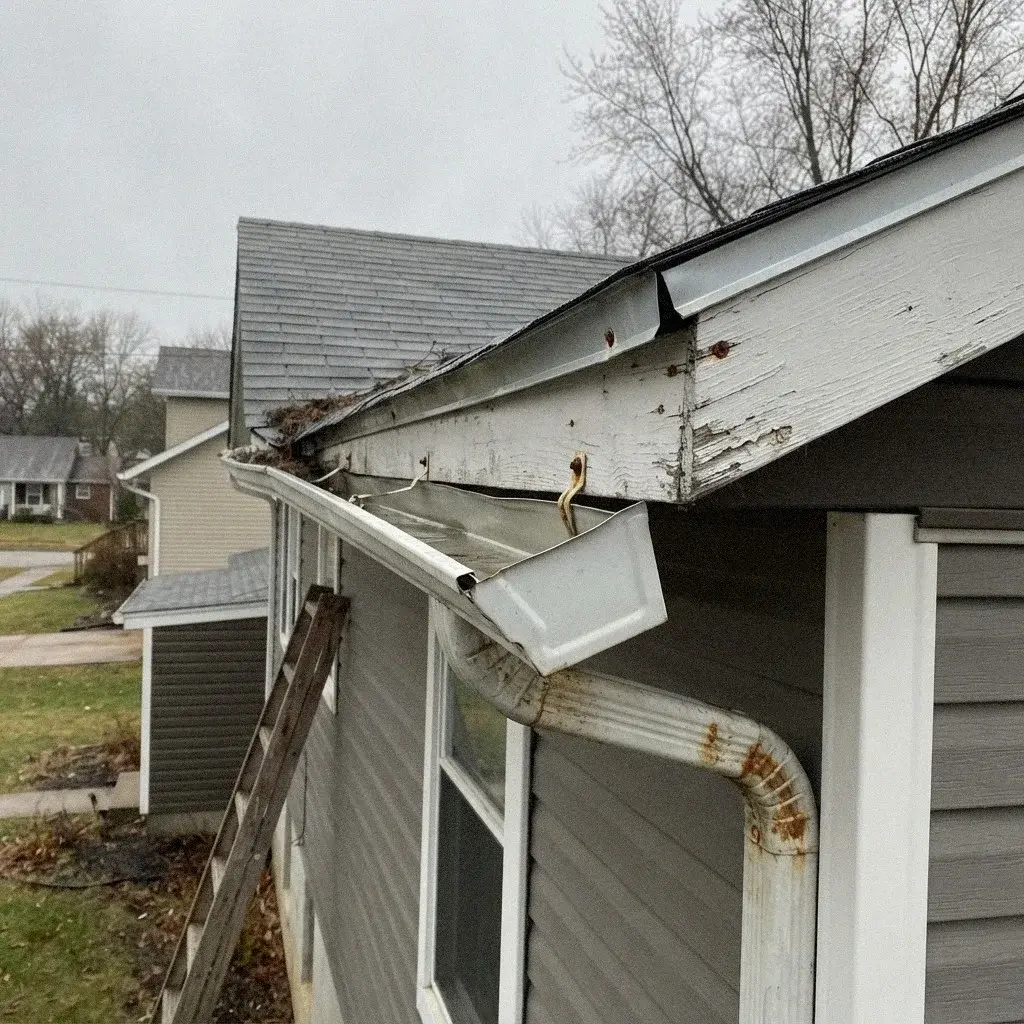
Bellevue roofs wear out through repeated wetting more than any single storm. Long overcast stretches keep surfaces damp, moss takes hold in shaded sections, and small flashing gaps let water travel before anyone sees a stain. The pros we connect you with check valleys, penetrations, and gutter flow, not just the shingles on top.

Before the long wet season settles over Bellevue, a roof benefits from a short walkaround done in the right order. This piece lays out what to clear, what to check, and when to book it.
Read article
You don't need a ladder to know a roof is in trouble. Shadow lines, streaking, and debris at the gutter outlet tell most of the story from the driveway. Here's what to look for from a Bellevue sidewalk before you call anyone.
Read article
Bellevue roofs rarely fail from one storm. They wear out from months of damp shade, clogged valleys, and weak flashing details that never get a real chance to dry between rains.
Read articleReading about this service is a fine start, but every Bellevue roof wears differently depending on shade, pitch, and age. The details on this page describe what the work generally involves; they cannot tell you whether your roof needs it right now. The licensed pros we connect you with can look at the actual conditions - moss, flashing, gutter runoff - and tell you honestly whether this is the right job or something else is the real problem first.
Call (425) 380-0932