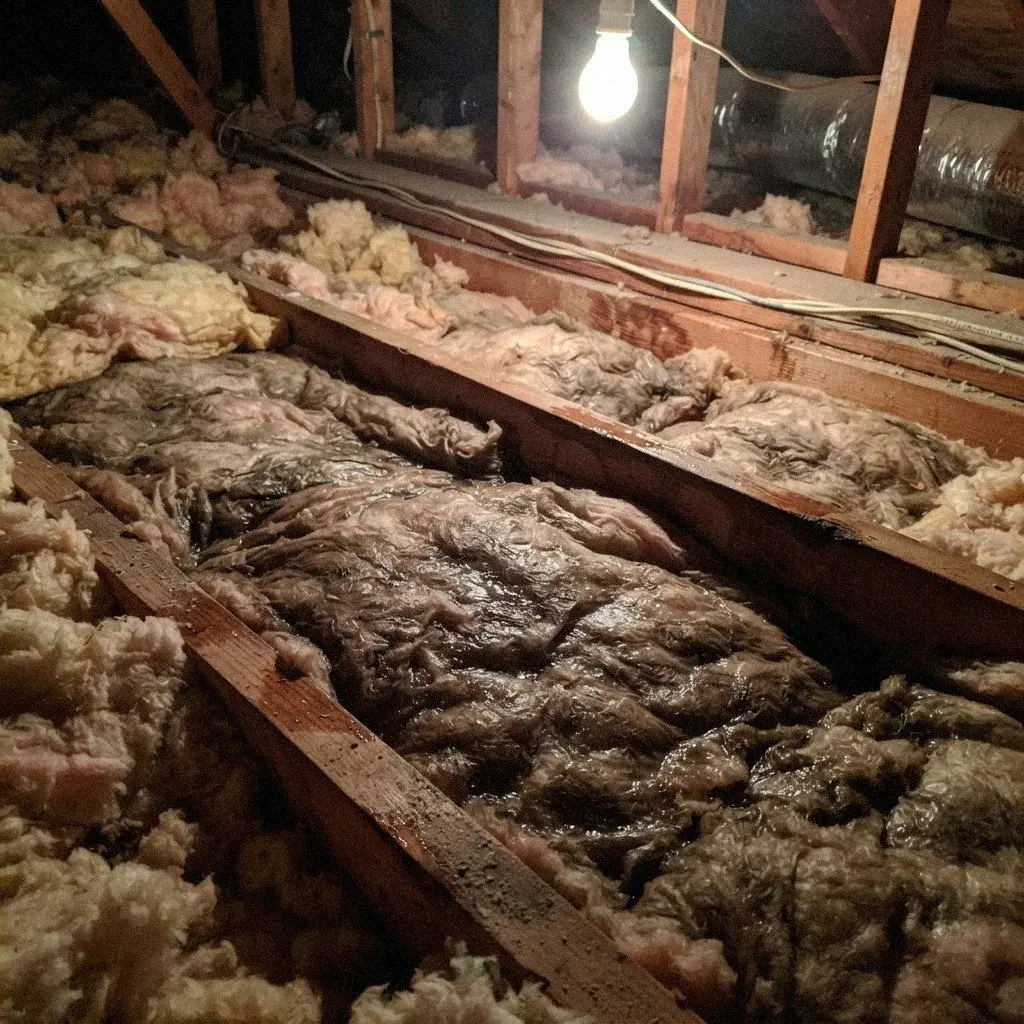
Why This Happens on Bellevue Roofs
Bellevue's marine climate keeps outdoor air cool and damp for long stretches, so warm indoor air migrating into an unheated attic condenses fast on the cold underside of the decking and rafters. Neighborhoods with heavy conifer cover, like Bridle Trails and Somerset, see roofs that never fully dry between rains, which compounds the problem once vent airflow is out of balance.
Many Bellevue attics rely on soffit intake paired with ridge or roof vents, following the vent-ratio approach referenced in the state residential code. When soffit vents get painted over, insulated shut, or blocked by debris, or when a bath fan vents into the attic instead of through the roof or wall, moist air has nowhere to go but onto the sheathing.
A roof in Bellevue rarely fails all at once. It fails one damp week at a time, as moss holds water at the edges and flashing slowly gives way. The pros we connect you with look past the shingles to the decking underneath, since that is where a quiet leak turns into a real repair bill.
The Key Points
- Location
- Underside of roof decking and rafters throughout the attic, often worst near the ridge.
- Appearance
- Damp or frosted sheathing, dark mold blotches, and beading on exposed nail tips.
- Cause
- Warm indoor air reaching a cold attic through gaps, poor insulation, or misrouted bath and dryer vents.
- Progression
- Weakens and delaminates roof sheathing, feeds mold growth, and shortens the life of the whole roof over repeated wet seasons.
- Damage
- Ignored condensation soaks insulation, rots roof decking and rafters, and invites mold through the attic and ceiling below.
- Typical Response
- Condensation risk in Bellevue peaks during the coldest, dampest stretches of the wet season, when indoor heating runs constantly against consistently cold outdoor air. The gap between warm indoor air and cold attic air is largest then, which is exactly when soffit and ridge airflow needs to be unobstructed.
- Roof Age
- an estimated $450–$2600
What Waiting Adds to the Bill
Attic condensation gets mistaken for a roof leak, since both leave water stains on the decking near Bellevue's wooded lots. A leak traces to one spot, usually a valley, flashing, or pipe boot, and keeps the same shape after each rain. Condensation spreads evenly across large sections of sheathing regardless of rainfall, appearing worst on cold, still mornings rather than during storms. The separating test is timing and pattern. Check the attic the morning after a dry, cold night: frost or damp sheathing spread broadly, with no rain in the prior day, points to condensation. A stain that only appears or worsens during active rain, tracing back to a flashing or penetration, points to a leak instead.
The Fix, in Order
Real correction rebalances intake and exhaust: clearing or adding soffit vents, adding or repairing ridge venting, and rerouting any bath or dryer duct that dead-ends in the attic so it terminates outside. This addresses the airflow that is actually driving moisture onto the decking, rather than papering over the symptom.
Painting over moldy sheathing or laying down a vapor barrier without fixing airflow only hides the sign temporarily; the moisture keeps arriving and the substrate keeps weakening underneath. Lasting correction pairs proper attic ventilation with sealing the interior air leaks that push moisture upward in the first place.
Composition shingle covers most roofs in this area, though enough homes still carry their original cedar for that to be a normal conversation too. Either way, age shows up differently depending on slope, shade, and how the roof drains. Get a straight read on condition before deciding whether patching still makes sense or a full reroof is the smarter move.
Tear-off or recover: weight, cost, and when each applies
| What you have |
Usually the right call |
|---|
| Cedar shake still shows up on plenty of older homes, and swapping it for composition shingle changes more than the look of the roof. Skip sheathing under shake behaves differently than solid decking under comp, and attic ventilation often needs a second look once the switch is made. It's a real job, not a simple swap. | A reroof quote should read as one number, not materials plus tax plus a surprise later. Sales tax applies to the whole job here, labor included, at the rate for where the roof sits, and a contractor cannot legally tax only the materials. Ask for that total in writing before signing anything. |
| Moss lift and worn flashing tend to show up gradually, not overnight. Bellevue's shaded, tree-covered lots keep roof surfaces damp long after storms pass, and that steady moisture works into valleys and seams before anyone notices a leak. Catching those early signs before the next wet stretch is what keeps a small repair from turning into a full reroof. | Moss on a shaded roof section isn't a look to tolerate until reroofing time. Left alone it holds moisture against the shingle and speeds up wear that would otherwise take years. The licensed pros we connect you with clear it carefully rather than pressure-washing granules loose, then look at what kept that section damp long enough for moss to take hold in the first place. |
| Getting quotes from several contractors is worth the extra hour it takes. Prices vary more than most homeowners expect, and so does what's actually included — cleanup, disposal, flashing work, warranty terms. A written estimate that spells out materials and scope protects you later, especially if a dispute over the work ever comes up. | Moss doesn't just sit on top of a roof, it holds moisture against the surface long after the rest of the neighborhood has dried out. That trapped water works into seams, lifts edges, and turns a small weak spot into a slow leak nobody notices until a ceiling stain shows up. Catching it early is cheaper than replacing sheathing later. |
The Homeowner Side of This
A homeowner can check from inside the house for musty smells, peek into the attic hatch for frost or dark staining on the sheathing, and look from the ground for blocked or painted-shut soffit vents along the eave. Measuring actual vent airflow, inspecting the ridge, and correcting any duct venting into the attic is roof-and-attic work for the licensed pros we connect you with.
The Damp and Air Quality Side
Damp, moldy attic sheathing is a mold-growth environment, and prolonged exposure to mold and mildew is a recognized indoor air quality concern for people in the house below. Left unaddressed through repeated wet seasons, it also weakens the decking itself, shortening the life of the whole roof assembly.
Time To Stop Guessing About That Roof?
Putting right attic condensation usually runs an estimated $450 to $2600. That is a budgeting figure, not a price. Rot and soft decking here come from trapped moisture and poor attic ventilation, not insects, so pest treatment rarely belongs in a Bellevue reroof estimate. If the licensed pros we connect you with find soft sheathing near Bridle Trails or Somerset's shaded lots, expect a conversation about ventilation and skip sheathing, not a pest bill. pricing guide, and the service that handles this is Roof Ventilation & Attic Airflow.