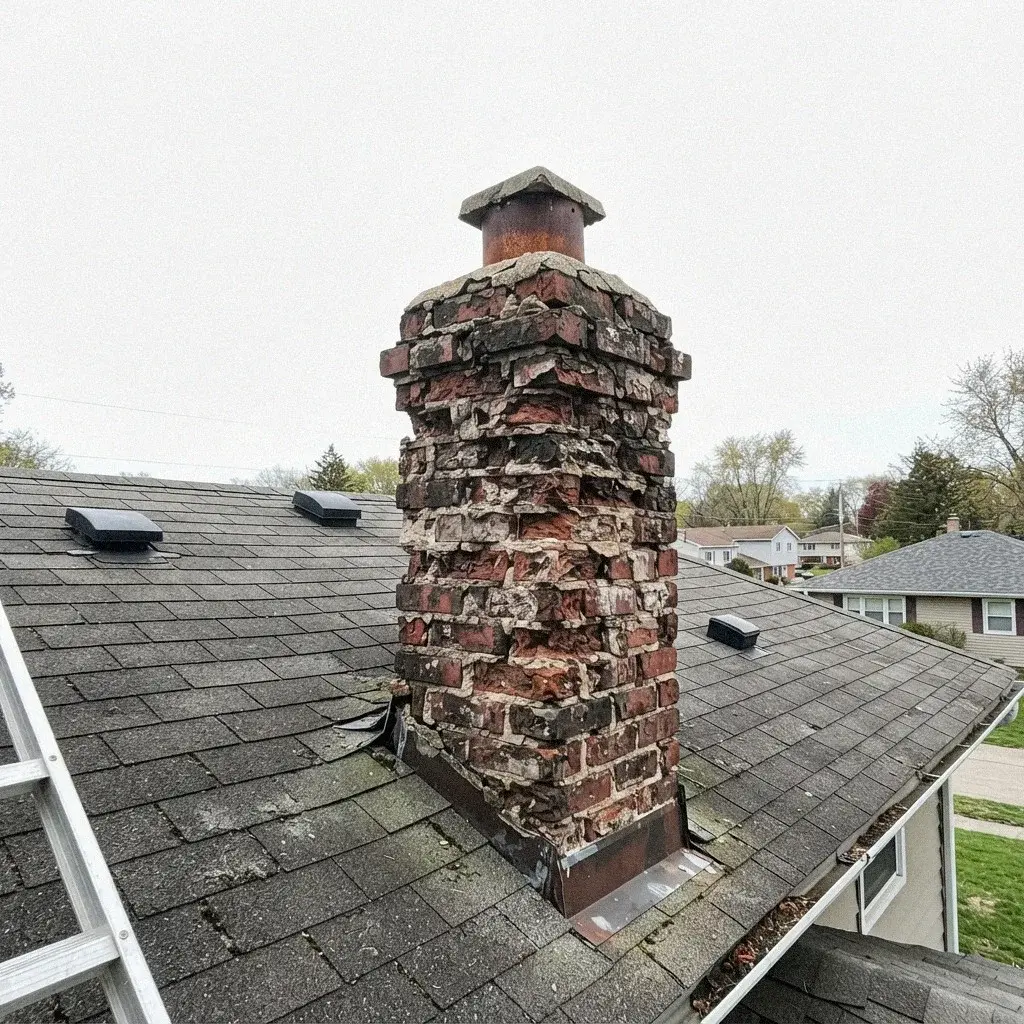
Why This One Turns Up Locally
Bellevue's long stretch of wet, overcast days keeps the flashing joint around a chimney damp for weeks at a time, which is exactly when sealant failure and rusted metal let water start tracking into the attic near the penetration.
Chimney leaks show up where a masonry or metal chimney breaks the roof plane, a spot that depends on flashing rather than shingles alone. Bellevue's long wet season keeps that joint damp for days after each storm, and repeated wetting works sealant and counterflashing loose faster than a single hard rain would.
Cedar shake still turns up on plenty of Bellevue roofs, and swapping it for composition shingle is a normal request, not a rare one. It changes the roof's weight and can mean rethinking the sheathing underneath, so it is worth a direct conversation with the pros we connect you with before signing anything.
The Short Version
- Location
- At the joint where flashing and counterflashing meet the chimney's brick or block, on any roof slope.
- Appearance
- Deteriorated or improperly lapped flashing and counterflashing at the chimney-to-roof joint, worsened by Bellevue's long stretches of wet, overcast weather.
- Cause
- Sealant failure, rusted or displaced flashing, and moss holding moisture against the chimney base.
- Progression
- Moderate; worsens each wet season as flashing metal degrades and decking absorbs more moisture.
- Damage
- Ignored chimney leaks rot the surrounding decking and rafters, stain interior ceilings and walls, and can let water track down into wall cavities near the flue.
- Roof Materials
- Late spring through early fall is when flashing repair work gets scheduled in Bellevue, since crews book that window solidly. A leak discovered in December often means living with a tarp until drier weeks open up.
- Timeline
- an estimated $350–$1900
The Real Cost of Leaving It
Chimney leaks get confused with valley leaks, since both can stain a ceiling near the same wall. Valley leaks track down a sloped channel between two roof planes; chimney leaks originate at a vertical penetration. Climb the attic and follow the water line back to its highest dry point. Trace the stain to its source. If dampness radiates outward from a masonry chimney chase, it's a chimney leak; if it runs parallel to a seam between two roof slopes with no masonry nearby, it's the valley. A pro on the roof confirms which flashing failed.
The Repair, Step by Step
Real repair means removing the failed flashing and counterflashing at the chimney base and sides, replacing corroded step flashing, and resealing the counterflashing reglet with fresh sealant. Caulk smeared over an existing gap only hides the leak until the next wet stretch, when water finds the same path back into the attic.
Where decking near the chimney chase has gone soft, the fix includes cutting out and replacing that substrate before new flashing goes back down, since fastening flashing to rotted wood only restarts the same failure.
A wet, mossy season here does more damage than any single storm. Roofs in Bellevue wear out from months of overcast weather that never quite dries the shingles, not from hail or ice dams. Shade from conifer canopy near neighborhoods like Bridle Trails and Somerset keeps north-facing slopes damp long after rain stops, and that moss lifts edges and shortens roof life. The licensed pros we connect you with know how that plays out on comp shingle, cedar shake, and low-slope roofs alike.
Moss treatment or moss removal: what each one does
| Your situation |
What normally fits |
|---|
| A leak rarely starts where the water shows up inside. Flashing, valleys, and the joints around anything that pokes through the roof are where wet-season water finds a way in, and gutters clogged with moss or debris just send more of it toward the edges. Tracing it back to the source is most of the actual work. | Most reroofs here start with moss lift, not storm damage. Once moss gets under a shingle edge it holds water against the surface and never lets it dry between rain spells. Left alone through a wet season, that damp edge curls, the granules wash thin, and a patch job turns into a full tear-off sooner than the shingle's age alone would suggest. |
| Getting a straight answer on roof condition shouldn't require guesswork. The licensed pros connected through this site look past the shingles at flashing, gutters, and attic ventilation to explain what's actually happening and what it would take to fix it, so a Bellevue homeowner can decide with real information instead of a sales pitch. | Roof problems here rarely announce themselves. Moss creeps under an edge, a valley holds water a season too long, a vent stays blocked through another wet stretch, and the deck underneath goes soft before anyone climbs up to look. A short visit from the licensed pros we connect you with turns that guesswork into a plain list: what is failing, what can wait, what cannot. |
| Roof problems in this region build slowly. Moisture works into flashing and valleys over many wet months before a ceiling stain gives it away. Waiting for a visible leak means the damage underneath is already older than it looks. Checking a roof before symptoms show costs far less than repairing what months of trapped water leave behind. | Flashing and valleys take the brunt of a long wet season, and they're usually the first thing to fail once sealant ages or metal shifts underneath shingles. The licensed pros in this area can check those spots, clear clogged gutters, and flag ventilation gaps before a small drip becomes a bigger repair bill. |
Where DIY Stops Being Sensible
From the ground, a homeowner can check for water stains on interior ceilings near the chimney and rust streaks on exterior brick or siding below it. Anything past that, ladder work at the flashing or counterflashing, belongs to the licensed pros we connect you with, since a missed lift here reopens the leak.
What It Means for the People Inside
Water sitting in chimney-area decking through Bellevue's wet months breeds mold in attic insulation and framing, a slower but real health concern that follows any leak left unaddressed past one rainy season.
Ready To Get Your Roof Looked At?
Most chimney leaks jobs in Bellevue land between an estimated $350 and $1900, and the roof decides where inside that. Rot and soft decking here come from trapped moisture and poor attic ventilation, not insects, so pest treatment rarely belongs in a Bellevue reroof estimate. If the licensed pros we connect you with find soft sheathing near Bridle Trails or Somerset's shaded lots, expect a conversation about ventilation and skip sheathing, not a pest bill. pricing guide, and the service that handles this is Flashing & Chimney Repair.