The Conditions Behind It
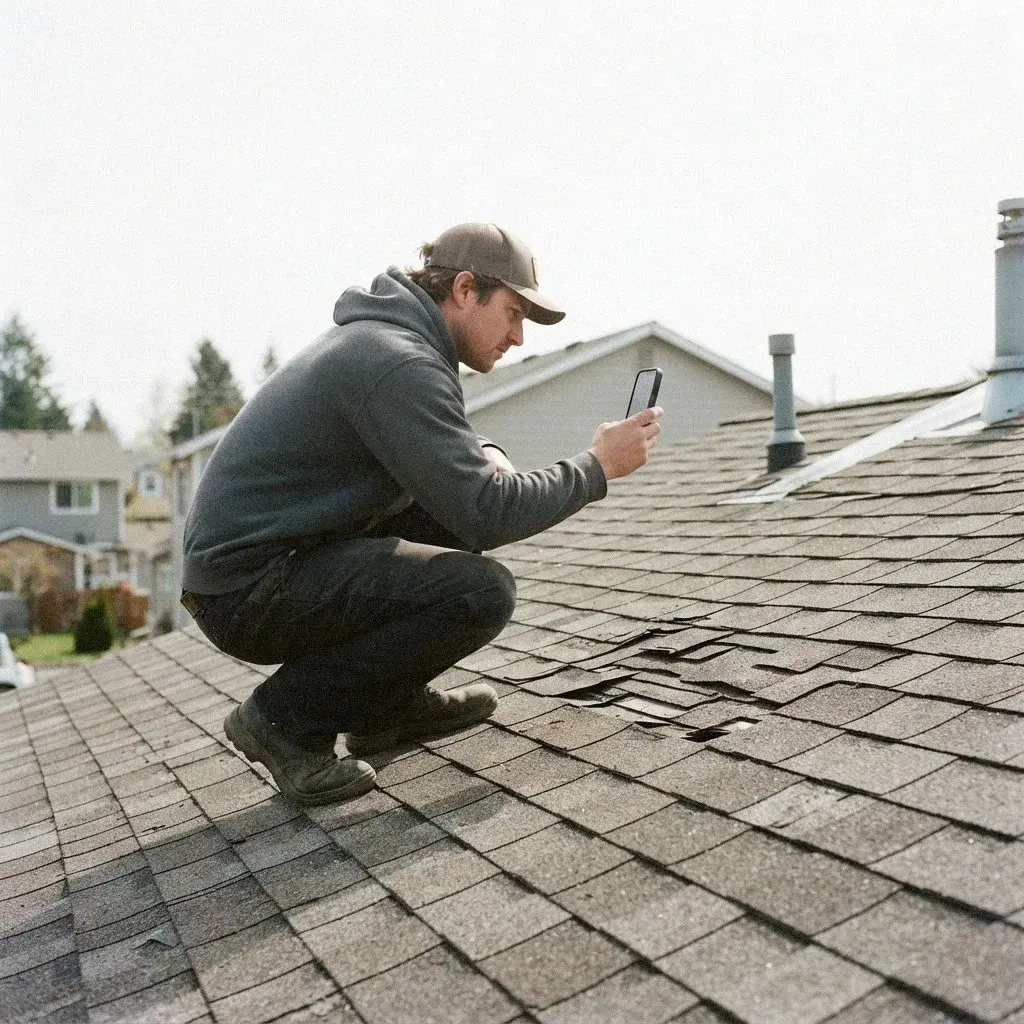
Bellevue's long stretch of wet months from October through May keeps composition shingles damp far longer than a drier climate would, and that repeated wetting and slow drying is the main driver behind curling on Eastside roofs.
Homes near Bridle Trails and the Cougar Mountain and Lakemont area sit under heavy Douglas fir and cedar canopy, so shaded slopes stay wetter between storms, which speeds up curling compared with open, sun-exposed roofs nearby.
Attic ventilation gets overlooked until a Bellevue roof starts failing from underneath. Trapped moisture and poor airflow, not insects, are what soften decking in this climate. The pros we connect you with can check soffit and ridge venting as part of any inspection, since a damp attic shortens a roof's life quietly.
What to Remember
- Location
- Shows first on south- and west-facing slopes and near ridge and hip lines where sun and wetting cycles hit hardest.
- Appearance
- Shingle edges roll upward or the whole tab bows into a shallow cup, with granules loosening at the lift point.
- Cause
- Repeated wetting from the wet season plus lost granule protection and aging asphalt underneath the mat.
- Progression
- Moderate; a few curled tabs can sit for a season, but wind and rain work them loose within a year or two.
- Damage
- Left alone it exposes fastener heads and seams, letting water reach the underlayment and decking below, which leads toward substrate rot.
- Roof Materials
- Curling shows up worst after Bellevue's long stretch of wet months, when shingles absorb moisture through fall and winter and then dry unevenly once spring arrives. Crews booking reroofs in the short late-spring-to-early-fall window see the most curling call-outs near Somerset and Bridle Trails, where shaded, moisture-holding roofs age fastest.
- Roof Type
- an estimated $11000–$30000
Why It Gets More Expensive
Curling and cupping gets mistaken for moss lift, where moss growing under shingle edges physically pries them up rather than the shingle itself aging and cupping from wetting cycles. The test is clearing debris and looking underneath the lifted edge. If moss or organic buildup is wedged there, it is moss lift; if the shingle itself is bowed or the mat is bare and brittle with no moss present, it is age-driven curling.
How the Work Is Done
A localized patch can swap out a handful of curled shingles if the decking and substrate underneath are still sound, but curling on an older roof usually signals the whole field is reaching the end of its service life.
Full reroofing pulls the old comp shingle off down to the decking, checks for soft substrate near valleys and penetrations, and resets flashing, drip edge, and ridge and hip caps before laying new shingles with proper fastener placement.
Wet-season damage tends to hide in the details: a valley that channels water where it shouldn't, a vent boot gone brittle, moss holding moisture against the surface longer than it should sit there. None of that shows from the ground. A closer inspection catches it while a repair is still cheaper than waiting for it to spread underneath.
Moss treatment or moss removal: what each one does
| Your situation |
What normally fits |
|---|
| A leak rarely starts where the water shows up inside. Flashing, valleys, and the joints around anything that pokes through the roof are where wet-season water finds a way in, and gutters clogged with moss or debris just send more of it toward the edges. Tracing it back to the source is most of the actual work. | Most reroofs here start with moss lift, not storm damage. Once moss gets under a shingle edge it holds water against the surface and never lets it dry between rain spells. Left alone through a wet season, that damp edge curls, the granules wash thin, and a patch job turns into a full tear-off sooner than the shingle's age alone would suggest. |
| Getting a straight answer on roof condition shouldn't require guesswork. The licensed pros connected through this site look past the shingles at flashing, gutters, and attic ventilation to explain what's actually happening and what it would take to fix it, so a Bellevue homeowner can decide with real information instead of a sales pitch. | Roof problems here rarely announce themselves. Moss creeps under an edge, a valley holds water a season too long, a vent stays blocked through another wet stretch, and the deck underneath goes soft before anyone climbs up to look. A short visit from the licensed pros we connect you with turns that guesswork into a plain list: what is failing, what can wait, what cannot. |
| Roof problems in this region build slowly. Moisture works into flashing and valleys over many wet months before a ceiling stain gives it away. Waiting for a visible leak means the damage underneath is already older than it looks. Checking a roof before symptoms show costs far less than repairing what months of trapped water leave behind. | Flashing and valleys take the brunt of a long wet season, and they're usually the first thing to fail once sealant ages or metal shifts underneath shingles. The licensed pros in this area can check those spots, clear clogged gutters, and flag ventilation gaps before a small drip becomes a bigger repair bill. |
What You Can Safely Do Yourself
A homeowner can flatten a single curled tab back down temporarily with roofing cement, but curling comes from underlayment and substrate wear underneath, not the visible tab. Once shingles cup across a slope near Bellevue Way or Factoria, the fix is tear-off and new decking or underlayment, not a patch a ladder trip can finish.
How It Affects the Rooms Below
Curled edges let wind get underneath the tab, and once a shingle starts flapping it accelerates fastener pull-through and lets water track sideways under the mat toward the decking and eave below.
Ready To Get Your Roof Looked At?
Most curling and cupping shingles jobs in Bellevue land between an estimated $11000 and $30000, and the roof decides where inside that. Rot and soft decking here come from trapped moisture and poor attic ventilation, not insects, so pest treatment rarely belongs in a Bellevue reroof estimate. If the licensed pros we connect you with find soft sheathing near Bridle Trails or Somerset's shaded lots, expect a conversation about ventilation and skip sheathing, not a pest bill. pricing guide.