Why Bellevue Roofs Age Before Their Time
Bellevue roofs rarely fail from one storm. They wear out from months of damp shade, clogged valleys, and weak flashing details that never get a real chance to dry between rains.
Read article
Fixing the metal and seals where your roof meets a chimney or wall.
Across King County, whether you're in Kirkland, Kenmore, Bothell, or elsewhere around Bellevue, flashing & chimney repair is worth arranging with somebody who works on this housing stock rather than a generic plan. Foundation type, soil and building age all change what has to happen first.
For a private home, residential roofing sets out what a visit involves. For a shop, office, or tenanted building, commercial roofing is the right starting point.
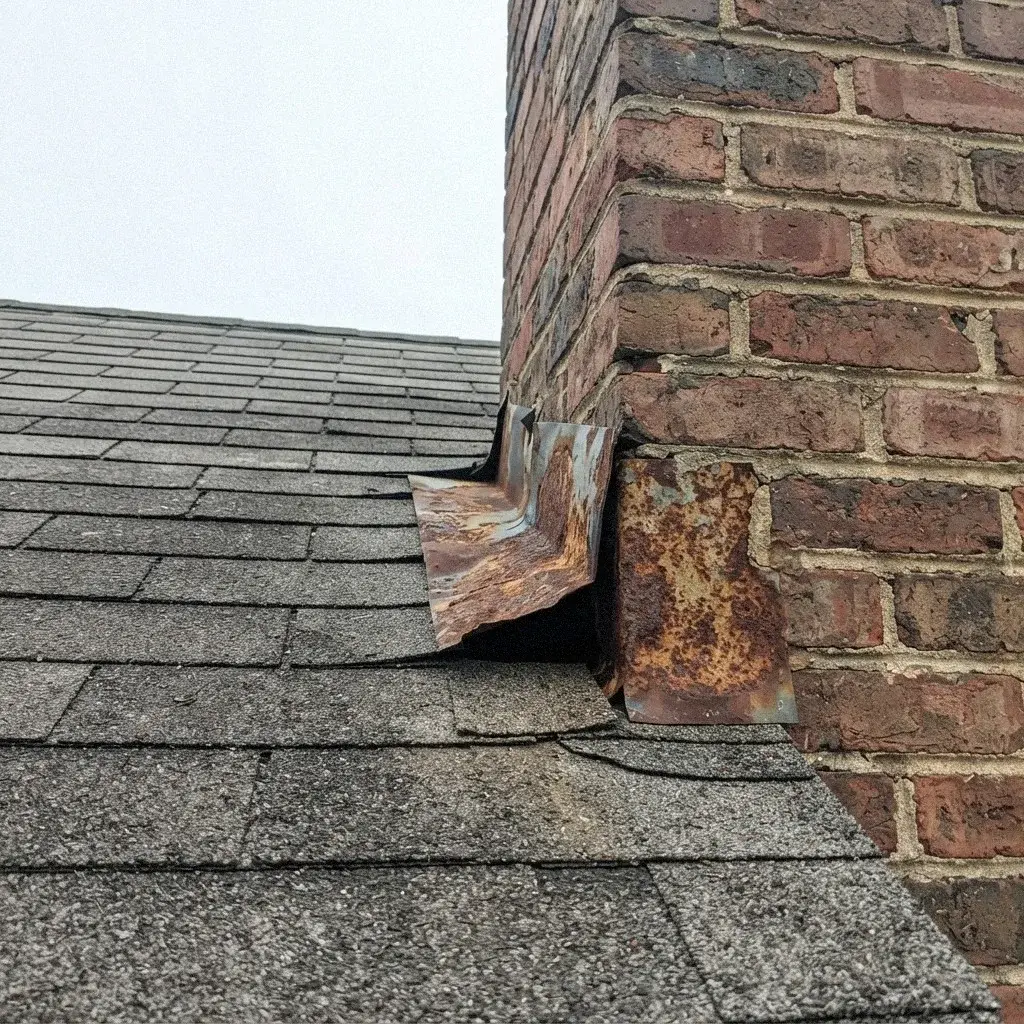
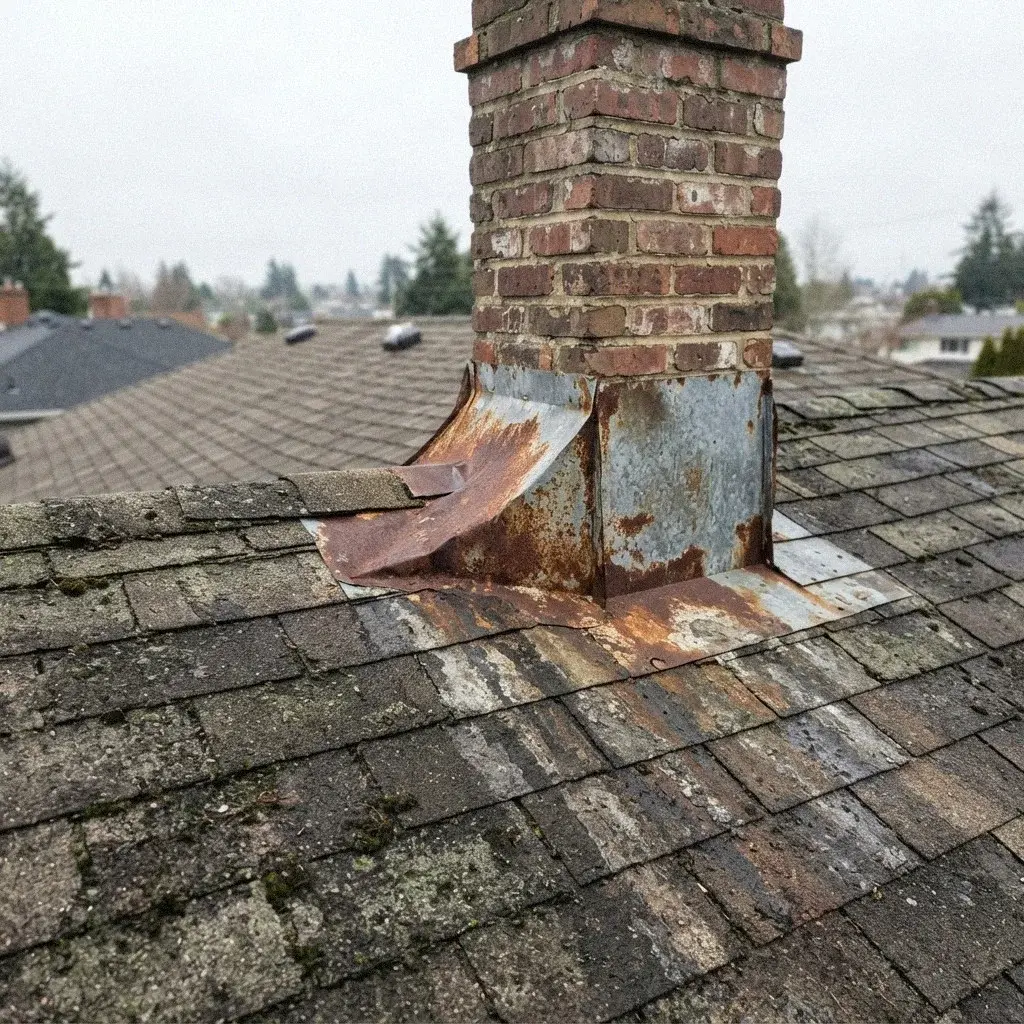
Rust streaks or dark staining below a chimney, valley, or sidewall usually mean the flashing under it has started to fail, not the shingles above it. In Bellevue's long wet season, that staining often shows up gradually over a winter rather than after one storm. If the streaking follows a straight line down the siding or brick, trace it back up to the flashing joint before assuming the roof covering itself is the problem.
Sealant beads around a chimney or pipe boot that look cracked, shrunk, or pulled away from the metal are a sign the joint is due for reflashing rather than another bead of sealant. Sealant is a short-term patch over metal that is still sound; once it is failing repeatedly at the same spot, the flashing or the reglet cut into the mortar joints has likely opened up and needs to be redone properly.
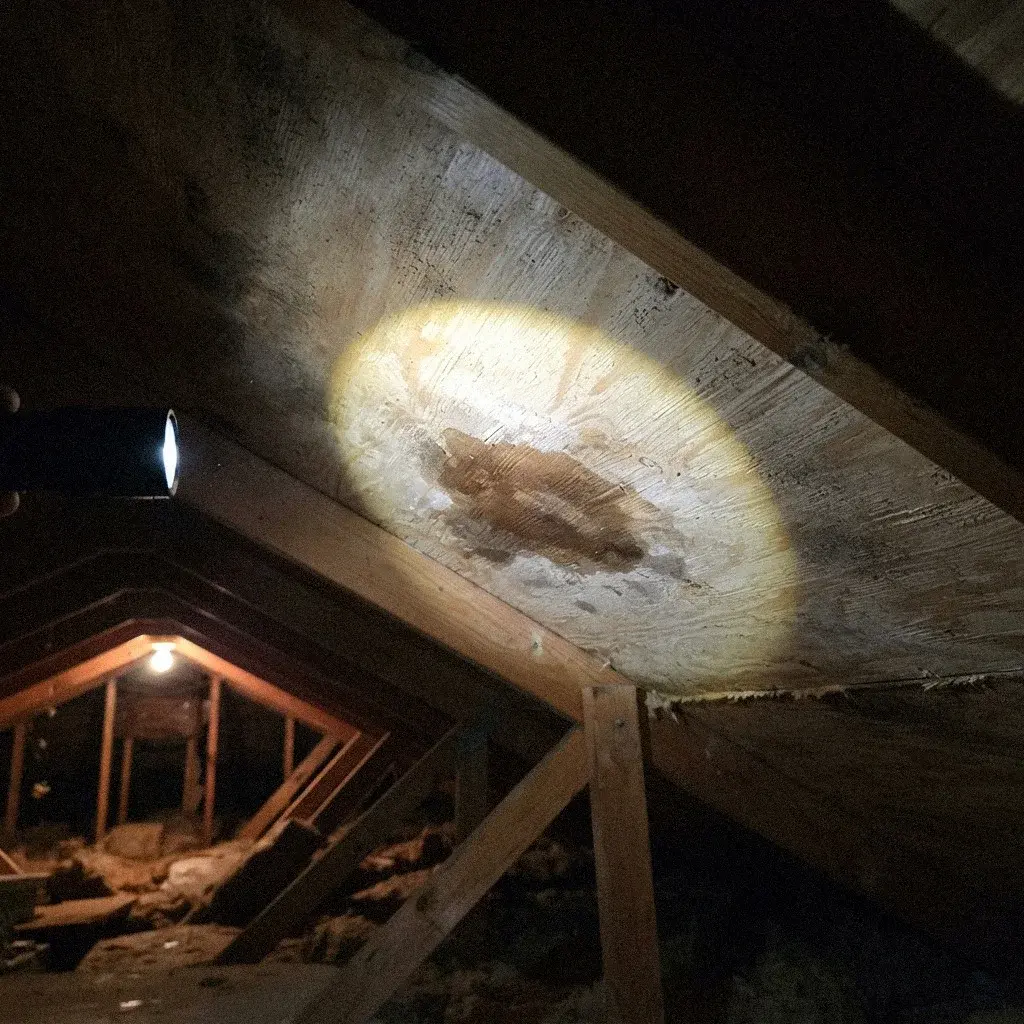
Water stains on an interior wall or ceiling near a chimney, valley, or where two roof planes meet at a sidewall almost always trace back to flashing, not a random shingle leak. Kick-out flashing missing at a roof-to-wall transition is a common culprit in Bellevue's older neighborhoods, since it sends water into the wall instead of the gutter below.
An inspection of every flashing point on the roof, chimney, valley, sidewall, and pipe boots, checking for rust, cracked sealant, and metal that has pulled loose from the reglet cut or from under the shingles.
A decision on resealing versus reflashing for each joint, based on what the metal underneath is actually doing rather than just what the sealant looks like from the ground.
Removal of failed step flashing, counterflashing, apron flashing, or valley metal and installation of new pieces, properly lapped with the shingles and set into the mortar joints where needed.
A final check of sealant beads, kick-out flashing at roof-to-wall transitions, and the chimney crown, so the repaired joints shed water the way the rest of the roof does.
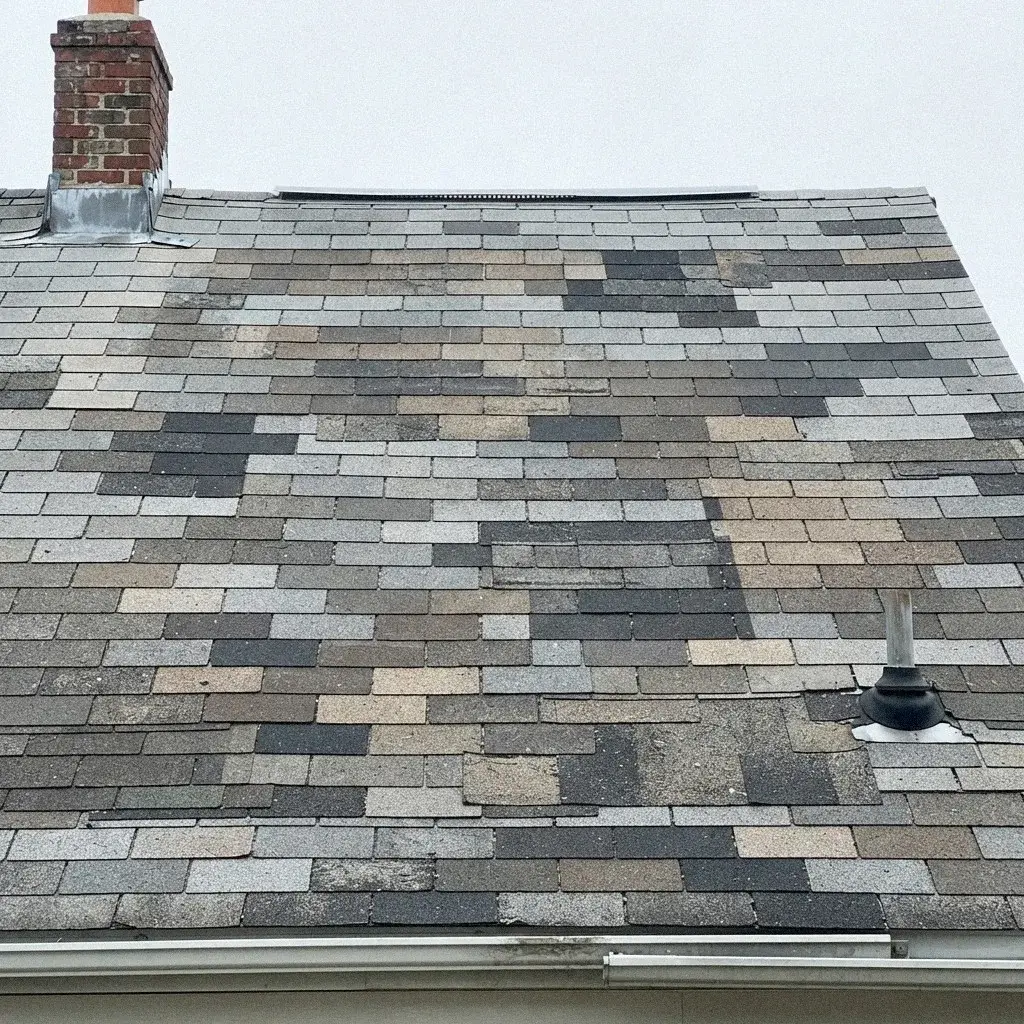
Bellevue homes mix composition shingle with cedar shake, and both rely on the same metal at chimneys, sidewalls, and valleys to stay dry through a wet season that runs October into May. Chimney flashing, step flashing, and valley metal take the brunt of long overcast stretches because they are the seams, not the field of the roof. When a reroof happens without addressing that metal, the new shingles inherit an old failure point underneath them.
Bellevue's building department treats a reroof and a flashing repair differently. Replacing shingles alone often skips a building permit under the city's roofing policy, but chimney flashing tied into a masonry cricket or a reglet cut into brick still needs correct sequencing so counterflashing sheds water rather than trapping it. On Somerset and Newport Hills homes, where conifer shade keeps valleys damp longer, that sequencing matters even more before the next wet season arrives.
Many Bellevue houses still carry cedar shake under a chimney or along a valley, and cedar shake flashing details are not identical to composition shingle ones, particularly around chimney crown clearance and apron flashing overlap. When a cedar-to-composition conversion happens, the old flashing is often reused without checking whether it still fits the new shingle profile, which is worth catching before the new roof goes down.
Here is roughly what flashing & chimney repair runs locally. Treat it as a guide — the property itself decides where inside the range you land.
| Written Scope | Tax Treatment | Permit Status |
|---|---|---|
| Licensed here means registered with the state, bonded, and carrying liability insurance. That status is checkable before anyone sets foot on the roof, and it matters more than a friendly sales pitch or a truck with a logo on it. | Visual check only, roof still in decent shape — no repairs, no climb on steep pitch | an estimated $245–$1805 |
| Insurance protects you two ways: it covers damage if something goes wrong during the job, and it keeps an injured worker's medical bills off your homeowner's policy. Ask to see current proof, not just a claim that coverage exists somewhere. | Tear-off, new flashing and valleys, standard shingle or shake — no structural repair | an estimated $350–$2470 |
| A bond is not the same as insurance. It's a smaller financial backstop meant to cover unfinished or defective work. Confirming both bond and insurance status takes a few minutes and avoids a much longer cleanup later. | Full reroof: complete tear-off, new decking where soft, flashing and valleys redone | an estimated $455–$3420 |
| Unlicensed work can still look competent on the surface, until a warranty claim has nowhere to go or a lien shows up after you thought the job was paid for and finished. Verification exists precisely because appearance and standing aren't the same thing. | Full tear-off, disposal, new decking as needed, no repaint or gutters | an estimated $630–$4940 |
A lower bid that separates labor from materials to shrink the taxed amount is not a discount — it is a miscalculation the state can still collect on later. The licensed pros we connect you with quote one number that already accounts for it correctly.
Flashing is thin metal, and it works loose or corrodes years before shingle fields wear out. Step flashing at sidewalls can pull free as houses settle, counterflashing at chimneys separates when mortar joints erode, and sealant beads at pipe boots dry out and crack in the wet season. In Bellevue neighborhoods with heavy conifer cover, like Bridle Trails or Somerset, trapped moisture speeds that breakdown at every roof-to-wall transition.
Resealing adds fresh sealant over an existing joint, a short-term fix for a small gap in a reglet cut or around a pipe boot. Reflashing removes the old metal and replaces the step flashing, counterflashing, or apron flashing itself. Sealant buys time; it does not fix metal that has rusted through or pulled away from a chimney or sidewall. The pros we connect you with can tell you which one your situation actually needs.
Often, yes. Chimney flashing is tied into the old roofing, and tearing off shingles around a chimney usually disturbs the counterflashing enough that it should be reset or replaced rather than reused. It is also the point to check the chimney crown and mortar joints for cracking, since water entering there can travel down inside the chase, not just under the shingles nearby.
A chimney cricket is a small peaked structure built on the uphill side of a chimney to divert water and debris around it instead of letting it pool against the flashing. Wider chimneys on steeper Bellevue roofs, common on hillside lots near Cougar Mountain and Lakemont, are the ones most likely to need one. Not every chimney requires a cricket; it depends on width and roof pitch.
That is usually a pipe boot, the rubber or metal collar sealing the roof around a vent pipe. Rubber boots crack and shrink well before the surrounding shingles wear out, and once they split, water tracks down the pipe into the attic. It is a common, fairly quick repair, though the diagnosis itself is more of a leak-tracing question than a flashing job on its own.
Kick-out flashing sits where a roof-to-wall transition ends at a gutter, diverting water outward into the gutter instead of letting it run behind the siding. Missing kick-out flashing is a common cause of hidden wall damage in older Bellevue homes, since the leak shows up inside a wall well after the roof itself was worked on. It is easy to overlook during a routine reroof.
Reroofing here is mostly a planned expense homeowners budget for, not something an insurance claim covers after a storm. Crews also book up fast in the short dry stretch from late spring into early fall, so timing a quote well ahead of that window matters. The licensed pros we connect you with can give you a realistic schedule instead of a guess.
A roof problem in one part of town rarely matches a roof problem somewhere else nearby, even a short drive off Bellevue Way or across from a park like Kelsey Creek. Slope, shade, and age all change what a roof needs. The licensed pros we connect you with look at your actual roof before naming a cause or a fix.

Bellevue roofs rarely fail from one storm. They wear out from months of damp shade, clogged valleys, and weak flashing details that never get a real chance to dry between rains.
Read article
Most Bellevue roof leaks trace back to a short list of weak points rather than the shingles themselves. This is a ranked look at where water actually gets in, from valleys and pipe boots to sidewall flashing and exposed fasteners.
Read articleReading about this service is a fine start, but every Bellevue roof wears differently depending on shade, pitch, and age. The details on this page describe what the work generally involves; they cannot tell you whether your roof needs it right now. The licensed pros we connect you with can look at the actual conditions - moss, flashing, gutter runoff - and tell you honestly whether this is the right job or something else is the real problem first.
Call (425) 380-0932