Repairing Your Bellevue Roof vs. Full Replacement
How roof age, damage extent, and deck condition decide whether a Bellevue roof gets patched or torn off.
Repair when damage is limited, the deck is sound, and remaining shingle life exceeds five years. Replace when moss and curling cover multiple slopes, layers are already at two, or repair cost per remaining year exceeds a fair share of full reroof cost.
Start With Remaining Service Life
A roof does not fail on a single day. It moves from sound to marginal to gone through years of wet-season cycling, and the honest question in Bellevue is never just age in years but remaining service life against what the roof is actually doing right now. A twenty-year-old composition shingle roof in Bridle Trails under heavy conifer shade may have less life left than the same age roof in an open Somerset yard. Deferred maintenance compounds faster here than the calendar suggests, so the framework below treats age as one input, not the answer.
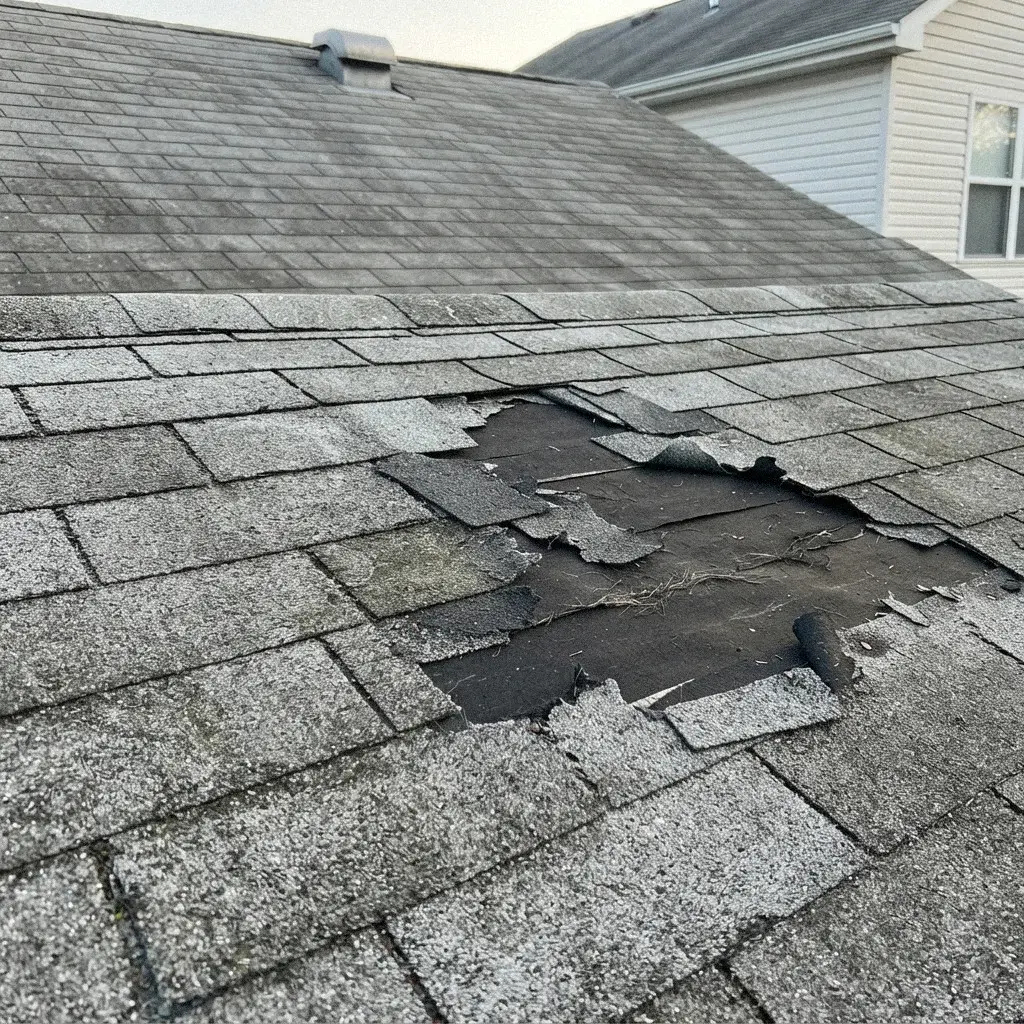
Start with what the damage actually is. A handful of lifted tabs after a windstorm, a valley that backed up once, a vent boot that dried out — these are spot repair territory, and a patch is the right answer if the rest of the roof is sound. Widespread granule loss, multiple soft spots when walked, or moss lift across several slopes point toward a roof that is failing as a system, not in one location. Bellevue's wet season punishes exactly this kind of spreading failure, since water finds every weak seam before it dries out again.
Deck condition is the fact that overrides almost everything else. A roof with a sound deck underneath tired shingles is a straightforward reroof candidate. A roof with soft, delaminating, or rotted sheathing is a different job entirely, because the deck has to be repaired or replaced before new roofing goes on, and that work adds cost regardless of which shingle goes down. In Bellevue's crawl-space and daylight-basement housing stock, deck rot traces to trapped moisture and poor attic ventilation rather than any pest, so a soft deck is a ventilation and moisture story first.
What The Damage Actually Tells You
Layer count decides whether repair is even legally on the table. Washington's residential code allows a roof to carry at most two applications of roofing material before a full tear-off is required; a third layer is not permitted under any circumstance. If a Bellevue home already has an original layer plus one overlay, a recover is off the list and the next job has to strip both back to the deck. This is worth confirming before assuming a quick layover is possible, since a lot of older Eastside homes carry more history under the current shingle than the owner remembers.
Bellevue also layers a separate rule on top of the state code for anything called a roof recover: no building permit is required unless the added material pushes total roof weight up by more than 5 percent. That threshold matters for anyone weighing an overlay against a full tear-off, because a heavier shingle line laid over an existing layer can trip that limit even when the layer count itself would otherwise allow it. Energy code requirements can still apply to a job that needs no permit at all, so permit-free is not the same as rule-free.
- Roof age against the manufacturer's expected service life is the starting number. A shingle roof nearing or past its rated life has little remaining service life left to protect, so spending on repair there returns fewer years per dollar than the same repair on a younger roof.
- Damage extent matters more than damage location. A single failed flashing near a chimney or valley is a spot repair. Curling, granule loss, or moss lift spreading across two or more slopes signals the whole roof is aging together, not one weak point.
- Deck condition decides whether repair is even possible. If the sheathing under the damaged area has softened from trapped moisture, a patch has no solid base to fasten to, and the scope quietly becomes a partial or full replacement with deck work included.
- Existing layer count is a hard limit, not a preference. Washington's code permits a second layer over the first in defined cases but prohibits adding a third, so a roof already carrying two layers must come off down to the deck regardless of how small the current damage looks.
- Shingle availability for patch matching affects whether a repair looks acceptable. A discontinued color or profile from an older Bellevue reroof will show as an obvious seam next to a patch, which pushes some homeowners toward a slope-by-slope replacement instead.
- Timing around a sale changes the calculus even when the roof still has years left. A resale disclosure that flags roof age or past repairs can slow a sale near Bellevue Square or in West Bellevue, so some sellers replace early rather than negotiate a credit.
Deck Condition And Layer Count
Shingle availability quietly kills more repair plans than damage severity does. A patch only looks right if the replacement shingle matches the color, profile, and granule blend of what is already on the roof, and manufacturers discontinue shingle lines regularly. A Bellevue roof installed a decade or more ago, especially anything in a less common color, may simply not be produced anymore, which turns a ten-shingle patch into a mismatched patch that stands out from the street. Slope-by-slope replacement is sometimes the workaround, redoing one full plane in new material so the seam falls at a ridge or hip instead of mid-field.
Shingle pliability is the other half of the matching problem. Older asphalt shingles lose flexibility over years of wet-dry cycling, and trying to lift and reset them to blend in new material often cracks the old ones on the spot. A roof that is too brittle to work with is telling you something about its remaining service life even if the specific damaged area is small. When a roofer says the existing shingles won't take handling, that is a repair-limiting fact, not a negotiating position.
- Add up the cost of the repair and divide it by the years of service life it realistically buys back. A cheap patch on a roof with three years left can cost more per remaining year than a full reroof that resets the clock to twenty or more.
- Deferred maintenance compounds this math. Clogged valleys, undersized gutters, and moss left in place for multiple wet seasons shorten remaining life further, so a repair estimate made today may already understate what the roof needs by next winter.
- Insurance-driven replacement is uncommon in Bellevue compared to hail states, since most roof failure here comes from moisture, moss, and age rather than a single storm event. That means most repair-versus-replace decisions are planned maintenance choices, not claim decisions.
- A full tear-off resets remaining service life across the whole roof and removes the layer-count problem for good. An overlay or recover costs less upfront but inherits whatever deck and ventilation issues already exist underneath it.
Repair Versus Replace At A Glance
Cost per remaining year is the number that actually resolves the repair-versus-replace argument once the technical facts are in. A $600 patch on a roof with eight honest years left costs far less per year than a $600 patch on a roof that is going to need full replacement in two years anyway, because the second patch is really just delaying an unavoidable full job while adding its own cost on top. Bellevue homeowners weighing this should ask what the roof's remaining life looks like after the repair, not just what the repair costs today.
Partial reroof sits between patch and full replacement, and it is a legitimate middle path when damage or wear concentrates on one or two slopes rather than the whole roof. A south-facing slope that has taken more sun and wear than a shaded north slope in a wooded Somerset or Cougar Mountain lot might genuinely need replacement years ahead of the rest of the roof. The tradeoff is a visible seam between old and newer material, and future work on the older slopes eventually has to reconcile with whatever was installed on the newer one.
| Factor | Favors Repair | Favors Replacement |
|---|---|---|
| Roof age | Under 12-15 years, one layer | Past typical service life |
| Damage extent | One slope, isolated area | Multiple slopes, widespread |
| Deck condition | Solid, dry sheathing nearby | Soft, delaminated, or stained |
| Shingle match | Line still available | Discontinued or badly faded |
| Existing layers | Full tear-off, not another layer | Two layers already present |
Timing A Reroof Around A Sale
Selling a home changes the math even when the roof itself has not changed. A roof with real remaining life but a cosmetic issue like moss staining might need only a cleaning and a minor repair before a resale disclosure that notes its condition honestly. A roof nearing the end of its service life, on the other hand, often becomes a negotiating point during inspection regardless of what the seller planned to do about it, and buyers frequently ask for either a credit or a completed replacement before closing.
Insurance-driven replacement is a different track than a planned maintenance decision, and it is worth keeping the two separate. A tree limb coming down across a roof near Kelsey Creek Park or Lake Hills after a winter windstorm is a covered-event situation with its own claims timeline, not a repair-versus-replace calculation based on wear. Most Bellevue roof replacements are planned purchases driven by age and condition rather than a single damaging event, so the cost-per-remaining-year framework above applies to the majority of decisions homeowners actually face.
Timing Repair Around a Home Sale
Putting these pieces together: check the deck first, because a rotted deck changes the job regardless of what the shingles look like. Count the layers, because two is the legal ceiling for any recover. Then look at how localized the damage is and whether matching shingle still exists, since availability and pliability together decide whether a clean patch is realistic or whether a slope or full tear-off is the more honest answer.
From there, run the actual numbers. Weigh what a repair costs against how many years it plausibly buys, factor in whether a sale is coming up in Bellevue's near-term plans, and be honest about whether the roof is failing in one place or failing as a whole system. The licensed pros we connect you with can walk a specific roof through each of these points and give a straight recommendation rather than a default push toward the bigger job.
What Washington Code Requires
- Two layers is the legal ceiling. Once a roof already carries two applications of roofing material, Washington's residential code requires full removal to the deck before new roofing goes on, closing off the overlay option entirely.
- A Bellevue roof recover generally needs no building permit unless the added material increases total roof weight by more than 5 percent, which is a narrower trigger than most homeowners expect going in.
- A residential roof replacement in Bellevue needs no permit if repaired or replaced sheathing stays within five 4-by-8 sheets. More sheathing than that, and the job crosses into permit territory.
- Moss is a structural issue here, not a cosmetic one. It holds moisture against the shingle, lifts edges, and shortens remaining service life fastest on shaded, north-facing slopes in wooded areas like Bridle Trails and Somerset.
- The practical reroof window in Bellevue runs from roughly late spring into early fall. A borderline repair-or-replace decision made in the wet months may need to wait for that window regardless of which way it goes.
- Cedar shake conversions to composition shingle are common on older Bellevue homes and are not a simple swap. They can involve skip sheathing versus solid decking and attic ventilation changes that affect the repair-versus-replace math.
Frequently Asked Questions
How do I know if a repair is enough?
There is no single number, but the deck is the deciding factor. If the sheathing under the damaged area is sound and the rest of the roof is holding up, a patch is often the right call. If the deck is soft, rotted, or the roof already carries two layers of material, repair options narrow fast, and a Bellevue roofer should check both before quoting either option.
Is it worth patching an old roof?
Yes, within limits. Washington's residential code allows a second layer over an existing one in most cases, but a third is not permitted once two applications already exist. At that point a full tear-off to the deck is required before Bellevue homes can add new roofing.
Can I replace just one roof slope?
Discontinued lines are common on Bellevue homes reroofed a decade or more ago. If the manufacturer no longer makes a matching color or profile, a patch will show as a visible seam. That mismatch is often the deciding factor pushing a homeowner from spot repair toward a slope-by-slope or full replacement.
Does a second layer affect resale?
Soft or spongy decking under a damaged section usually means trapped moisture has been sitting there through repeated wet seasons, not a single leak event. Once sheathing is compromised, a patch has nothing solid to fasten to, and the job shifts from repair to a replacement that includes deck work.
Should I reroof before selling my house?
A partial reroof replaces one or two failing slopes, often the north-facing sections shaded by conifers in neighborhoods like Bridle Trails or Somerset, while leaving sound slopes alone. It costs less upfront than a full reroof but can leave a visible seam and a future mismatch if the remaining slopes fail later.
Not Sure Which Side You're On?
Not sure which side of the line your Bellevue roof falls on? Talk it through with the licensed pros we connect you with.
Call (425) 380-0932