What Causes It Around Here
Granule loss on a Bellevue roof reads as a Roof Replacement need once bare patches spread past a single course or cluster around several penetrations. Shingles that have shed their protective layer widely no longer resist the region's steady wet-season moisture, and patch repairs stop making financial sense past that point.
When granule loss shows up alongside curling edges, cracked tabs, or sealant failure at fasteners, it signals the shingle mat itself is aging out, not just weathering on the surface. At that stage, a Roof Replacement addresses the underlying decking and underlayment instead of chasing bare spots one at a time.
Attic ventilation gets overlooked until a Bellevue roof starts failing from underneath. Trapped moisture and poor airflow, not insects, are what soften decking in this climate. The pros we connect you with can check soffit and ridge venting as part of any inspection, since a damp attic shortens a roof's life quietly.
What to Remember
- Location
- Ridge lines, rake edges, and slopes facing prevailing wind and sun typically show it first.
- Appearance
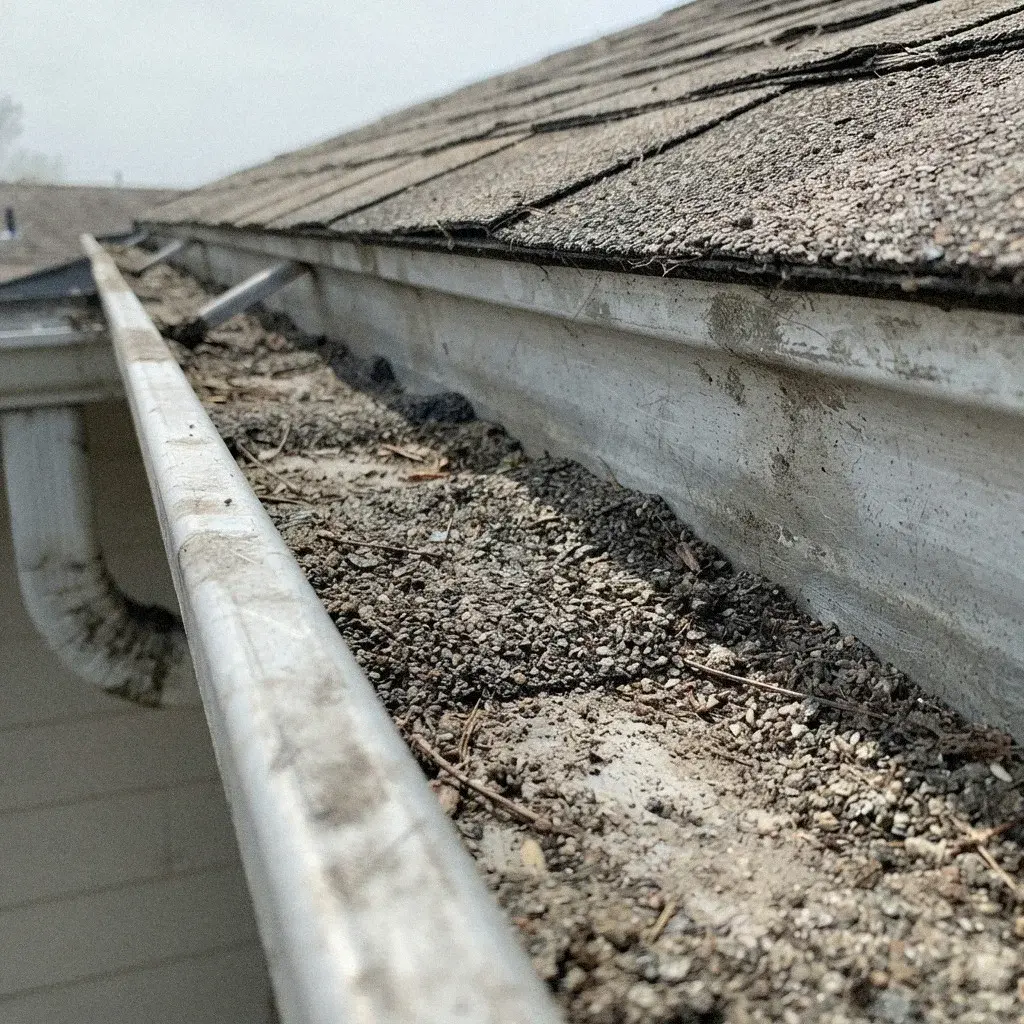
- Shiny, dark, or gray bare patches on the shingle face, with gritty debris collecting in gutters below.
- Cause
- Normal aging sped up by long wet-season dampness, poor attic ventilation, and UV exposure at exposed courses.
- Progression
- Gradual over years, but it accelerates once bare patches let water reach the asphalt mat directly.
- If Ignored
- Left untreated, bare mats absorb UV and moisture, curl at exposed edges, and let water reach the underlayment and decking beneath.
- Roof Materials
- Granule loss is easiest to spot after a dry stretch in July or August, when shingles are fully dry and bare patches show real contrast against the surrounding surface. Scheduling a Roof Replacement in that same late spring through early fall window matters, since crews book solid during Bellevue's short dry season.
- Timeline
- an estimated $11000–$30000
The Real Cost of Leaving It
Granule loss gets mixed up with moss staining, since both leave shingles looking dark and patchy from the ground. Moss holds water and grows a visible mat; granule loss just exposes bare asphalt with no plant growth. Scrape a suspect patch on a ladder inspection: moss lifts off in clumps, while bare asphalt stays smooth and slightly tacky underneath. The separating test is touch and sight up close. Moss comes away as a green or black mat over intact granules underneath. Granule loss leaves a shiny, dark gray shingle surface with no organic growth at all, and often a matching pile of loose grit collecting at the eave or in the downspout below.
How the Work Is Done
There's no product that restores worn granules; once the asphalt mat is exposed, that shingle is compromised for good. Roof Replacement swaps the affected field for new composition shingle, along with checking decking, valley metal, and drip edge for wear hidden underneath the old material.
Spot-sealing a bare patch with roofing cement only slows water intrusion at that one spot; it does nothing for granules lost elsewhere on the same course. A full Roof Replacement is the only fix that resets the shingle's ability to shed Bellevue's long wet season evenly across the whole roof.
A wet, mossy season here does more damage than any single storm. Roofs in Bellevue wear out from months of overcast weather that never quite dries the shingles, not from hail or ice dams. Shade from conifer canopy near neighborhoods like Bridle Trails and Somerset keeps north-facing slopes damp long after rain stops, and that moss lifts edges and shortens roof life. The licensed pros we connect you with know how that plays out on comp shingle, cedar shake, and low-slope roofs alike.
Moss treatment or moss removal: what each one does
| Your situation |
What normally fits |
|---|
| A leak rarely starts where the water shows up inside. Flashing, valleys, and the joints around anything that pokes through the roof are where wet-season water finds a way in, and gutters clogged with moss or debris just send more of it toward the edges. Tracing it back to the source is most of the actual work. | Most reroofs here start with moss lift, not storm damage. Once moss gets under a shingle edge it holds water against the surface and never lets it dry between rain spells. Left alone through a wet season, that damp edge curls, the granules wash thin, and a patch job turns into a full tear-off sooner than the shingle's age alone would suggest. |
| Getting a straight answer on roof condition shouldn't require guesswork. The licensed pros connected through this site look past the shingles at flashing, gutters, and attic ventilation to explain what's actually happening and what it would take to fix it, so a Bellevue homeowner can decide with real information instead of a sales pitch. | Roof problems here rarely announce themselves. Moss creeps under an edge, a valley holds water a season too long, a vent stays blocked through another wet stretch, and the deck underneath goes soft before anyone climbs up to look. A short visit from the licensed pros we connect you with turns that guesswork into a plain list: what is failing, what can wait, what cannot. |
| Roof problems in this region build slowly. Moisture works into flashing and valleys over many wet months before a ceiling stain gives it away. Waiting for a visible leak means the damage underneath is already older than it looks. Checking a roof before symptoms show costs far less than repairing what months of trapped water leave behind. | Flashing and valleys take the brunt of a long wet season, and they're usually the first thing to fail once sealant ages or metal shifts underneath shingles. The licensed pros in this area can check those spots, clear clogged gutters, and flag ventilation gaps before a small drip becomes a bigger repair bill. |
What Is Worth Trying First
From the ground, a homeowner can scan for shiny or dark patches with binoculars and check gutters for gritty buildup after rain. Getting on the roof to assess valley wear, flashing condition, or fastener sealant is not a ladder job for most people; that inspection belongs with the pros this site connects you to.
What It Means for the People Inside
Granule loss itself isn't a health hazard, but the bare asphalt it exposes lets water reach the decking faster, and trapped moisture under poor attic ventilation can lead to mold on sheathing over time. That's a building-durability problem more than an air-quality one for most Bellevue homes.
Ready To Get Your Roof Looked At?
Most granule loss jobs in Bellevue land between an estimated $11000 and $30000, and the roof decides where inside that. Rot and soft decking here come from trapped moisture and poor attic ventilation, not insects, so pest treatment rarely belongs in a Bellevue reroof estimate. If the licensed pros we connect you with find soft sheathing near Bridle Trails or Somerset's shaded lots, expect a conversation about ventilation and skip sheathing, not a pest bill. pricing guide.