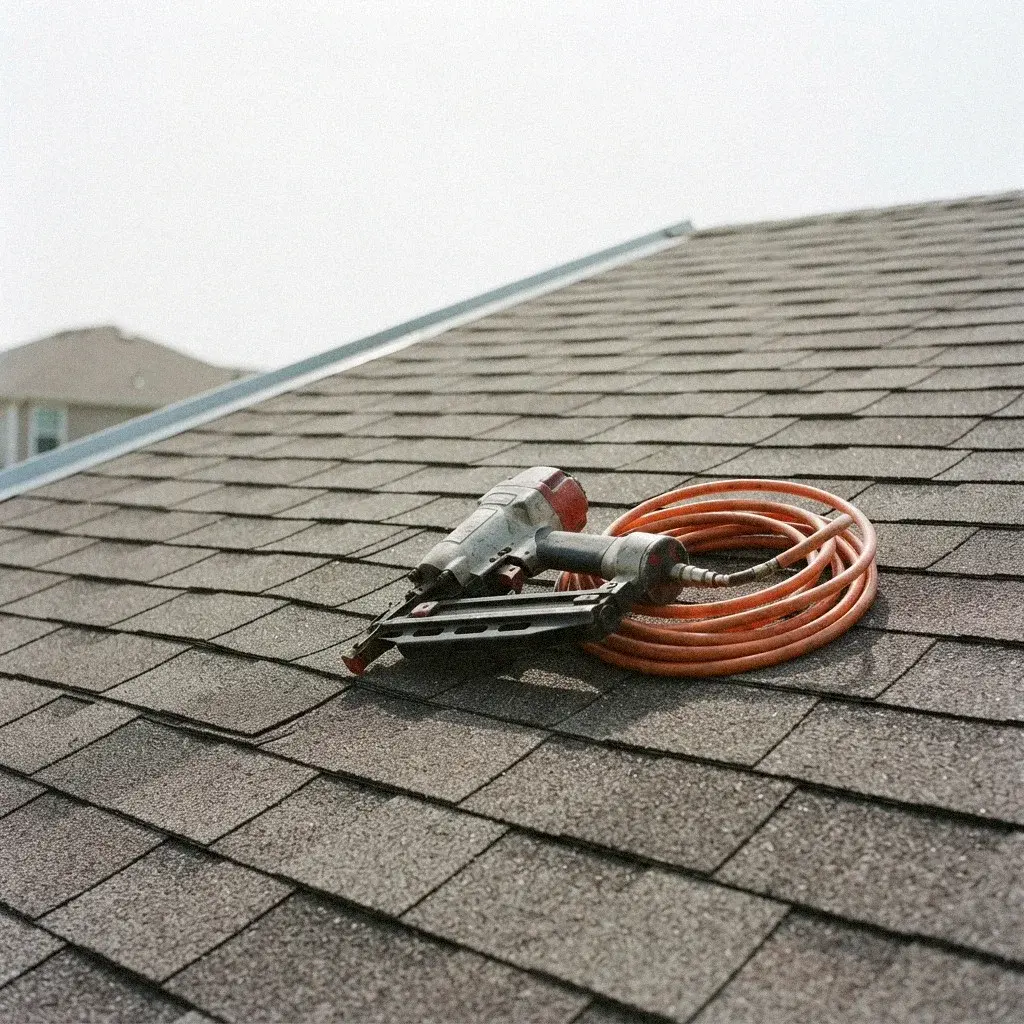
A nail pop is exactly what it sounds like: a roofing nail that no longer sits flush with the shingle above it. The shank backs partway out of the deck, and the head pushes up a small bump under the shingle surface, sometimes breaking through as a raised dot or a cracked dab of sealant. On a Bellevue roof, where shingles stay damp for long stretches of the year, this is one of the more common small defects a homeowner notices during a gutter cleaning or a walk around the yard.
How It Shows Up
Look along a shingle course at a low angle in afternoon light and a nail pop reads as a faint ridge or blister, often lined up with the row of fasteners just below the one above it. Sometimes the shingle tab has cracked at that spot. Sometimes it is just a shiny fleck where sealant has been pushed up and split. On a two-story colonial near Bridle Trails or a rambler off Coal Creek Parkway, these tend to cluster wherever the deck flexes most.
What Pushes A Nail Out
Wood swells and shrinks with moisture the way metal expands and contracts with temperature, and a roofing nail sits between two materials moving at different rates. Repeated wetting and drying of the sheathing, seasonal expansion and contraction of the shingle itself, and foot traffic on the roof can all walk a nail head upward over time. It rarely happens all at once. It is usually a slow creep across several wet seasons before the head is visible at the surface.
The Role Of Deck Movement
Sheathing that flexes slightly under weight or moisture load gives fasteners less to grip. A nail driven into a spot where the deck has softened, warped, or separated slightly at a seam will not hold as tightly as one driven into solid, dry sheathing. This is why nail pops sometimes cluster near valleys, near a plumbing vent, or along an edge where water has lingered longer than elsewhere on a Bellevue roof shaded by conifers.
Nailing Line And High Nails
Shingle manufacturers specify a nailing line, a narrow band where each fastener needs to land to catch the layer below and hold the tab down correctly. A nail driven above that line, sometimes called a high nail, has less shingle material gripping it and is more prone to working loose. A nail driven at an angle instead of straight in has a similar problem: the shank never seated fully, so there was less holding power from the day it went in.
Why An Exposed Head Matters
A nail pop starts as a fastener that never fully seated, or one that's slowly backing out as the deck beneath it moves with seasonal expansion and contraction. On the surface it shows up as a small raised bump under a shingle, or a dab of sealant marking where a high nail head was caught and dabbed during an earlier repair. The shank loses its grip in the sheathing, the head lifts along the nailing line, and once it breaks through, that exposed point becomes a pinhole leak. It's a small sign, but it usually means something underneath is shifting.
From Pinhole To Interior Stain
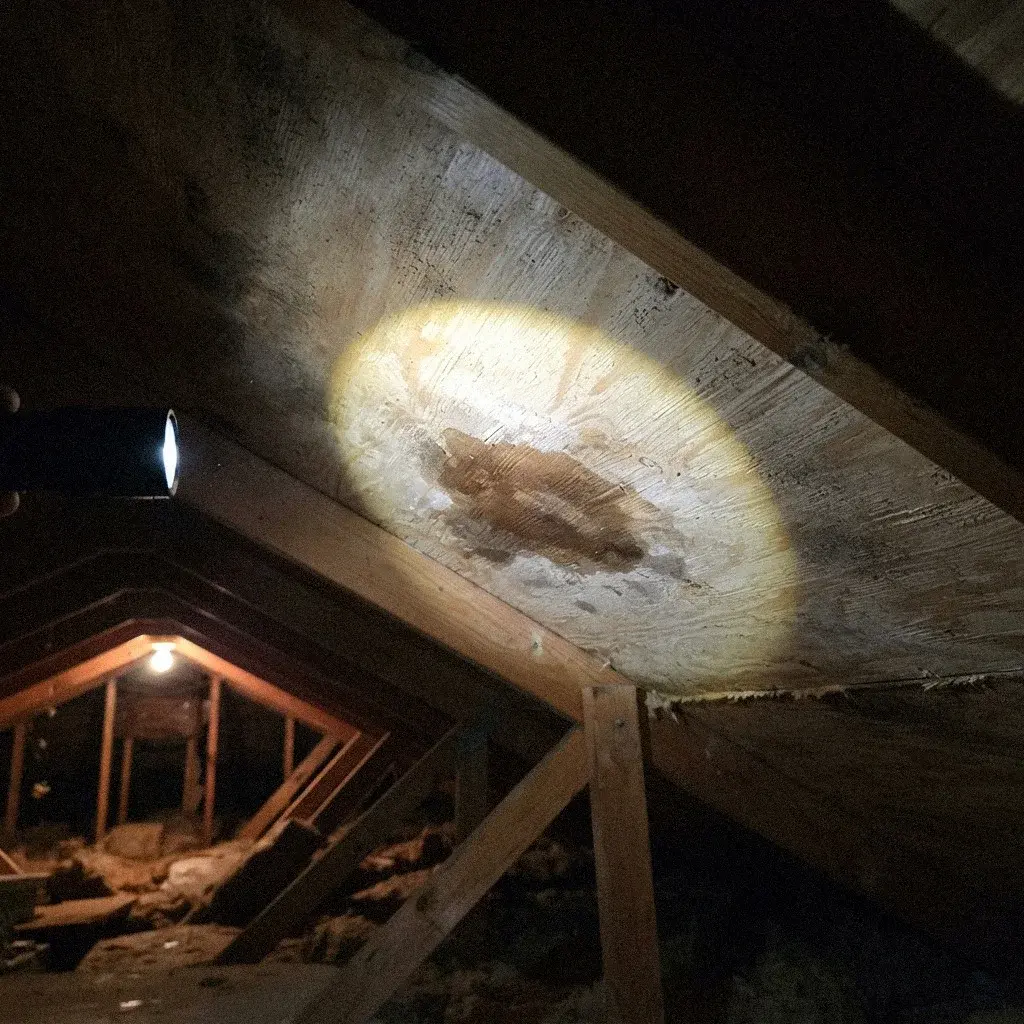
A pinhole leak rarely shows up as a wet ceiling right away. Water tends to travel along the underside of the sheathing or down a rafter before it finds a spot to show through drywall, so the stain inside a house often sits several feet from the actual nail pop on the roof above it. That gap is part of why a small raised bump outside can go unnoticed for a season before anyone connects it to a stain on a bedroom ceiling.
Why Some Roofs Show More
Roofs with more shade and more standing moisture tend to show more nail pops over their lifespan, since the sheathing underneath is cycling through wet and dry more often. Homes tucked under heavy tree cover in Somerset or along the Cougar Mountain hillside see this more than homes on an open, sunnier lot in Crossroads. Moss buildup on a shaded course can also hold water against the shingle right where a fastener sits, adding to the cycle.
One Pop Or A Pattern
A single nail pop on an otherwise sound roof is a minor, localized thing. A whole course of them, or pops appearing in a repeating line across several courses, points to something more systemic: a batch of nails driven at the wrong angle, a section of deck that flexes more than the rest, or a roof reaching the age where multiple fasteners are loosening at once. The difference between one and a pattern is worth noting before drawing any conclusion.
What Not To Assume
A raised bump does not automatically mean the sheathing underneath is failing, and it does not mean the whole roof needs attention. It is a localized fastener issue first. Reading it as proof of deeper decking trouble, or ignoring it entirely because it looks minor, are both mistakes. The honest position is that a nail pop is a signal worth investigating, not a verdict on the roof's condition by itself.
Checking It Yourself
From the ground, binoculars or a zoom photo taken in raking light can often show whether bumps are scattered or lined up in a pattern. From a ladder, at the eave line only, a homeowner can sometimes feel a slightly raised spot by hand without walking the roof itself. Anyone without safe roof access, especially on a steeper pitch common in some of Bellevue's hillside neighborhoods, is better off having someone else take that closer look.
When To Get It Looked At
A nail pop noticed early, before the sealant cracks or the shingle splits, is a small fix. One left through another wet season on a roof over Kelsey Creek Park or anywhere shaded and slow to dry has more time to become a real leak. If a homeowner in Bellevue spots raised bumps or cracked sealant dots along a shingle course, the licensed pros we connect you with can take a closer look and say whether it is one fastener or a wider pattern.
Dealing with this in your home?
Bellevue roofs age on their own schedule. Wooded lots near Bridle Trails and Somerset stay shaded long after storms pass, and conifer cover keeps surfaces from ever fully drying between fronts. Add a reroof window that tightens once summer ends, and small maintenance calls turn urgent fast. The sections below sort out timing, materials, and who actually answers for the work overhead.