What a Real Roof Inspection Covers in Bellevue, WA
Every part checked, why it matters, and what the findings mean for repair, maintenance, or replacement.
A roof inspection is a visual and sometimes instrumented check of the roof covering, flashings, attic, and gutters to find leaks, moss, soft spots, and wear before they cause damage, documented in a photo report with condition ratings for each area.
Four Kinds of Inspection
A roof inspection in Bellevue means something different depending on why it happens. A maintenance inspection checks a healthy roof for early trouble. A pre-purchase inspection gives a buyer or seller a condition rating before closing. A post-storm inspection follows wind or falling limbs and looks for new damage. A warranty inspection documents condition against a manufacturer or workmanship warranty. Each type shares the same basic scope but asks a different question of the same roof.
The visual inspection is the base layer under all four types. It covers the field of the roof, the flashing at chimneys and walls, the valleys, and every penetration for a pipe, vent, or skylight. In Bellevue's wet season, most failures start small at a flashing seam or a clogged valley rather than across an open field of shingles, so the inspector's attention concentrates on those joints and edges rather than walking the whole roof looking for one obvious problem.
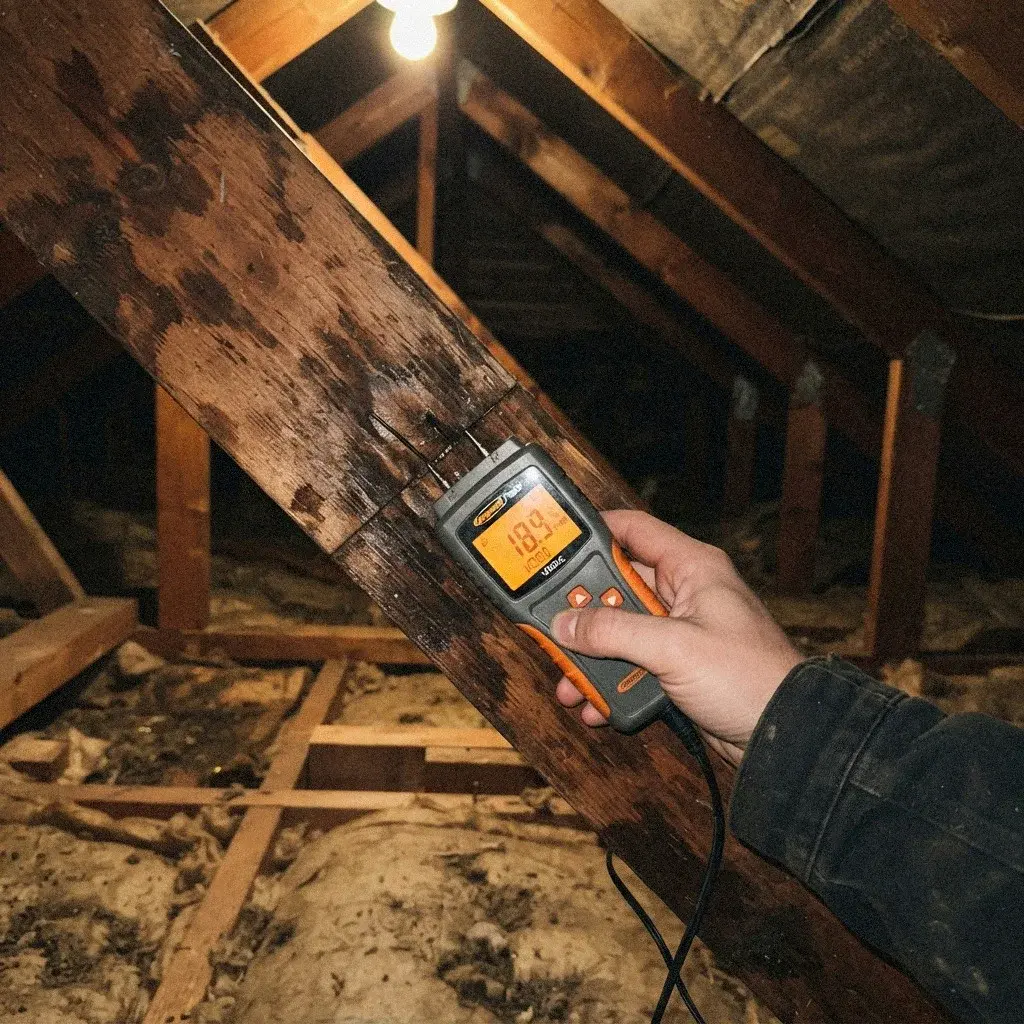
Tools vary with what the inspection needs to prove. A moisture meter reads dampness in decking without opening it up. An infrared scan can show temperature differences that suggest trapped moisture under the surface. A core sample or a small cut into decking confirms rot where a soft spot is suspected. Most Bellevue inspections never need the last two; a careful visual check plus a moisture meter reading answers most questions a homeowner in neighborhoods from Somerset to Bridle Trails actually has.
Where the Inspector Looks
The exterior scope starts with the shingle or shake field itself: curling, cracked, or missing pieces, granule loss, and moss coverage. Moss is not cosmetic here. In shaded, conifer-heavy areas like Bridle Trails, Somerset, and the Cougar Mountain and Lakemont hillsides, moss holds water against the roof covering long after a storm has passed, and an inspector notes where it has lifted shingle edges rather than just where it is visibly green.
Flashing gets checked at every place the roof meets something else: chimneys, sidewalls, dormers, and skylights. Valleys get checked for debris buildup that backs water up under the shingles above. On cedar shake roofs, which are still common enough in Bellevue's older neighborhoods to matter, the inspector also looks for split or curled shakes and thinning at exposed edges, since shake fails differently than composition shingle and ages on its own schedule.
- Roof slopes and ridges get a visual inspection first, looking for lifted or missing shingles, cracked cedar shake, moss colonies, and any soft spot that gives underfoot, which often signals a punch-through risk beneath.
- Flashing check covers valleys, chimneys, skylights, and any point where the roof meets a wall or vent pipe, since these penetrations are where slow leaks start in Bellevue's long wet stretches rather than mid-slope.
- Gutters and downspouts get checked for debris, sag, and whether water actually reaches the ground away from the foundation, which matters on sloped lots near Lakemont or Bridle Trails where runoff undermines soil.
- Attic inspection looks at sheathing from underneath for staining, checks insulation for compression or wet spots, and confirms soffit and ridge vents are clear, since blocked ventilation is a common cause of hidden rot.
- A moisture meter gets used on any sheathing that looks discolored or feels soft, giving a reading without cutting into the material, which helps separate an old dried stain from an active leak.
- Photos get taken at every finding, tied to a location on the roof, so the report shows exactly where a soft spot, missing flashing, or moss patch sits rather than describing it in words alone.
What Gets Documented
Interior scope means walking the rooms below the roof, not just the attic. Ceiling stains, peeling paint near an exterior wall, and soft or discolored drywall around a chimney chase all point back to a roof problem even when nothing shows from the yard. A pre-purchase inspection in particular treats these interior signs as leads: a stain in a Bellevue home's upstairs bedroom often traces to a flashing failure two rooms away, not directly overhead.
Attic inspection is where a lot of the real story shows up, because water that never reaches a ceiling still leaves a mark on the underside of the decking. The inspector looks for daylight through a gap, dark staining or a punch-through on the sheathing, rusted nail heads, and signs that soffit or ridge vents are blocked or unbalanced, since poor attic ventilation is a common contributor to condensation and shortened roof life in this region's marine climate.
- A maintenance inspection is a routine check, usually yearly, meant to catch small problems like moss buildup or a lifted shingle before the next wet season turns them into a leak.
- A pre-purchase inspection happens before closing on a Bellevue home and gives a buyer or their agent a condition rating on the roof, useful for negotiating price or repair credits ahead of the sale.
- A post-storm inspection follows a windstorm or falling limb, focused on impact damage, dislodged flashing, and anything that opened a path for water rather than a full top-to-bottom review.
- A warranty inspection checks whether workmanship or material issues fall under a manufacturer or installer warranty, which usually requires documentation of the original install and a clear description of what failed.
Report Versus Bid
Gutter and drainage scope matters as much as the roof surface itself in Bellevue, because a roof that sheds water well onto a clogged or undersized gutter system still causes damage. The inspector checks that gutters and downspouts are attached, sloped correctly, and clear, and traces where downspouts actually discharge. On sloped lots common near Cougar Mountain and the Lake Washington shoreline, water shed against a hillside can saturate soil rather than just overflow a gutter.
Needle and leaf debris from the conifer canopy that covers so much of Bellevue's residential terrain is a routine finding, not an exception. A gutter packed with fir or cedar debris backs water up under the roof edge the same way a clogged valley does higher up. An inspection that skips the gutters and only looks at the shingles misses one of the most common causes of edge rot this climate produces.
| Area | What's Checked | Common Findings |
|---|---|---|
| Maintenance inspection | Records condition, no work promised | Prices a specific repair or reroof |
| Written by | Inspector, sometimes a third party | The contractor doing the work |
| Includes photos | Yes, keyed to each finding | Sometimes, not always |
| Scope of repair | Described, not priced | Line-itemed with cost |
| Best used for | Home sale, insurance, planning | Deciding who does the work |
Reading the Condition Rating
A photo report turns what the inspector saw into something a homeowner, buyer, or insurer can actually review later. Each finding gets a photo tied to a location on the roof plan or a room in the house, so a soft spot near a chimney or a lifted valley isn't just a line item, it's a picture anyone can compare against the roof itself. Good documentation matters most in a pre-purchase or warranty inspection, where someone other than the inspector has to make a decision from it.
Reading a report means paying attention to the condition rating attached to each area, not just the photos. A rating might separate the field of the roof from the flashing, the valleys, and the gutters, because a roof can be sound in the field and still be failing at every penetration. A single soft spot or one section of moss lift doesn't necessarily mean the whole roof needs to come off; the rating is meant to show where the risk actually concentrates.
Reading the Findings Correctly
An inspection report and a repair bid answer different questions, and Bellevue homeowners sometimes expect one to do the other's job. The report describes condition: what's failing, where, and how severe. A scope of repair or a bid translates that into work and cost, and it should reference the findings in the report directly rather than restating a generic list. A report without a clear scope leaves a homeowner knowing something is wrong without knowing what fixing it actually involves.
This distinction matters most when more than one roofer is involved, since a report written independently of a bid gives a homeowner something to compare bids against. It also matters for insurance or warranty situations, where a report documents a condition at a point in time regardless of who ends up doing the repair. Keeping the two separate protects the homeowner from a bid that inflates a minor finding into a full reroof recommendation.
Report Versus Repair Bid
- Composition shingle is the dominant roof covering in Bellevue, with cedar shake and shingle as a real second material on older homes, and metal or membrane on flat-roofed mid-century houses.
- Moss holds water against shingles and lifts their edges, and it's treated as a maintenance issue here rather than a cosmetic one, especially under conifer cover in Bridle Trails or Somerset.
- Rot in Bellevue roofs typically traces back to trapped moisture and poor attic ventilation, not insect damage, so soft sheathing usually points to a venting or flashing problem first.
- Bellevue rarely requires a permit for a straightforward tear-off, but the threshold turns on how much decking gets replaced, not on the size of the job you had in mind. Confirm with Development Services before assuming either way.
- Composition shingle dominates Bellevue roofs, with cedar shake as the notable second material. Metal and low-slope membrane show up mostly on mid-century and modern flat-roofed homes. Clay and concrete tile is essentially absent, so tile-specific advice does not apply here.
- Registered Washington contractors are bonded and insured through L&I rather than holding a roofing-specific license, and their registration number should appear on any inspection report or bid they provide.
Frequently Asked Questions
What does a roof inspector actually check?
Bellevue homeowners near Bridle Trails or Somerset usually need one every three to five years given moss and shade from conifer cover, sooner if a windstorm dropped limbs from trees along Coal Creek Parkway or a big wet season just ended. A pre-purchase visual check before closing on a Lake Hills or Newport Hills home, or a look after a hard freeze, both count too.
How is a pre-purchase roof inspection different?
A standard visual inspection covers exterior roof surfaces, flashings, and gutters, plus an attic look for moisture staining, and takes roughly thirty minutes to an hour on a typical Bellevue house. Steeper hillside roofs near Cougar Mountain or Somerset, or homes with multiple roof planes, can run longer once attic access and gutter checks are included.
Do inspectors go inside the attic?
A moisture meter reads dampness in wood without cutting into it, useful for checking sheathing near a suspected leak. An infrared scan shows temperature differences across a roof or ceiling that can indicate trapped moisture under the surface. Neither replaces a core sample or test square, which physically opens a section to confirm what's underneath.
What is a moisture meter used for?
A report describes condition, findings, and photo documentation with no dollar figures attached. A bid or estimate follows from the report and prices out a specific scope of repair. Keeping them separate lets a Bellevue homeowner get an honest condition read before any repair cost enters the conversation.
Will the report tell me if I need a new roof?
Bring the inspection report, any prior repair receipts, and photos of known trouble spots like recurring stains in the attic or gutters that overflow near Kelsey Creek or Mercer Slough drainage areas. A punch list of specific concerns, room by room, helps the pro doing the inspection prioritize where to spend time.
Ready to schedule a full roof inspection?
Get a full roof inspection from a licensed pro connected through this site, with a written report you can actually use.
Call (425) 380-0932