Why Eastside Roofs See This
Cedar shake became common across Bellevue's older neighborhoods because western red cedar was a locally abundant building material, and its rough, split-face look suited the wooded, low-key character of streets in Somerset and Bridle Trails alike.
Enough of that original cedar stock remains standing today that reroofing it is a routine job here, not a rare one. Composition shingle has become the common replacement choice on Bellevue tear-offs, though some owners still reroof with new cedar to keep the original look.
A quote for a Bellevue reroof should read as one number, not a number plus tax added later. Sales tax applies to labor as well as materials here, and a contractor cannot legally charge it on materials alone. Ask the pros we connect you with to show the tax separately so the total is not a surprise.
Quick Facts on This
- Service life
- A cared-for cedar shake roof commonly lasts a few decades in Bellevue, though moss and shade cut that span on wooded lots.
- Roof weight
- Cedar shake sits lighter than concrete or clay but heavier than composition shingle, and swapping it for shingle changes the load the structure carries.
- Minimum slope
- Shake needs a steeper pitch than composition shingle to shed water fast, since its thick, uneven courses are less forgiving on a flat run.
- Walkability
- Cedar shake costs more than composition shingle to install and maintain, reflecting split cedar's labor-intensive application and the upkeep Bridle Trails and Somerset homeowners take on to keep moss from shortening its life.
- Damage repair
- A cracked or missing shake is usually sliced out and a matching replacement is slid into the exposure and face-nailed or hidden under the course above.
- Roof Materials
- Cedar shake covers many older Bellevue roofs, split or sawn western red cedar laid in overlapping courses on skip sheathing, giving that regional look homes near Bridle Trails and Somerset are known for. It ages through splitting, moss buildup under heavy conifer canopy, and curling as courses lose their treatment. Reroofs here often convert to composition shingle, which changes weight and ventilation needs. Worth weighing against composition shingle before committing to a like-for-like replacement.
- Timeline
- an estimated $20000–$48000
The Real Cost of Leaving It
Cedar shake gets confused with cedar shingle, its thinner, machine-sawn cousin. Shake is split or resawn and thicker with a rough, irregular face; shingle is uniformly tapered and sawn smooth on both sides, giving a flatter, more even course line across the same roof. Both are cedar and both show up on older Bellevue and Somerset homes, so from the ground they read as one material. The difference matters at repair time: shake exposure and course overlap differ from shingle, so matching a patch to the surrounding courses means knowing which one is actually on the roof.
What Fixing It Involves
A cedar reroof or conversion starts with a full tear-off down to the skip sheathing or solid decking underneath, since shake was often installed over spaced boards rather than a continuous deck. Whichever decking is found decides what underlayment and fastening pattern the new roof can use.
If the replacement covering is composition shingle rather than new cedar, the skip sheathing typically needs solid decking added first, since shingle needs continuous support along every course. Attic ventilation should be reassessed at the same time, since shake and shingle vent differently.
A wet, mossy season here does more damage than any single storm. Roofs in Bellevue wear out from months of overcast weather that never quite dries the shingles, not from hail or ice dams. Shade from conifer canopy near neighborhoods like Bridle Trails and Somerset keeps north-facing slopes damp long after rain stops, and that moss lifts edges and shortens roof life. The licensed pros we connect you with know how that plays out on comp shingle, cedar shake, and low-slope roofs alike.
Moss treatment or moss removal: what each one does
| Your situation |
What normally fits |
|---|
| A leak rarely starts where the water shows up inside. Flashing, valleys, and the joints around anything that pokes through the roof are where wet-season water finds a way in, and gutters clogged with moss or debris just send more of it toward the edges. Tracing it back to the source is most of the actual work. | Most reroofs here start with moss lift, not storm damage. Once moss gets under a shingle edge it holds water against the surface and never lets it dry between rain spells. Left alone through a wet season, that damp edge curls, the granules wash thin, and a patch job turns into a full tear-off sooner than the shingle's age alone would suggest. |
| Getting a straight answer on roof condition shouldn't require guesswork. The licensed pros connected through this site look past the shingles at flashing, gutters, and attic ventilation to explain what's actually happening and what it would take to fix it, so a Bellevue homeowner can decide with real information instead of a sales pitch. | Roof problems here rarely announce themselves. Moss creeps under an edge, a valley holds water a season too long, a vent stays blocked through another wet stretch, and the deck underneath goes soft before anyone climbs up to look. A short visit from the licensed pros we connect you with turns that guesswork into a plain list: what is failing, what can wait, what cannot. |
| Roof problems in this region build slowly. Moisture works into flashing and valleys over many wet months before a ceiling stain gives it away. Waiting for a visible leak means the damage underneath is already older than it looks. Checking a roof before symptoms show costs far less than repairing what months of trapped water leave behind. | Flashing and valleys take the brunt of a long wet season, and they're usually the first thing to fail once sealant ages or metal shifts underneath shingles. The licensed pros in this area can check those spots, clear clogged gutters, and flag ventilation gaps before a small drip becomes a bigger repair bill. |
Code and permitsWhether a cedar reroof needs a City of Bellevue building permit depends on the added weight and how much sheathing gets replaced, not on the fact that cedar is being removed. A licensed, L&I-registered contractor pulling the permit will know which threshold applies to your job.
Where It Spreads To
Cedar shake degrades mainly through cupping and splitting from repeated wetting and drying, moss and lichen holding moisture against the wood, and gradual thinning where wind and debris wear down exposed edges. Each shows up gradually rather than as a single sudden failure.
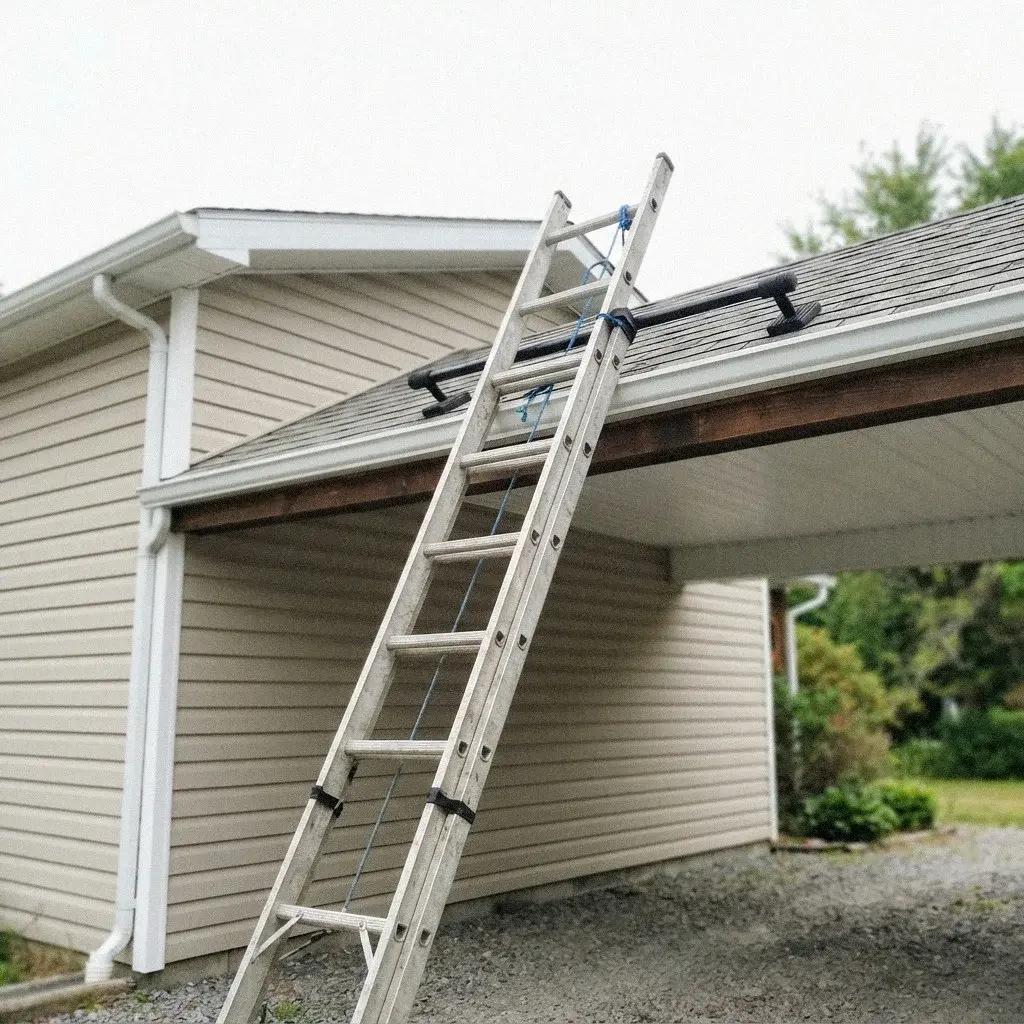
Where Ladder Work Turns Dangerous Fast
Individual shake replacement is possible for a confident homeowner, but matching old exposure and weathered color, keeping the fastening pattern correct, and working safely on a roof this textured is where most DIY attempts go wrong. Wider splitting or soft sheathing is a job for the licensed pros we connect you with.
What It Means for the People Inside
Damp cedar that stays wet for extended stretches, especially under moss, can support mold and fungal growth on the underside of the decking, not just surface staining on the shakes themselves. That's a reason to address a spreading soft or dark patch promptly rather than waiting out another wet season.
Ready To Get Your Roof Looked At?
Most cedar shake roofs jobs in Bellevue land between an estimated $20000 and $48000, and the roof decides where inside that. Rot and soft decking here come from trapped moisture and poor attic ventilation, not insects, so pest treatment rarely belongs in a Bellevue reroof estimate. If the licensed pros we connect you with find soft sheathing near Bridle Trails or Somerset's shaded lots, expect a conversation about ventilation and skip sheathing, not a pest bill. pricing guide, and the service that handles this is Roof Replacement.