Condos & HOAs
Condo & HOA Roofs
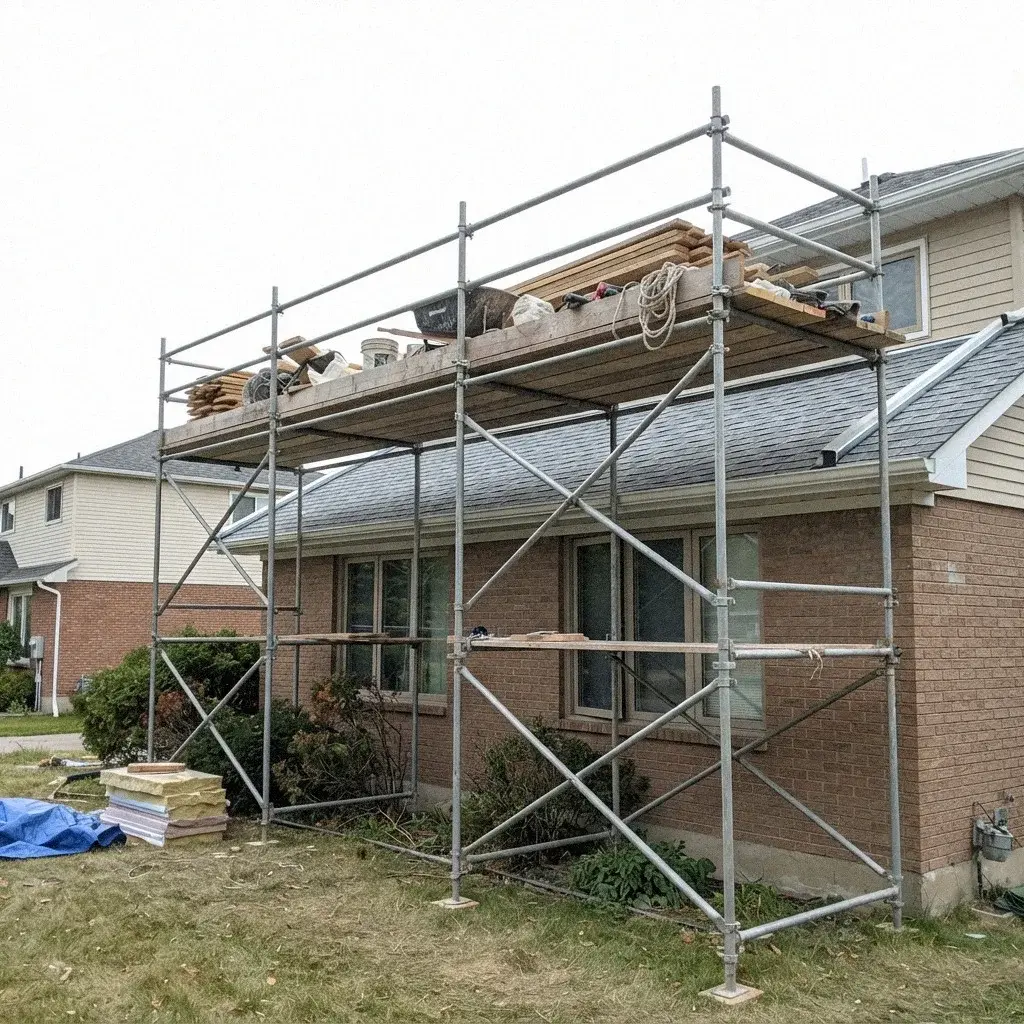
Roof work scheduled around services and funded in phases a volunteer board can approve.
A church or nonprofit roof takes planning around the worship schedule, a phased scope a volunteer board can approve in pieces, and care around steeples, bell towers, and sanctuary interiors where a leak reaches plaster ceilings, stained glass, or a pipe organ. The licensed pros we connect you with in Bellevue can scope it in phases.
A church roof in Bellevue rarely fails on the congregation's schedule. Steeples and bell towers sit above the sanctuary and fellowship hall like separate small buildings, each with its own flashing details, and a leak there tracks down through plaster ceilings before anyone on the ground floor notices. Weather off the Pacific settles into valleys and penetrations over weeks, not one storm, so by the time a stain shows above the pews the deck underneath may already be soft.
Most Bellevue churches carry mixed steep and low-slope geometry: a steep nave roof feeding into a flatter fellowship hall or classroom wing added decades later. Each transition is a place water can back up, and stained glass windows set into gable ends add another edge for flashing to fail around. A volunteer board weighing a roof decision is usually looking at several roof types on one building, not one uniform surface, which changes what a fair scope even looks like.
Timing is not abstract for a congregation. A crew on the roof during a wedding, a funeral, or a weekday preschool program is a real conflict, not a scheduling footnote. Bellevue's practical reroof window runs from late spring into early fall, and that window gets booked early, so a board deciding in October is choosing among what is left, not what is best, unless the decision starts months ahead of the worship calendar.
Sanctuary interiors punish a leak more than almost any other commercial space. Plaster ceilings, pipe organs, stained glass, and donated furnishings sit under a roof that may be sixty or more feet up, so water finds its way into places a maintenance volunteer cannot easily inspect. Moss holds moisture against composition shingle or cedar shake on the steep slopes, and needle debris from the conifer canopy common across Bellevue collects in valleys and gutters feeding the low-slope sections.
A bell tower or steeple is also a structure in its own right, often built with different materials and different access than the main roof. Flashing where a tower meets the main roof plane is a known failure point, and standing water on a low-slope membrane behind a steeple can sit undetected for a season before it shows as a stain inside. The licensed pros we connect you with can walk both the steep and low-slope sections and say plainly which parts are original and which have already been patched.
| Issue | What It Looks Like | What's At Stake |
|---|---|---|
| Sanctuary leak during services | Capital campaign, memorial gifts, grants | Operating budget or loan |
| Decision maker | Volunteer board vote | Property manager or owner |
| Roof geometry | Steeple, bell tower, mixed steep and low-slope | Single low-slope field |
| Scheduling constraint | Services, weddings, funerals | Business hours only |
| Interior at risk | Sanctuary, plaster ceiling, pipe organ | Office space, storage |
| Typical approach | Phased scope across seasons | Single full replacement |
| Interior water damage | Plaster ceiling stains, stained glass frame rot | Sanctuary use paused, pews and organ at risk |
| Scheduling around services | Work fitted between weekday programs and events | No disruption to worship, weddings, or funerals |
Money for a church roof rarely arrives as one check. It comes through a capital campaign, a grant application, memorial gifts given in someone's name, and general donated funding, often pledged over more than one year. That pushes many congregations toward a phased scope: the steep sanctuary roof this year, the fellowship hall or classroom wing low-slope section next, rather than one contract covering the whole building at once.
Phasing is a legitimate way to fund a roof, but it has to be planned as one project split in two, not two unrelated jobs. Flashing details where an old section meets a new one need to match, and a contractor who only sees the current phase can leave a transition that fails in a few years. Asking for a full-roof assessment up front, even when only part of it gets funded now, keeps the later phase from undoing the first.
A volunteer board making this call is usually not made up of building professionals. That is normal, and it means the useful question is not whether a board member can judge a bid alone, but whether the proposal explains the roof in terms the board can carry back to the congregation: what is being replaced, what is being repaired, and why the two steep and low-slope sections are priced differently.
Worship schedule drives everything about when work happens. Weekly services, weddings, funerals, and weekday preschool or tutoring programs all need the building usable, and a funeral cannot be rescheduled around a crew's timeline. A realistic plan names which days are protected and builds the noisy tear-off work, especially on the steep sanctuary section, around them rather than around the contractor's convenience.
Because Bellevue's dry-season window is short, a congregation that waits until a spring leak to start planning is often choosing between rushing a phased decision or living with a tarp through another wet season. Starting the conversation in winter, well before weddings and graduation-season events fill the calendar, gives a board time to line up a campaign, get bids on the actual mixed geometry, and still land in the workable months.
A nonprofit sharing the same building type faces a similar mismatch between funding cycles and roof age. Grant applications and board approval take time, and a roof does not wait for the grant cycle to line up with the leak. Many nonprofits in Bellevue operate out of older converted buildings with the same skip sheathing and cedar-to-composition conversion questions as an older church, which affects both weight and attic ventilation once a reroof is planned.
The same instinct that serves a church board serves a nonprofit board: get the roof assessed as a whole before deciding what gets funded first. A single low-slope roof over an office wing looks like a smaller, simpler job than a sanctuary, but membrane roofs fail quietly, and a nonprofit with donated funding to protect has less room to redo a repair that was scoped too narrowly the first time.
None of this changes what a bid should include. A congregation weighing a phased scope should still see the building's full roof condition in writing, not just the section under discussion, so the board is choosing a sequence rather than guessing at what comes next. That document is also what a capital campaign or grant application can point to when donors ask what the money is actually funding.
What a church or nonprofit board in Bellevue is really deciding is not just steep versus low-slope or this phase versus that one. It is how to protect a sanctuary, a bell tower, and the programs that run through the building all week, on a funding timeline that moves slower than the weather does. That is worth asking about before a leak forces the question.
A leak in a sanctuary is not the same problem as a leak in a warehouse. Water tracking down behind plaster ceiling medallions or staining a wall near stained glass can ruin work that a memorial gift paid for and that no grant application will fund twice. Churches across Bellevue and Kirkland schedule roof work around what the ceiling below is worth, not just what the shingles cost.
Bellevue roofs age on their own schedule, shaped by shade, slope, and how long a surface stays wet after rain rather than by any single storm. A property near dense conifer cover holds moisture longer than one out in the open. Local registration status and bond coverage are worth confirming before anyone climbs a ladder on your home.Snohomish, Clyde Hill and Issaquah. Shaded, north-facing roof sections in Bellevue stay damp longest after rain, and that's exactly where moss takes hold and starts lifting shingle edges. It's a maintenance issue, not a cosmetic one. The licensed pros we connect you with treat moss removal as part of protecting the roof, not just how it looks.
A quote is only useful if it says what happens to the decking, the flashing, and the ventilation, not just the shingle brand. The licensed pros we connect you with write that detail into every estimate, so a homeowner can compare bids on substance instead of a single bottom-line number.Cost depends on what a roof actually needs, and that only shows up close up. A read on shingle condition near Bellevue Way or a shaded lot by Bridle Trails still means someone climbing the ladder. The licensed pros we connect you with can price a tear-off, a moss-heavy reroof, or a cedar-to-composition conversion once they've seen the deck itself, not a photo of it. pricing guide, and the commercial overview covers how a scheduled program works.
Condo & HOA Roofs
Commercial Roofing
Industrial Roofing
Most congregations we see in Bellevue and Redmond ask for scope that can be phased across two or three fiscal years, tied to what a capital campaign has actually raised rather than a single lump payment. A phased plan lets the volunteer board commit to the steepest, most exposed slope first and hold the low-slope fellowship hall roof for a later phase.
Steeples and bell towers combine steep, hard-to-access slopes with flashing details that ordinary roofs don't have, and any low-slope section over a fellowship hall or education wing drains differently and fails differently. A church roof in Bellevue or Issaquah often needs two separate repair approaches under one contract.
Weekday programs, choir practice, and a full worship schedule mean there is rarely a week with no activity in the building. Crews we connect churches with in Bellevue and Sammamish typically plan noisy tear-off work around weekdays and hold quiet finish work for whenever a wedding or funeral is booked.
A donated roof fund or grant application usually covers materials and labor, not always the full scope a volunteer board hoped for once the old covering comes off and hidden deck damage shows up. Getting a written phased-scope estimate before the campaign closes helps the board know what phase one actually buys.
Get a phased scope and a schedule built around your worship calendar from the licensed pros we connect you with in Bellevue.
Call (425) 380-0932