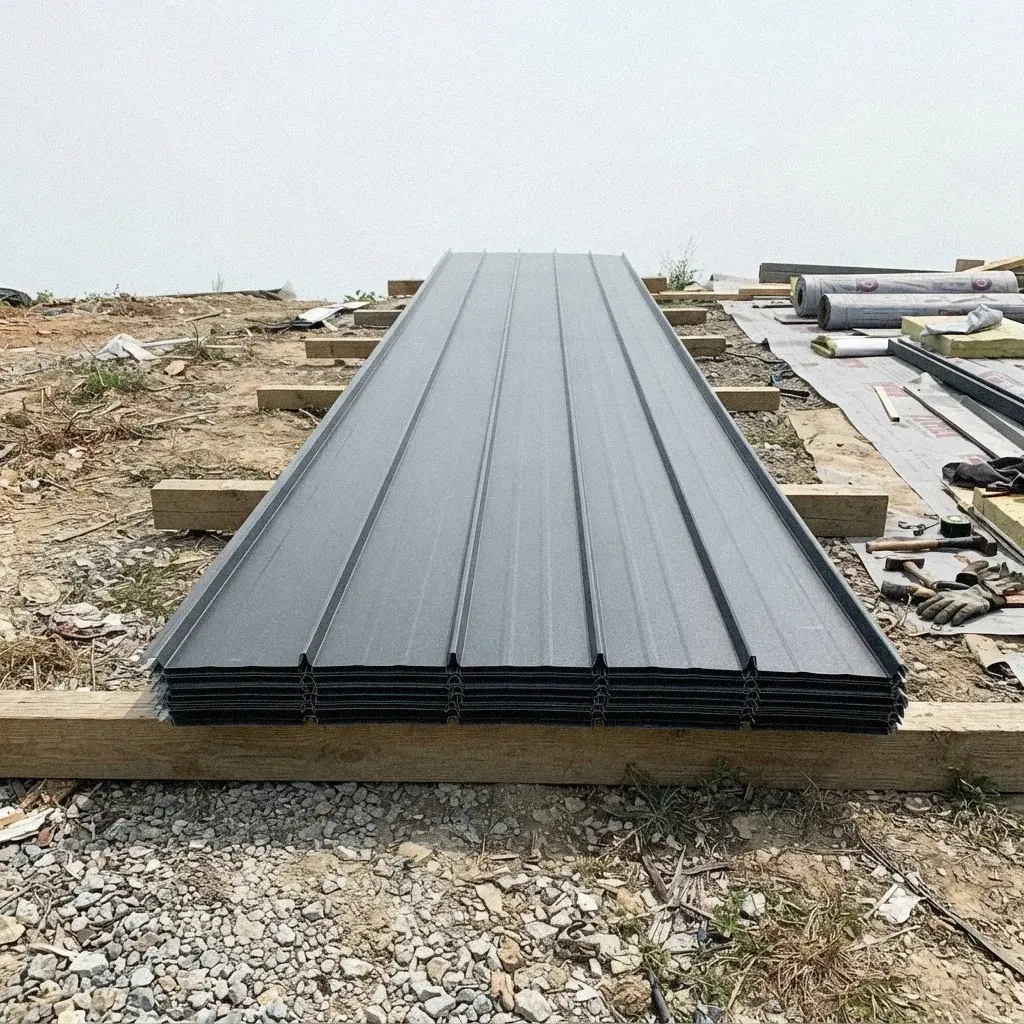
Metal vs Composition Roofing in Bellevue
How standing seam and asphalt composition shingles compare for Bellevue homes, from dead load to resale value.
Composition asphalt shingle costs less and suits most Bellevue roof pitches; standing seam metal weighs less, sheds moss better, and outlasts shingle by decades. Metal costs more upfront but often wins on lifespan, snow performance, and resale over a long hold.
Service Life and Long-Term Durability
Bellevue reroofs settle into two real choices: composition asphalt shingle or standing seam metal. Both hold up against the region's long wet season, but they age differently and cost differently to own over time. This page sets the two side by side across the points that actually matter here: how long each lasts under Bellevue's conifer canopy and moss pressure, what each weighs on the structure, how they look next to neighbors from Enatai to Somerset, and what a reroof or eventual resale looks like for each material.
Composition shingle dominates Bellevue roofs today, and for good reason: it is familiar, widely stocked, and easy for the licensed pros we connect you with to install and repair on tight schedules. Metal roofing shows up more on modern builds, mid-century flat and low-slope homes, and increasingly on cedar-to-metal conversions where a homeowner wants out of the moss-and-moisture cycle for good. Neither material is wrong for this climate. The right one depends on how long the homeowner plans to own the house and how much upkeep they want.
Service life is where the two materials separate the most. A well-installed composition shingle roof in Bellevue's damp, shaded conditions typically needs replacement well before a standing seam metal roof does, since metal sheds moss and standing water far more effectively than a shingle mat that traps it against the granules. That gap narrows if the shingle roof gets regular moss removal and gutter maintenance, and it widens on north-facing slopes near heavy Douglas fir and western red cedar canopy where shade keeps surfaces wet longest.
Weight, Structural Load, and Framing
Dead load is a real design factor once metal enters the conversation. Composition shingle is heavier per square than most metal panel systems, which matters on older Bellevue framing, especially homes converting from cedar shake where the original structure was sized for a lighter roof. Standing seam and other metal panel systems generally reduce the load on the roof structure compared to shingle, which is one reason metal shows up on some cedar-to-metal conversions in neighborhoods like Bridle Trails and Somerset where the framing wasn't built for a heavy overlay.
Weight matters more than most Bellevue homeowners expect. Composition shingle stays fairly light per square, while standing seam and exposed fastener panel systems vary by panel gauge but generally land lighter still once installed. That difference shapes what a recover over shingles can carry before the deck and rafters feel the load. A steep hillside lot in Somerset or Newport Hills, where framing was sized for the original covering, is not always a safe assumption for extra dead load without checking first.
- Composition shingle typically runs a couple of decades before granule loss and moss lift force a tear-off. Standing seam metal with a Kynar coating routinely runs several times longer, which matters on steep Bellevue hillside lots where reroofing access is harder to arrange twice.
- Shingle roofs carry more dead load per square, which rarely matters on standard framing but factors into recover decisions. Metal panels weigh a fraction of that, an advantage on older homes near Enatai or Meydenbauer where original rafters weren't sized for a second layer.
- Exposed fastener panels are cheaper but rely on gasketed screws that work loose as the panel expands and contracts through Bellevue's wet-to-dry seasonal swings. Concealed clip standing seam lets the panel move independently of the fastener, which holds up better over the long run.
- Shingle grades vary by weight and wind rating, and heavier architectural grades resist wind uplift better in the winter storms that move through the Eastside. Panel gauge does similar work on metal: thinner gauge flexes and can oil can, thicker gauge stays flatter under Coal Creek Parkway's wind exposure.
- Fire classification matters less for material choice here than moisture does, since Bellevue's failures come from wet weather rather than heat. Both composition shingle and metal carry adequate fire ratings for standard residential use; neither needs upgrading for that reason alone.
- Snow retention is a minor factor at typical Bellevue elevations but becomes relevant above 700 feet, where the city requires a higher design roof snow load. Metal sheds snow in sheets without retention devices; shingle holds snow in place naturally, which some hillside homeowners near Cougar Mountain prefer.
Panel Profiles Versus Shingle Grades
Panel profile and shingle grade are not directly comparable, but they drive the same outcome: how the roof performs at edges, valleys, and penetrations. Metal comes as exposed fastener panels, cheaper to install but reliant on gaskets and screws that can loosen with thermal movement, or standing seam panels joined with concealed clips that let the panel expand and contract without punching through the metal. Composition shingle comes in grades that mostly differ by mat thickness and wind and impact rating rather than by how they handle movement, since shingles don't expand and contract the way metal does.
Thermal movement is the metal-specific issue worth understanding before choosing a panel type. Standing seam with concealed clips is built to move with temperature swings, which is what keeps panels flat over time; exposed fastener panels lack that give, and repeated cycles can work fasteners loose or telegraph as light waviness in the panel, sometimes called oil canning, especially on thinner-gauge panels or darker Kynar coating colors that run hotter in direct sun. Bellevue's mild temperature range keeps this less severe than in harsher climates, but it doesn't eliminate it.
- Composition shingle repairs cleanly. A cracked or moss-lifted section near a valley or chimney flashing can be cut out and replaced without touching the rest of the slope, which keeps repair jobs small and contained.
- Standing seam repairs are more particular. A dented or scratched panel usually has to be replaced end to end because seams interlock along the full run, so a repair on a Yarrow Point or Clyde Hill metal roof often means removing more than the damaged section.
- Both materials handle Bellevue's flashing and valley points differently. Shingle relies on step flashing and valley metal tucked under the shingle courses. Standing seam integrates the panel edge directly into custom-formed flashing, which takes more shop work but seals tighter long term.
- Thermal movement drives most of the difference in long-term repair needs. Metal panels expand and contract along their length with temperature swings, so clips and closures need room to move; shingle doesn't move the same way but degrades instead through repeated wetting and drying.
Cost Tier, Resale, and Recyclability
Appearance and HOA acceptance often decide the question before the technical points do. Composition shingle blends into nearly every Bellevue streetscape without a second look, from the Bellemead neighborhood to Newport Hills, and most architectural committees have decades of precedent approving it. Standing seam metal reads as a more modern or deliberate choice, common enough on newer construction and mid-century flat-roof homes that it's not unusual, but an HOA with older design guidelines may have opinions about panel color, profile, or how it looks against neighboring composition roofs.
Noise and walkability separate the two more than most homeowners expect going in. Metal roofs carry a reputation for being loud in rain that's mostly overstated once proper decking and underlayment are in place, though a bare metal roof over open framing does transmit more sound than shingle. Walkability matters for anyone planning gutter cleaning or skylight maintenance: composition shingle tolerates foot traffic well, while standing seam panels can dent or scratch underfoot and generally call for more careful footing, which is worth factoring in on roofs with skylights or multiple valleys.
| Factor | Metal | Composition |
|---|---|---|
| Relative cost tier | Higher upfront tier | Lower upfront tier |
| Dead load on framing | Light, often under 1.5 psf | Heavier, especially multi-layer |
| Recyclability at tear-off | High scrap value | Mostly landfilled |
| Recover over old shingles | Sometimes allowed | Limited by layer count |
| Resale value impact | Careful foot traffic only | Tolerates normal foot traffic |
Noise, Walkability, and Repairs
Repairability tends to favor whichever material is more common in the immediate area, since matching materials and finding a contractor experienced with that specific system both get easier with local prevalence. Composition shingle repairs are straightforward almost anywhere in Bellevue: a damaged section gets cut out and replaced, and color matching is manageable within a few years of the original install. Standing seam repairs require matching panel gauge, coating, and profile, which is harder if the original manufacturer or run has been discontinued, though isolated panel replacement is usually possible without redoing the whole roof.
Recover-over-shingle situations point toward one clear rule: metal can often go over an existing composition shingle roof, and shingle can sometimes go over cedar shake if the deck and code conditions allow it, but neither recover works if the existing roof already carries two layers of covering, which triggers a full tear-off regardless of which material comes next. Anyone recovering rather than tearing off in Bellevue should also check the 5 percent weight threshold before assuming a recover permit isn't needed.
Which One Fits Your Roof
Cost tier, without putting a number on it, runs in a fairly consistent order: composition shingle sits at the lower end of upfront cost, standing seam metal sits meaningfully higher, and exposed fastener metal panels land somewhere between the two. Where that flips is total cost of ownership: a metal roof's longer service life and lower maintenance can offset the higher install cost over the time a homeowner actually keeps the house, while a shingle roof's lower upfront cost comes with more frequent moss removal, gutter clearing, and an earlier full replacement.
Recyclability and resale value round out the comparison. Metal roofing is broadly recyclable at the end of its service life, while composition shingle recycling exists in some markets but is far less consistent and depends on what a given hauler or facility accepts. On resale, a newer roof of either material reads well in a Bellevue listing and presale inspection, but standing seam metal often gets called out specifically as a selling point given its longer remaining life, while a shingle roof's value depends heavily on its age and visible moss or wear at the time of listing.
Metal vs Composition at a Glance
- Composition shingle is the default roof covering across most of Bellevue, from Crossroads to Lake Hills, largely on cost and familiarity with local roofing crews.
- Standing seam metal shows up more on newer builds and remodels, including some homes near the Wilburton light rail station area and modern infill closer to Downtown Bellevue.
- Moss and lichen shorten shingle life faster than age alone; metal sheds standing moisture and resists moss growth better across a wet Bellevue winter.
- Recover-over-shingle rules apply the same regardless of the new material; Bellevue's 5 percent added-weight threshold decides whether a permit is triggered.
- Metal panels are broadly recyclable at end of life; composition shingle recycling depends on whether a hauler serving the Bellevue area accepts asphalt shingle waste.
- Resale value tends to favor metal on a long hold given its lifespan, though most Bellevue listings still show composition shingle simply because it's the more common covering.
Frequently Asked Questions
Is metal roofing worth the extra cost in Bellevue?
Sometimes, but not always. A metal recover over existing composition shingle can work structurally, since panels typically weigh less per square than the shingle layer beneath. The concern in Bellevue is whether the existing roof is sound enough to build on and whether local rules on added weight or sheathing come into play. The licensed pros we connect you with can check the deck and flashing details around valleys before recommending recover versus tear-off.
Can you put metal roofing over old shingles?
Yes, if the shingle layer is dry and the deck is sound. Bellevue's roofing policy allows a recover without a building permit unless the added weight exceeds 5 percent of the existing roof weight. Standing seam over shingles also needs battens or a slip sheet so panels don't telegraph the shingle pattern underneath.
Does a metal roof lower my insurance rate?
Metal roofs cost more to install than composition shingle in Bellevue, but the gap narrows over time. Shingle needs replacement roughly every couple decades while metal often outlasts it several times over, so the lifetime cost tier gets closer even though the upfront tier stays higher for metal.
Will my Bellevue HOA allow a metal roof?
Both are walkable when dry, but technique differs. Composition shingle tolerates foot traffic across most of the field. Standing seam needs weight placed over the flat pan between ribs, not on the seams, and Kynar-coated panels scuff and show foot marks more readily than granulated shingle.
How loud is a metal roof when it rains?
Most Bellevue HOAs and architectural committees accept both. Composition shingle blends into older neighborhoods like Somerset and Newport Hills without review friction. Standing seam draws more scrutiny on hillside lots near Lakemont where committees weigh panel color and glare, though neither material is commonly restricted outright.
Weighing metal against composition shingle in Bellevue?
Weighing metal against composition shingle for a Bellevue reroof? Connect with the licensed pros we connect you with for a straight comparison.
Call (425) 380-0932