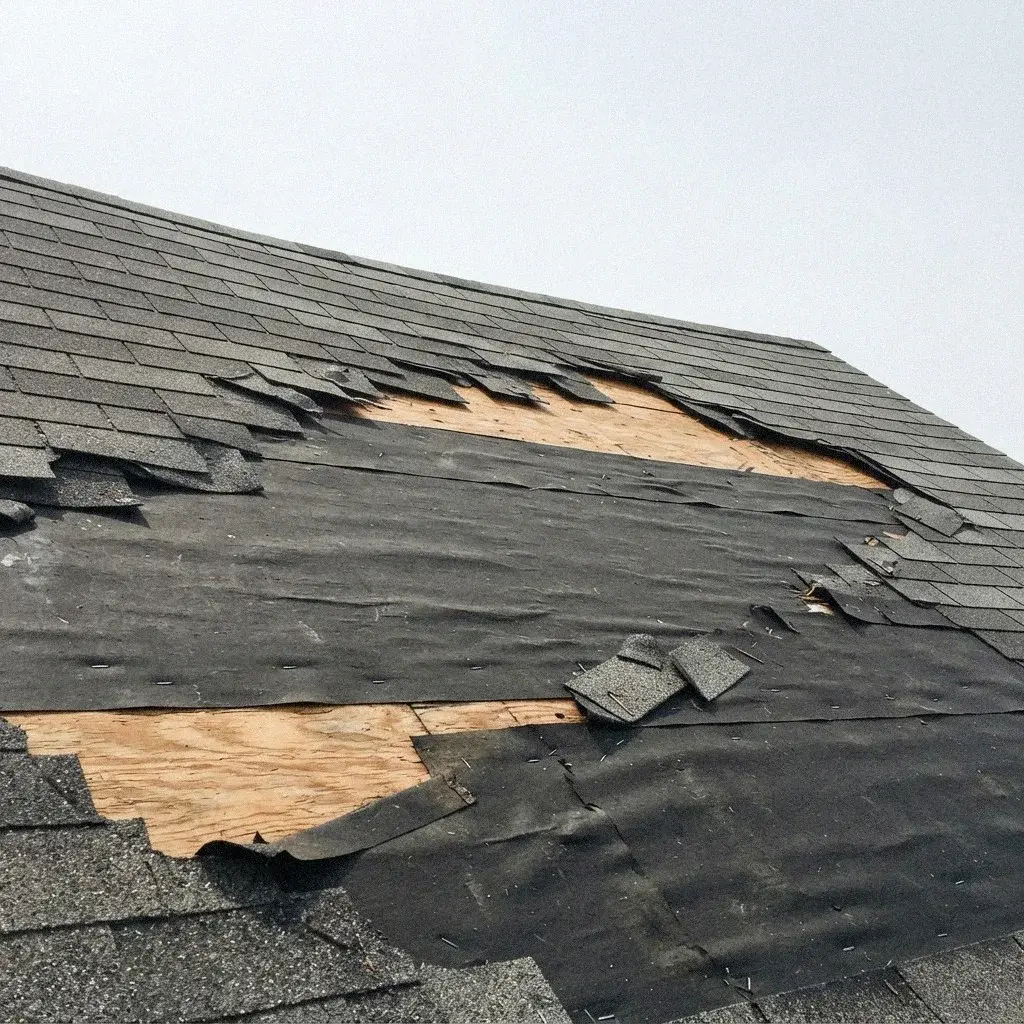
Why This Happens on Bellevue Roofs
Bellevue's roofs sit under heavy conifer cover in neighborhoods like Bridle Trails and Somerset, and shaded valleys and eaves stay damp long enough for leaks to soak into the decking unnoticed for seasons.
Homes near Kelsey Creek Park and the Cougar Mountain and Lakemont hillsides see the same pattern: a slow valley or pipe boot leak works into the substrate long before a ceiling stain gives it away.
Attic ventilation gets overlooked until a Bellevue roof starts failing from underneath. Trapped moisture and poor airflow, not insects, are what soften decking in this climate. The pros we connect you with can check soffit and ridge venting as part of any inspection, since a damp attic shortens a roof's life quietly.
What to Remember
- Location
- Shows first at valleys, eaves, and around pipe boots and other roof penetrations where flashing has already failed and water has tracked under the shingles.
- Appearance
- Soft, springy, or visibly sagging sheathing, sometimes with dark staining or a slight dip visible from a ladder along the roof plane.
- Cause
- Long-term moisture entry through failed flashing, sealant failure at a penetration, or clogged valleys, not insect activity in this region.
- Progression
- Slow, spread over multiple wet seasons, then sudden once fasteners lose their grip and the covering above starts to shift.
- Damage
- Ignored rot spreads to rafters and trusses, risking sagging, deck failure, and interior leaks that damage insulation, drywall, and framing throughout the Bellevue home.
- Roof Materials
- Bellevue's wet season, running through the fall and winter months, is when trapped moisture does the most damage, so a spring inspection often catches decking that softened over the previous months of rain.
- Roof Type
- an estimated $600–$4500
Why It Gets More Expensive
Rotted decking gets mistaken for a simple shingle leak, since both show up as a ceiling stain or attic dampness near the same valley or penetration. The test is pressing on the roof surface from a ladder near the stain: shingles alone flex normally, while rotted decking gives with a soft, springy feel underneath.
How the Work Is Done
The rotted section of decking gets cut back to solid wood and replaced with matching sheathing, tied into sound substrate at the rafters, then covered with new underlayment before any shingle goes back down.
Flashing, counterflashing, and the pipe boot or valley that let water in get rebuilt at the same time, since new decking under a leak that was never fixed just rots again on the same timeline.
Wet-season damage tends to hide in the details: a valley that channels water where it shouldn't, a vent boot gone brittle, moss holding moisture against the surface longer than it should sit there. None of that shows from the ground. A closer inspection catches it while a repair is still cheaper than waiting for it to spread underneath.
Moss treatment or moss removal: what each one does
| Your situation |
What normally fits |
|---|
| A leak rarely starts where the water shows up inside. Flashing, valleys, and the joints around anything that pokes through the roof are where wet-season water finds a way in, and gutters clogged with moss or debris just send more of it toward the edges. Tracing it back to the source is most of the actual work. | Most reroofs here start with moss lift, not storm damage. Once moss gets under a shingle edge it holds water against the surface and never lets it dry between rain spells. Left alone through a wet season, that damp edge curls, the granules wash thin, and a patch job turns into a full tear-off sooner than the shingle's age alone would suggest. |
| Getting a straight answer on roof condition shouldn't require guesswork. The licensed pros connected through this site look past the shingles at flashing, gutters, and attic ventilation to explain what's actually happening and what it would take to fix it, so a Bellevue homeowner can decide with real information instead of a sales pitch. | Roof problems here rarely announce themselves. Moss creeps under an edge, a valley holds water a season too long, a vent stays blocked through another wet stretch, and the deck underneath goes soft before anyone climbs up to look. A short visit from the licensed pros we connect you with turns that guesswork into a plain list: what is failing, what can wait, what cannot. |
| Roof problems in this region build slowly. Moisture works into flashing and valleys over many wet months before a ceiling stain gives it away. Waiting for a visible leak means the damage underneath is already older than it looks. Checking a roof before symptoms show costs far less than repairing what months of trapped water leave behind. | Flashing and valleys take the brunt of a long wet season, and they're usually the first thing to fail once sealant ages or metal shifts underneath shingles. The licensed pros in this area can check those spots, clear clogged gutters, and flag ventilation gaps before a small drip becomes a bigger repair bill. |
The Homeowner Side of This
A homeowner can watch for a sagging roof plane from the yard or a soft spot from the attic with a flashlight, but cutting into decking, resetting fasteners, and rebuilding flashing belongs to the licensed pros we connect you with.
How It Affects the Rooms Below
Left alone, rot spreads along the sheathing seams, lets moisture reach rafters and the attic ventilation path, and can end in a soft spot giving way underfoot or water reaching insulation and ceiling drywall.
Ready To Get Your Roof Looked At?
Most rotted roof decking jobs in Bellevue land between an estimated $600 and $4500, and the roof decides where inside that. Rot and soft decking here come from trapped moisture and poor attic ventilation, not insects, so pest treatment rarely belongs in a Bellevue reroof estimate. If the licensed pros we connect you with find soft sheathing near Bridle Trails or Somerset's shaded lots, expect a conversation about ventilation and skip sheathing, not a pest bill. pricing guide, and the service that handles this is Roof Decking & Sheathing Repair.