A fall storm moving through Bellevue rarely announces itself as roof damage. It shows up as a gust that rattles windows, a night of hard rain against the siding, then a morning where nothing looks obviously wrong. But wind and wind-driven rain work on a roof in specific ways, at specific edges, and the damage often sits quietly until the next storm finds the opening. Understanding what actually happens up there, from the ridge cap down to the gutters, makes the difference between catching a problem early and finding it later as a stain on a ceiling.
Wind Uplift at the Edges
Wind doesn't push evenly across a roof. It accelerates around rake edges, hips, and corners, and that faster-moving air creates uplift, a suction force trying to peel shingles away from the deck rather than push them down. Bellevue homes on exposed hillside lots, or anywhere near open ground between Cougar Mountain and Lakemont, take this harder than sheltered lots. A shingle with weak sealant or an aging tab is the first to lift, and once one lifts, the wind gets underneath its neighbors too.
Creased and Blown-Off Tabs
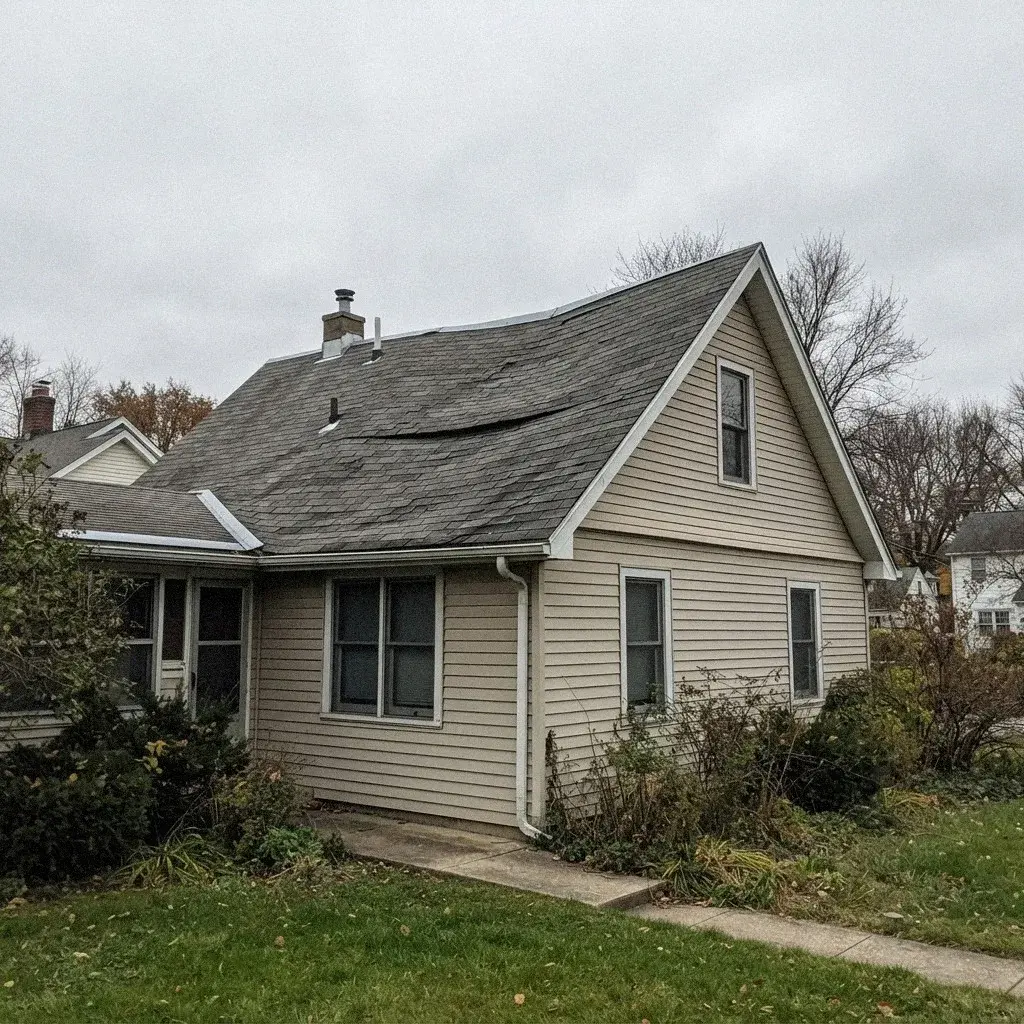
Once wind gets under a shingle, it can bend the tab back far enough to crease it without tearing it loose. A creased shingle looks intact from the ground but has broken its seal permanently and will keep working loose in every storm after. Fully blown-off shingles are more obvious, leaving a bare patch of exposed sheathing or felt, but the creased ones are the ones that get missed. Both are more common along ridge caps and rake edges than in the middle of a slope.
Branch Strikes and Impact Bruises
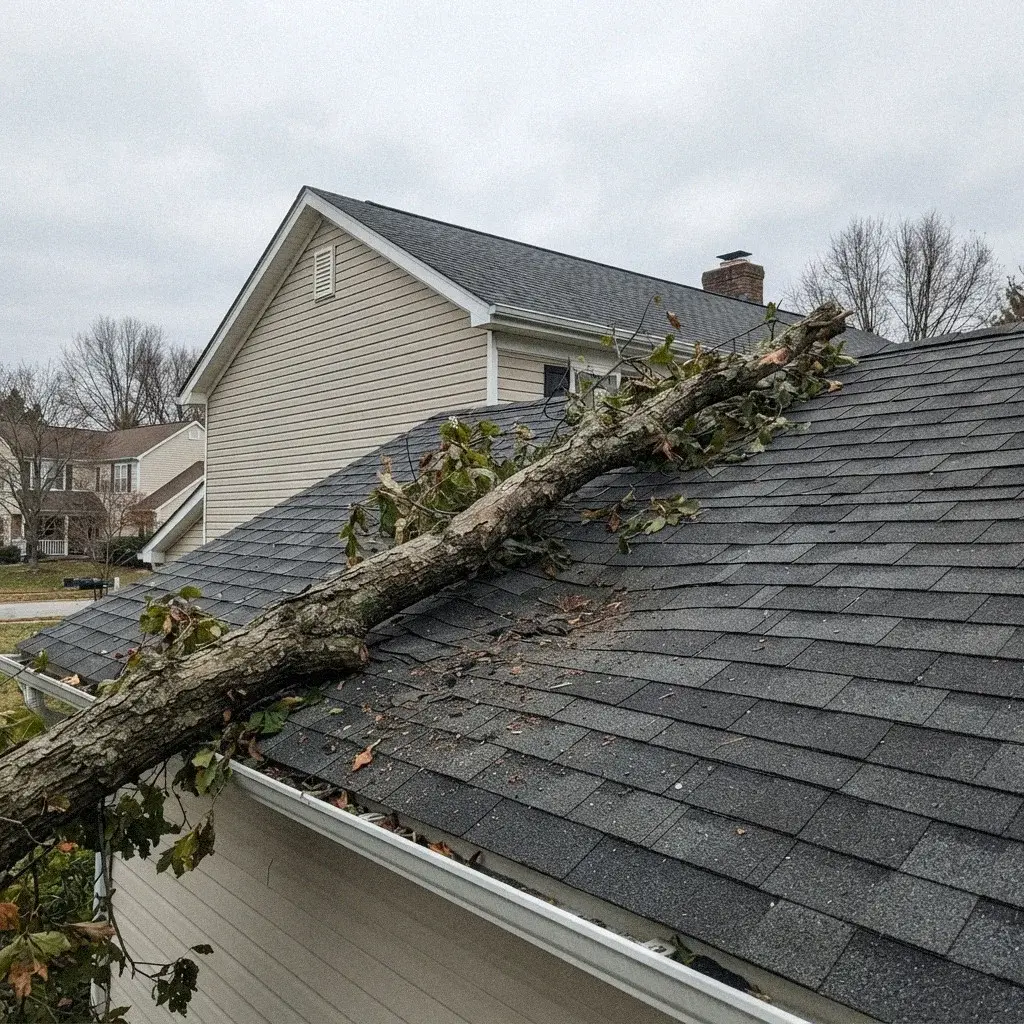
Bellevue's tree canopy, heavy with Douglas fir and western red cedar in neighborhoods like Bridle Trails and Somerset, means a windstorm is as much a falling-debris event as a wind event. A branch strike can crack shingles, punch through cedar shake, or leave an impact bruise that isn't visible until granules wear away and the underlying mat shows through. Even a smaller branch dragged across a slope by gusts can scuff a wide path of granule loss that shortens the life of every shingle it touches.
Debris Fields on the Roof
After a storm, needles, cones, twigs, and full branches often settle into valleys and against the uphill side of any roof penetration, from skylights to plumbing vents. This debris field holds moisture directly against the shingle surface long after the rain stops, which is exactly the kind of standing dampness that encourages moss growth later in the wet season. On lower-slope sections, debris can also dam water temporarily, sending it sideways under shingle edges instead of down toward the gutter line.
Gutters Overwhelmed by Runoff
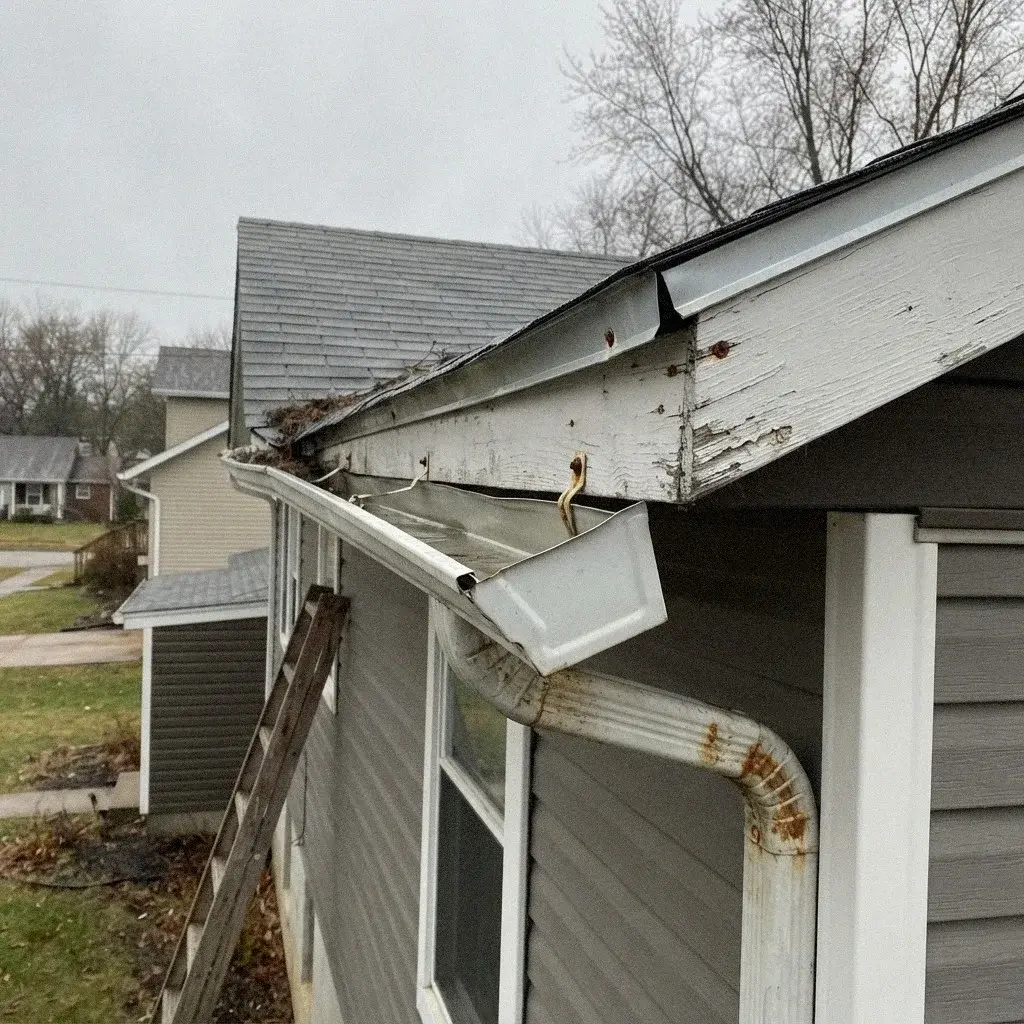
A fall storm in Bellevue often combines two problems at once: a sudden volume of rain and a fresh load of needles and leaves knocked loose by the same wind. Gutters and downspouts that were clear in September can be overflowing by the time a storm passes through. Overflowing gutters send water down the fascia and siding instead of away from the foundation, and on hillside lots, that runoff saturates soil right where the ground is already sloped and least able to shed it safely.
Wind-Driven Rain Finds Weak Flashing
Flashing around chimneys, skylights, and roof-to-wall transitions is built to shed rain falling straight down, not rain being pushed sideways by a gust. Wind-driven rain finds any gap in loose flashing, any nail that's backed out, or any sealant that's dried and cracked, and pushes water in rather than letting it run off. This is why leaks often appear during or right after a windstorm even on a roof that handled ordinary rain fine all year, and why the leak point is rarely directly above the stain inside.
Why Hips and Ridges Take More Damage
Hips and ridge caps sit at the highest, most exposed points of a roof, which is exactly where wind speed is greatest and where two roof planes meet in a seam that's already a weaker point than an open field of shingles. Ridge cap pieces are smaller and often set with less overlap than field shingles, so a strong gust has less material to grip. Homes with cut-up rooflines and multiple gables, common in Bellevue's later two-story construction, have more hip and ridge length exposed to this kind of wear than a simple gable roof.
Cedar Shake in a Windstorm
Cedar shake and cedar shingle roofs, still common across parts of Bellevue, respond to wind differently than composition shingle. Individual shakes are heavier and less likely to lift as a full tab would, but a shake that's already curled or split from age can crack further under wind flex or shear off entirely under a direct branch strike. Because shake is often installed over skip sheathing rather than solid decking, a missing shake can also mean a more direct gap straight through to the attic space below.
Low-Slope and Flat Roof Effects
Bellevue's mid-century modern homes and some newer construction include low-slope or flat sections finished in torch-down or single-ply membrane, and these respond to wind differently than a pitched shingle roof. Wind doesn't lift a membrane the way it lifts a shingle tab, but it can drive debris across the surface with enough force to abrade the membrane or work loose an edge seam or a perimeter fastener. Standing water from a heavy storm also lingers longer on a flat section, which stresses any seam that's already marginal.
What a Post-Storm Walkaround Should Cover
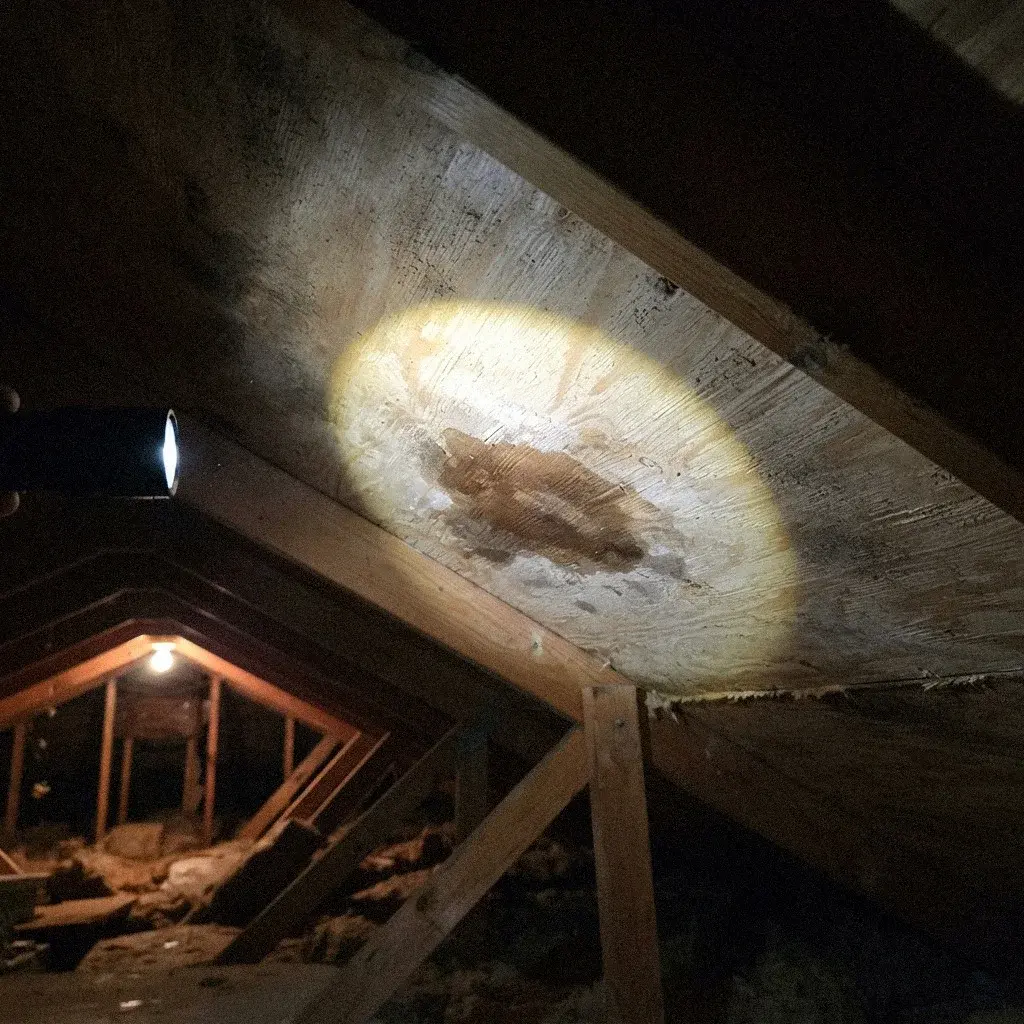
A post-storm walkaround doesn't require climbing onto the roof. From the ground, look along rake edges and ridge lines for shingles sitting at a different angle than their neighbors, check gutters for overflow staining on the fascia, and scan the yard for granules, shingle fragments, or shake pieces that came down with the debris. Inside, a flashlight check of the attic after a storm can catch a new damp spot on sheathing before it ever shows up as a ceiling stain.
What to Watch in the Days After
Storm damage doesn't always show itself immediately. A creased shingle might hold through one more dry stretch before it finally lets go in the next gust, and a small gap in flashing might only leak once wind direction shifts and drives rain at it from a different angle. Keeping an eye on the same areas, gutters, valleys, ridge lines, and any spot near a tall conifer, for a few weeks after a storm catches the damage that a single walkaround right after the wind dies down can miss.
Dealing with this in your home?
Bellevue roofs age on their own schedule. Wooded lots near Bridle Trails and Somerset stay shaded long after storms pass, and conifer cover keeps surfaces from ever fully drying between fronts. Add a reroof window that tightens once summer ends, and small maintenance calls turn urgent fast. The sections below sort out timing, materials, and who actually answers for the work overhead.