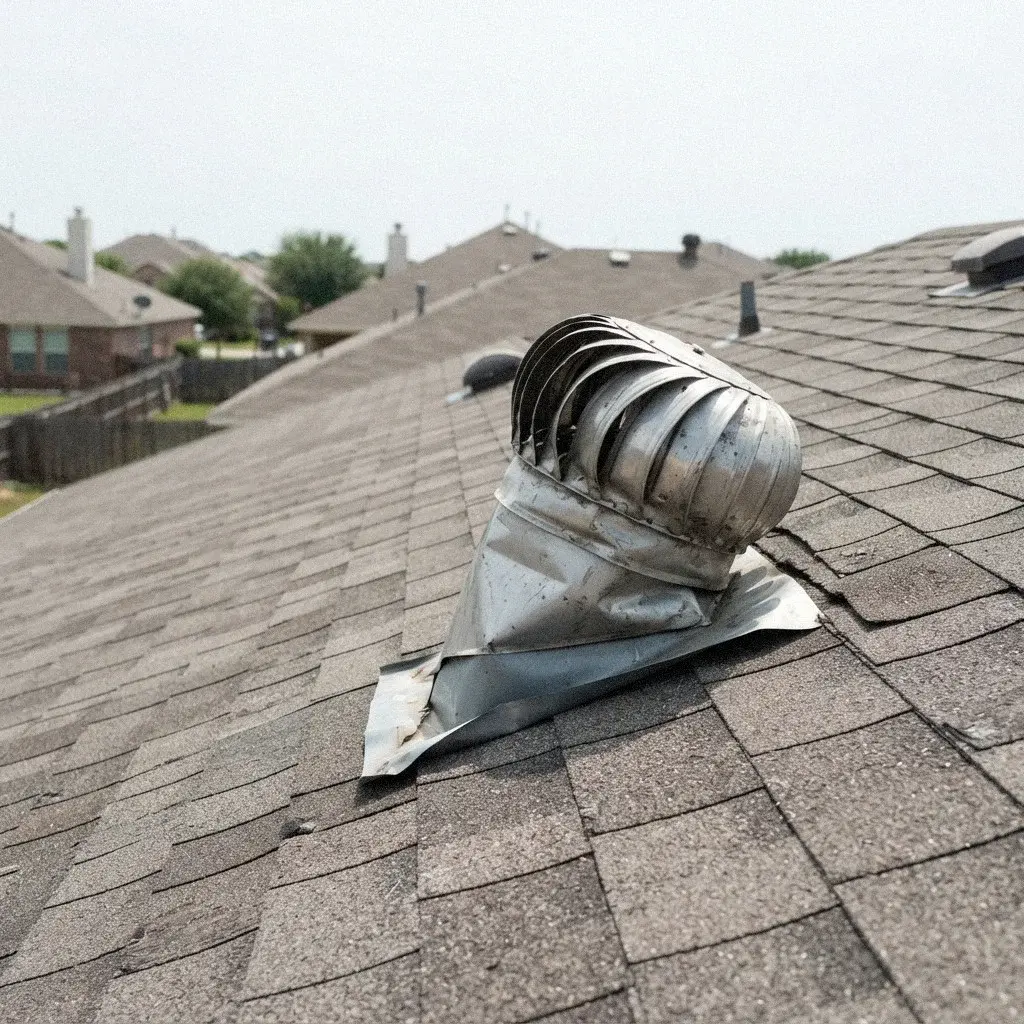
Why This One Turns Up Locally
Bellevue attics trap moisture because soffit vents at the eave get painted shut, stuffed with insulation, or blocked by squirrel nests, cutting off the intake air that ridge or roof vents need to pull moist air out through the underlayment and decking above.
Bellevue's older neighborhoods carry a lot of vented attic construction, and building-science reporting on the region points to blocked soffit intake and undersized ridge exhaust as the recurring imbalance. Add bathroom or dryer vents that terminate in the attic instead of outside, and the decking, fasteners, and underlayment take on moisture no fastener or sealant can hold back.
Attic ventilation gets overlooked until a Bellevue roof starts failing from underneath. Trapped moisture and poor airflow, not insects, are what soften decking in this climate. The pros we connect you with can check soffit and ridge venting as part of any inspection, since a damp attic shortens a roof's life quietly.
What to Remember
- Location
- Attic space under the ridge and hip lines, above the insulation and decking, not visible from the ground.
- Appearance
- Damp rafters, dark staining on the underside of the roof decking, and musty attic air on a ladder inspection.
- Cause
- Blocked soffit intake vents, misrouted bathroom or dryer vents, or exhaust vents that outnumber intake vents.
- Progression
- Slow, building over multiple wet seasons rather than a single storm; symptoms compound year over year.
- Damage
- Ignored ventilation shortens shingle life, rots decking and ridge framing, and lets moisture migrate into insulation until sheathing goes soft.
- Common Culprit
- Bellevue's long wet season is when poor ventilation shows itself most, since damp air has weeks of overcast, low-drying-rate weather to linger in the attic instead of a quick dry spell to clear it out.
- Roof Age
- an estimated $450–$2600
What Waiting Adds to the Bill
Poor attic ventilation gets mistaken for a leaking roof, since both leave stains on the ceiling below the decking. The test is timing and pattern: ventilation-driven moisture shows up as widespread condensation and sheathing discoloration across the attic even during dry stretches, while a leak traces back to one flashing, valley, or penetration and only appears after rain reaches Bellevue. Check whether the marks follow a single path from a roof penetration, pipe boot, or valley down to one spot, which points to a flashing or sealant failure, versus broad, even dampness across the ridge and eave areas with no dry-weather explanation, which points to intake and exhaust vents that cannot move air through the attic.
How the Work Is Done
The fix is balanced airflow: clear or add soffit intake along the eave and fascia, then match it with ridge or roof-mounted exhaust vents near the hip and ridge lines so air actually moves through the attic instead of stalling.
Any bath or dryer vent found terminating in the attic gets rerouted through a proper roof or wall penetration with a sealed pipe boot or cap, since patching sealant failure at the old opening only masks the real problem.
Composition shingle covers most roofs in this area, though enough homes still carry their original cedar for that to be a normal conversation too. Either way, age shows up differently depending on slope, shade, and how the roof drains. Get a straight read on condition before deciding whether patching still makes sense or a full reroof is the smarter move.
Metal or low-slope membrane: which roofs each one suits
| What the roof is doing |
The sensible option |
|---|
| Comp shingle ages differently on a shaded slope than on one that catches sun most of the day. Moss holds moisture against the surface and lifts edges long before the shingle itself wears out, which is why two roofs of the same age can need very different work. A pro who looks at yours in person can tell which stage you're actually at. | Wet-season damage rarely announces itself. Water works into flashings and valleys over weeks of overcast weather, moss lifts shingle edges, and gutters clogged by fall debris back up against the roofline. The pros we connect you with check attic ventilation and decking condition, not just the surface, before pricing any repair or reroof. |
| Shade and moisture do more damage than age alone in this climate. A roof under heavy tree cover can wear out years before an identical one in open sun, simply because it never fully dries between rains. The licensed pros we connect you with know how to read that difference on sight. | What shortens a Bellevue roof isn't one storm but the slow accumulation of wet weeks with no real drying time between them. Moss lifts shingle edges, valleys clog, flashing works loose, and the damage compounds quietly for years before a homeowner sees a stain on the ceiling. Catching that pattern early is the whole point of a routine roof check. |
| Moss is not just an appearance problem. It holds water against shingles, lifts edges, and shortens the life of a roof that would otherwise last for years. Left alone through several wet seasons, it turns a simple cleaning job into a full section of damaged decking. Catching it early keeps the fix small. | Every roof problem has a cause, not just a symptom. Trapped moisture, blocked ventilation, and shaded surfaces that never fully dry all shorten a roof's life in their own way. The licensed pros we connect you with trace the actual source before proposing work, so a repair addresses what's happening under the surface, not just the spot that's visibly failing. |
Where DIY Stops Being Sensible
From the ground, a homeowner can look for icicle-free eaves in winter, check that soffit vents aren't painted over, and glance at gutters near the rake edge for staining. Anything involving the attic interior or the roof deck itself belongs to the licensed pros we connect you with.
The Damp and Air Quality Side
Trapped attic moisture grows mold on rafters and the underside of the decking, which can affect indoor air quality in the rooms below, and prolonged dampness softens wood framing that shouldn't be handled without proper protection.
Want A Straight Answer On Your Roof?
A guide figure for poor attic ventilation locally is an estimated $450 to $2600, which is a band rather than a quote. Rot and soft decking here come from trapped moisture and poor attic ventilation, not insects, so pest treatment rarely belongs in a Bellevue reroof estimate. If the licensed pros we connect you with find soft sheathing near Bridle Trails or Somerset's shaded lots, expect a conversation about ventilation and skip sheathing, not a pest bill. pricing guide.