What Causes It Around Here
Bellevue's mid-century flat-roofed homes near Wilburton and the low-slope additions common around Factoria are exactly the roof shapes TPO and PVC were built for, where a shingle or shake roof simply has no slope to work with.
Long wet stretches through the winter reward a fully welded, seamless membrane over anything relying on overlapping courses, which is why single-ply membrane keeps showing up on Bellevue's flatter rooftops instead of composition shingle.
Cedar shake still turns up on plenty of Bellevue roofs, and swapping it for composition shingle is a normal request, not a rare one. It changes the roof's weight and can mean rethinking the sheathing underneath, so it is worth a direct conversation with the pros we connect you with before signing anything.
The Short Version
- Service Life
- A properly seamed TPO or PVC membrane on a Bellevue low-slope roof commonly runs twenty to thirty years before the seams or field membrane need replacing.
- Roof Weight
- Single-ply membrane is one of the lightest roof coverings available, adding little load to the structure compared with built-up or shingled systems.
- Minimum Slope
- TPO and PVC are built for flat and low-slope decks, workable down to roughly a quarter inch of fall per foot with proper drainage planning.
- Walkability
- The membrane itself is walkable for routine inspection and maintenance, though foot traffic near seams and penetrations should stay occasional rather than constant.
- Repair Method
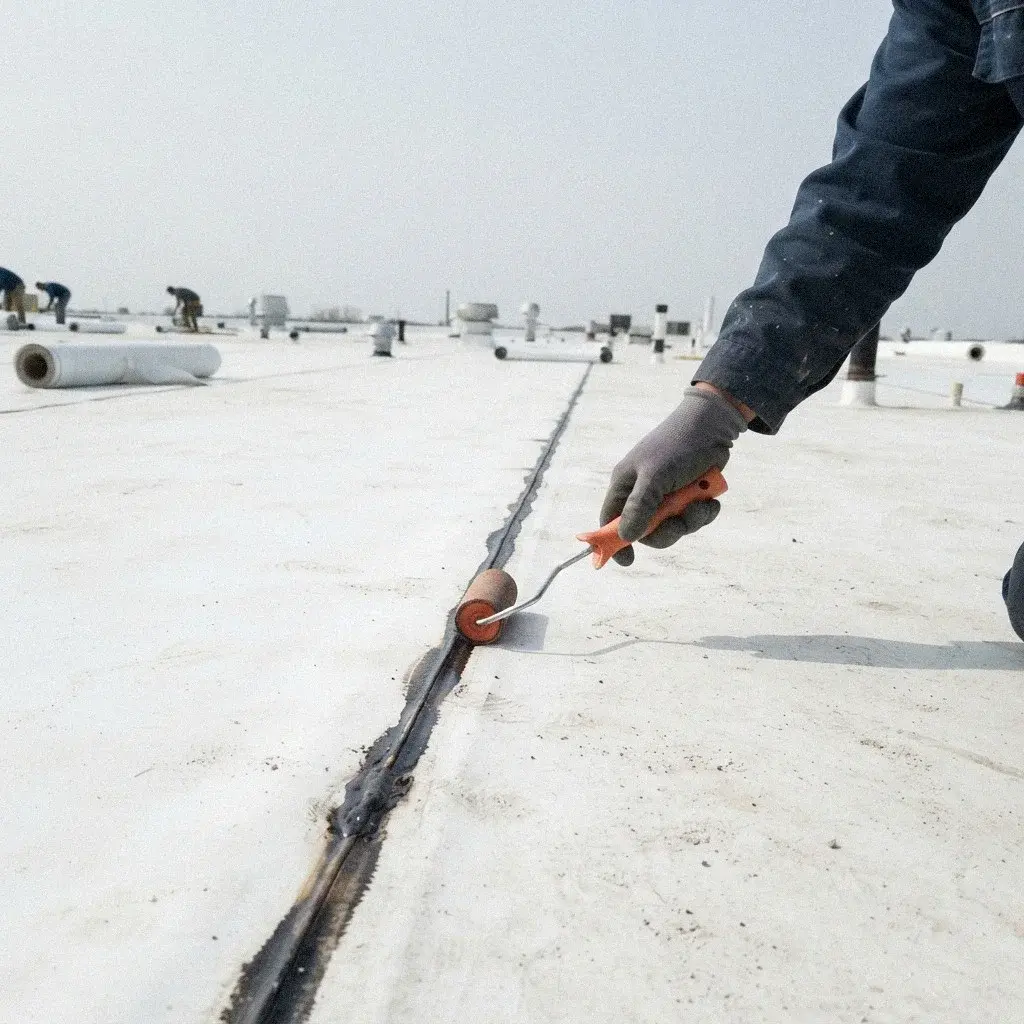
- A damaged section is patched by welding a new piece of matching membrane over the cut or puncture, not by tarring or shingling over it.
- Common Culprit
- Bellevue's long wet season from October through May is the real test for any flat roof, and July's dry stretch is when most tear-offs and recovers get booked. Waiting past early fall means a membrane job competes for the same short window every other reroof in the city is chasing.
- Slope Access
- an estimated $9000–$26000
What Another Wet Season Would Do
TPO and PVC are most often weighed against modified bitumen, another single-ply option seen on Bellevue's flat-roofed mid-century homes and small commercial buildings near Crossroads. Modified bitumen is torch-applied or self-adhered in overlapping sheets with granule or foil surfacing, while TPO and PVC are heat-welded sheets. The deciding difference is seam strength and reflectivity versus modified bitumen's thicker, more puncture-tolerant surface.
The Repair, Step by Step
A tear-off down to deck, new insulation board, and a fully welded membrane with properly detailed edges and penetrations is the standard fix once seams or the field have aged out on a Bellevue low-slope roof.
Where the existing membrane is sound, a recover layer can sometimes go down over it, similar to how a shingle recover works, but Bellevue limits that path once added weight passes 5 percent of the roof's total.
A roof here fails slowly. Wet-season weeks keep shingles from ever fully drying, and moss takes hold before anyone notices a problem. The licensed pros we connect you with check flashing, valleys, and gutters for the slow leaks that show up as a stain long after the water first got in.
Reroof or repair: how to tell which one you need
| What the roof is doing |
The sensible option |
|---|
| A leak rarely starts where the water shows up inside. Flashing, valleys, and the joints around anything that pokes through the roof are where wet-season water finds a way in, and gutters clogged with moss or debris just send more of it toward the edges. Tracing it back to the source is most of the actual work. | Most reroofs here start with moss lift, not storm damage. Once moss gets under a shingle edge it holds water against the surface and never lets it dry between rain spells. Left alone through a wet season, that damp edge curls, the granules wash thin, and a patch job turns into a full tear-off sooner than the shingle's age alone would suggest. |
| Getting a straight answer on roof condition shouldn't require guesswork. The licensed pros connected through this site look past the shingles at flashing, gutters, and attic ventilation to explain what's actually happening and what it would take to fix it, so a Bellevue homeowner can decide with real information instead of a sales pitch. | Roof problems here rarely announce themselves. Moss creeps under an edge, a valley holds water a season too long, a vent stays blocked through another wet stretch, and the deck underneath goes soft before anyone climbs up to look. A short visit from the licensed pros we connect you with turns that guesswork into a plain list: what is failing, what can wait, what cannot. |
| Roof problems in this region build slowly. Moisture works into flashing and valleys over many wet months before a ceiling stain gives it away. Waiting for a visible leak means the damage underneath is already older than it looks. Checking a roof before symptoms show costs far less than repairing what months of trapped water leave behind. | Flashing and valleys take the brunt of a long wet season, and they're usually the first thing to fail once sealant ages or metal shifts underneath shingles. The licensed pros in this area can check those spots, clear clogged gutters, and flag ventilation gaps before a small drip becomes a bigger repair bill. |
What the rules sayBellevue's Development Services Department decides whether a membrane recover or replacement needs a permit based on added weight or sheathing count, not on the material itself, so ask early rather than assume.
The Damage and the Repair After It
A torn or punctured section on a welded membrane roof gets cut out and a new patch is heat-welded in over the deck, rather than the shingle-style approach of sliding in a replacement piece under adjacent courses.
What Is Worth Trying First
A membrane roof is not a shingle roof, and patch kits sold for composition shingle or rolled roofing do not seal TPO or PVC seams reliably. Seam welding takes the right heat gun and technique. For anything past a small test patch, bring in the licensed pros we connect you with rather than risking a leak that reopens.
What It Does Indoors
Standing water on a low-slope roof near Kelsey Creek can hold enough moisture to feed moss and algae even on a membrane surface, and trapped moisture under a failed seam eventually shows up as a damp ceiling below.
Want A Straight Answer On Your Roof?
A guide figure for tpo and pvc membrane roofs locally is an estimated $9000 to $26000, which is a band rather than a quote. Rot and soft decking here come from trapped moisture and poor attic ventilation, not insects, so pest treatment rarely belongs in a Bellevue reroof estimate. If the licensed pros we connect you with find soft sheathing near Bridle Trails or Somerset's shaded lots, expect a conversation about ventilation and skip sheathing, not a pest bill. pricing guide, and the service that handles this is Flat & Low-Slope Roofing.