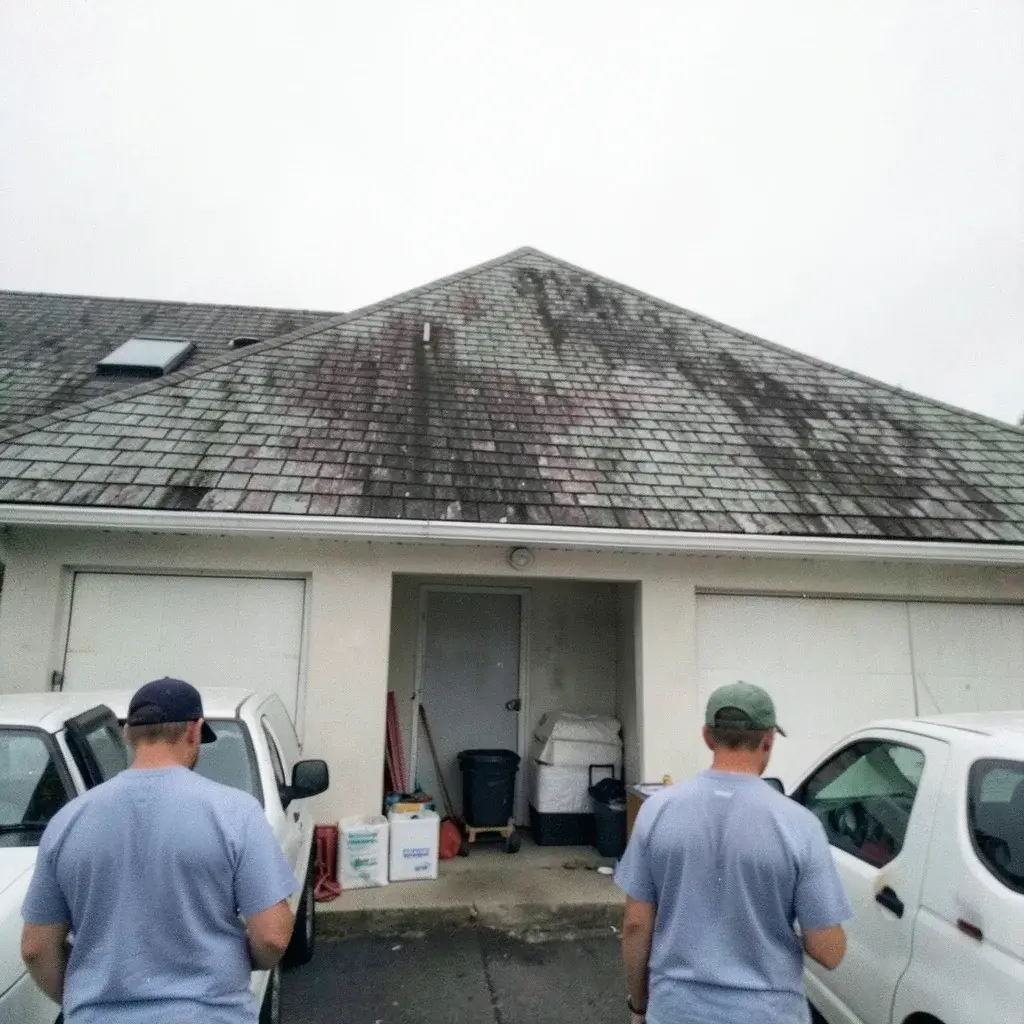
Walk around almost any older home in Bellevue and look up at the roof from more than one angle. It is common to see one slope with darker streaking, softer-looking shingles, or moss creeping in near the eaves while the rest of the roof looks years younger. That difference is not random. It comes down to roof orientation, and specifically to which plane gets sun and which one sits in shade for most of the day.
What Roof Orientation Changes
A roof is really several separate surfaces joined at ridges and valleys, each facing a different direction. South and west slopes generally get more direct solar exposure through the day. North slopes get the least, especially in a city with the tree canopy Bellevue has. Less sun means less heat reaching the shingle mat, and less heat means the surface holds onto moisture from the last rain far longer than a sunlit plane does.
The Shade Line Problem
Shade does not come only from the sun's angle. It comes from what is standing nearby. A mature tree, a neighboring roofline, or even the house's own chimney can cast a shade line across part of a slope for hours at a stretch. In neighborhoods with heavy conifer cover, that shade line often sits squarely over the north plane, and it moves so little through the day that the same strip of shingles almost never sees direct light.
Why Drying Time Matters
Every roof gets wet in a Bellevue winter. What separates a slope that ages well from one that does not is how fast it dries afterward. A sunlit south slope might be bone dry within hours of a storm clearing. A shaded north slope, especially one under overhanging branches, can stay damp for a day or more. Shingles were never designed to sit wet that long, and the surface pays for it over years, not weeks.
Surface Moisture and the Mat
Underneath the granules, a composition shingle has a mat that gives it structure. Repeated cycles of surface moisture soaking in and slowly evaporating put stress on that mat over time, even without a single hard freeze. A slope that dries quickly rarely reaches that point. A slope that stays damp for extended stretches puts the mat through far more wet-dry cycling across a given year, which is a large part of why one plane can visibly age faster than its neighbors.
Differential Wear Across One Roof
Roofers use the term differential wear for exactly this pattern: one roof, multiple planes, and a spread in condition between them that has nothing to do with the age of the shingles, since they were all installed on the same day. A south slope might still have a decade of service left while the shaded north slope is already curling at the edges. Judging a roof's remaining life from a single, sunny-facing plane is a common and easy mistake.
Tree Canopy and Overhangs
In the more wooded parts of Bellevue, Douglas fir, cedar, and hemlock overhang plenty of rooflines, and their canopy does two things at once. It blocks the sun that would otherwise dry a slope quickly, and it drops needles and debris that pool water in valleys and along eaves. A north slope with a deep overhang and canopy above it is dealing with both problems together, which is why these sections often show the earliest visible wear on the whole house.
Slope Pitch Plays a Role Too
Orientation is not the only variable. Slope pitch affects how quickly water sheds off a surface in the first place. A lower-pitched plane holds water longer regardless of which direction it faces, and when a low-pitch section also happens to face north, the two effects stack. This is one reason two homes with similar tree cover can still age differently, since the roofline geometry itself is doing some of the work.
What This Means for a Repair
None of this means a whole roof needs replacing because one slope looks rough. A partial reroof limited to the affected plane is often a reasonable response, provided the rest of the roof is genuinely in better shape and not just less visibly worn. The catch is that matching shingle color and lot across a partial job gets harder the longer a roof has weathered, since sun-faded slopes and shaded slopes age at different visual rates too.
Why a Plane-by-Plane Look Helps
Because wear is not even across a roof, judging the whole thing from ground level or from one photo tends to miss what is actually happening. A plane-by-plane assessment, looking at each slope on its own terms rather than averaging an impression across the whole roofline, is what actually tells a homeowner whether they are looking at a spot repair or something closer to a full reroof.
Signs Worth Watching For
On a shaded north slope, the early signs tend to be subtle: a darker or greener tint compared to the rest of the roof, shingle edges that look slightly lifted rather than flat, or granules collecting in the gutter below that section specifically. None of these mean immediate failure, but they are the kind of detail worth noting before the next wet season rather than after a leak shows up on a ceiling.
Getting an Opinion Worth Trusting
If a north slope looks visibly different from the rest of a roof, that difference is worth having looked at directly rather than guessed at from the driveway. The licensed pros we connect you with can walk each plane separately and say plainly whether it is a localized repair or a sign of something wider, which is a more useful answer than treating the whole roof as one uniform surface.
Dealing with this in your home?
Bellevue roofs age on their own schedule. Wooded lots near Bridle Trails and Somerset stay shaded long after storms pass, and conifer cover keeps surfaces from ever fully drying between fronts. Add a reroof window that tightens once summer ends, and small maintenance calls turn urgent fast. The sections below sort out timing, materials, and who actually answers for the work overhead.