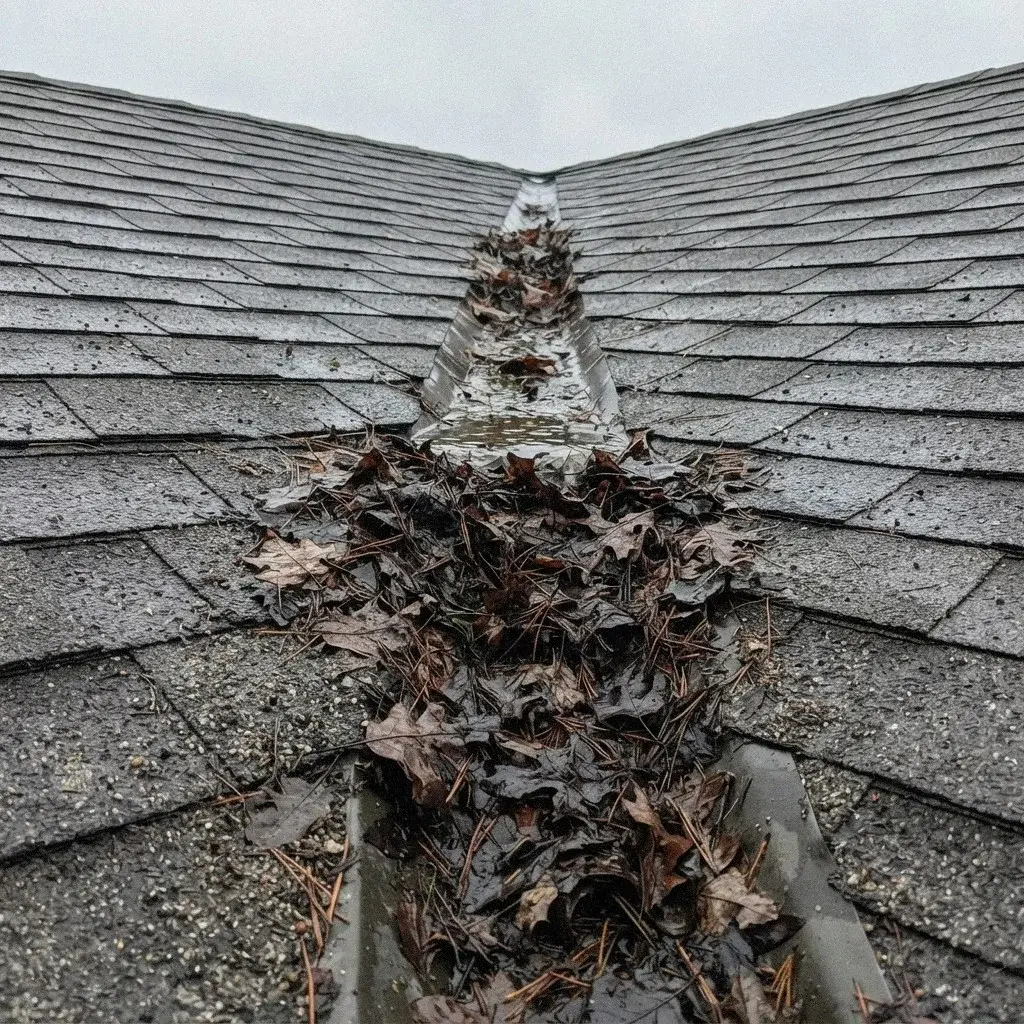
Fir and cedar debris behaves differently than fall leaves. Needles slip into valley seams and settle behind chimneys and dormers, building a needle mat that thickens season after season instead of blowing clear. Cones catch on ridge lines and roll into the gutter trough, where they jam the outlet and force a downspout clog. In Bellevue, homes near Bridle Trails or the Lakemont hillside sit under enough conifer canopy that this pileup becomes routine rather than occasional, and it changes how the roof drains.
Where the Debris Actually Collects
Needle mat and cones settle where a roof's shape or overhanging limbs interrupt runoff. Valleys, the angled channels where two roof planes meet, catch debris carried down by rain and hold it against the shingle surface. Areas behind chimneys and other roof penetrations see the same buildup, since the structure breaks up wind and water flow. Any spot shaded by a Douglas fir or western red cedar limb overhead tends to collect more than open, sun-exposed slopes nearby.
Gutters and the Downspout Problem
The gutter trough along the roof edge is often the worst-hit area, since it is designed to catch runoff and ends up catching needles along with it. Once needle mat packs into a gutter, water backs up instead of reaching the downspout, and a downspout clog compounds the problem by trapping standing water even after the visible debris is cleared. On heavily wooded Bellevue lots, this is less a seasonal chore than a recurring one.
How Trapped Debris Holds Water
Water damming starts small. A clogged gutter trough backs up during a normal rain, and the overflow runs behind the fascia instead of down the downspout. On a low-pitch section or anywhere debris has collected in a valley, standing water sits against the shingle edge under a needle mat, soaking the mat and the roofing beneath it. Given the wet stretch Bellevue runs from fall through spring, that soaked pocket rarely gets a real chance to dry between storms, and the shingle edge underneath starts to soften and curl.
What Water Damming Does to a Roof
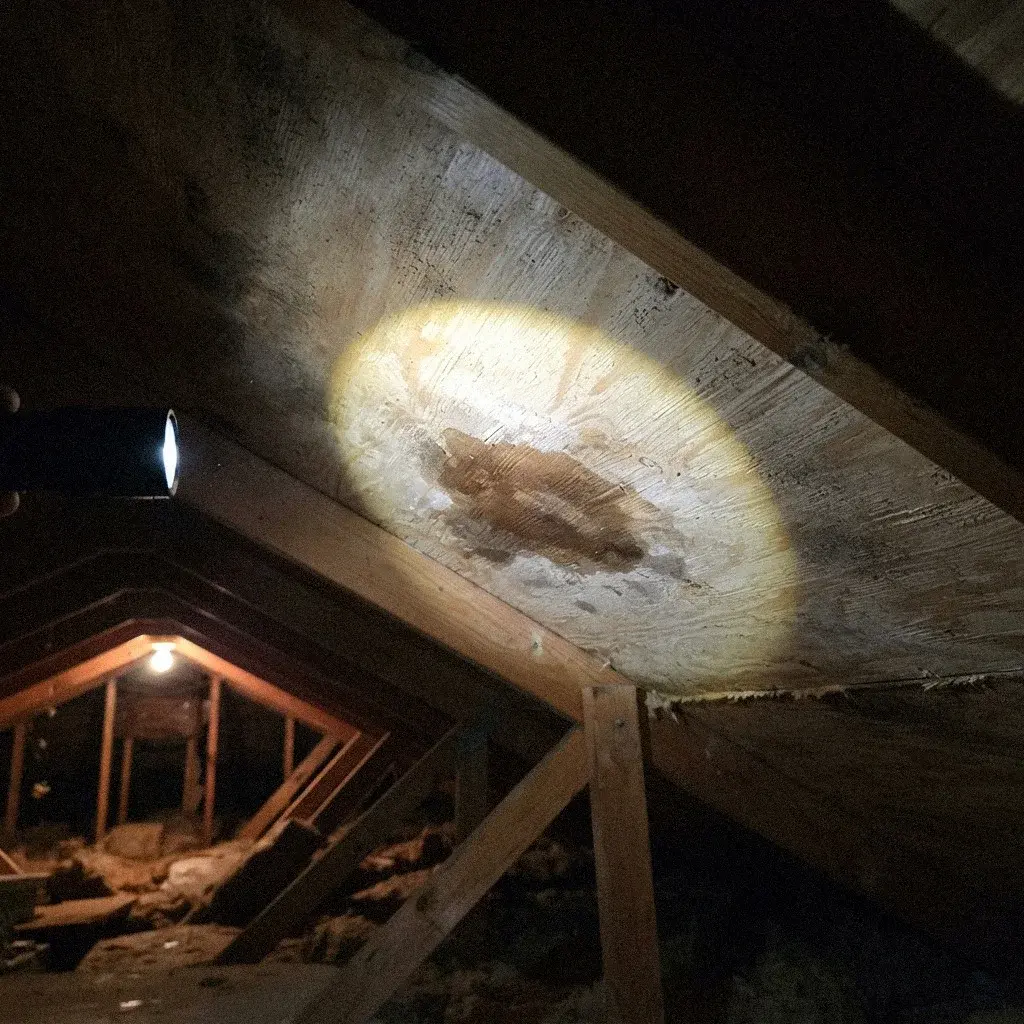
When debris blocks a valley or gutter outlet, water has nowhere to drain and starts pooling instead of shedding off. That pooled water can back up under shingle edges, work its way toward flashing seams, and find its way into the roof deck itself over time. Water damming from a clogged valley behaves differently than a leak from a cracked shingle, since the water sits and probes for a weak point rather than dropping straight through.
Granule Loss From Trapped Debris
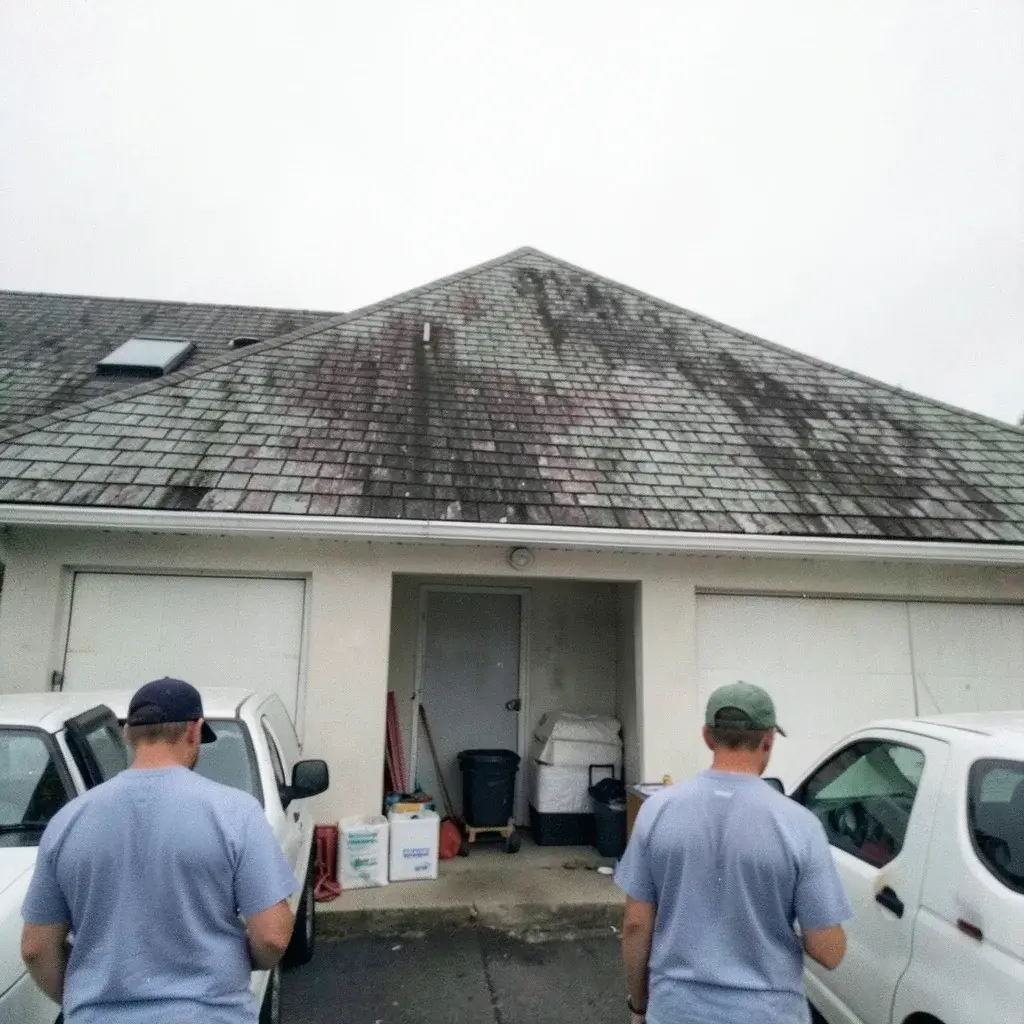
Composition shingle relies on its granule surface to shed water and block UV exposure, and that granule layer takes damage when needles and cones sit against it for weeks. The constant moisture softens the shingle surface, and granule abrasion happens as wet debris shifts with wind and rain, slowly wearing down the coating over a section that never gets the chance to dry out between storms.
Clearing Debris From the Ground
A surprising amount of roof-edge debris can be cleared without a ladder. A leaf blower aimed upward along the gutter line or roof edge from the ground can dislodge loose needles and light cone litter from single-story sections and lower roof edges. This is the safest starting point for any Bellevue homeowner, since it avoids roof access entirely for the debris that is easiest to reach.
Clearing Debris From the Roof Surface
For needle mat packed into valleys or behind a chimney, a roof rake or a soft-bristle brush used from a stable ladder position can lift debris without gouging the shingle surface. Working down-slope, in the direction water naturally drains, keeps loosened material moving off the roof rather than pushing it deeper into a valley. Metal rakes or stiff bristles should be avoided, since they can strip granules along with the debris.
Why Pressure Washing Is a Poor Fit
Clearing the debris safely starts on the ground when it can. A leaf blower angled along the slope, or a soft-bristle brush pulled downhill, moves needles and cones off the field without gouging the mat into the shingle surface. A roof rake reaches valley debris and gutter buildup from a ladder without walking the roof at all. Skip the pressure washer here; the spray strips granules and drives water under tabs, which is granule abrasion nobody notices until the shingle underneath starts failing.
Gutters, Outlets, and Downspouts
Once the roof surface is clear, the gutter trough and its outlet need the same attention, since needle mat that washed down during roof clearing often lands right back in the gutter. Checking that the gutter outlet flows freely into the downspout, and that the downspout clog has actually cleared rather than just moved lower, confirms that water has somewhere to go the next time it rains.
Overhanging Limbs and Ongoing Buildup
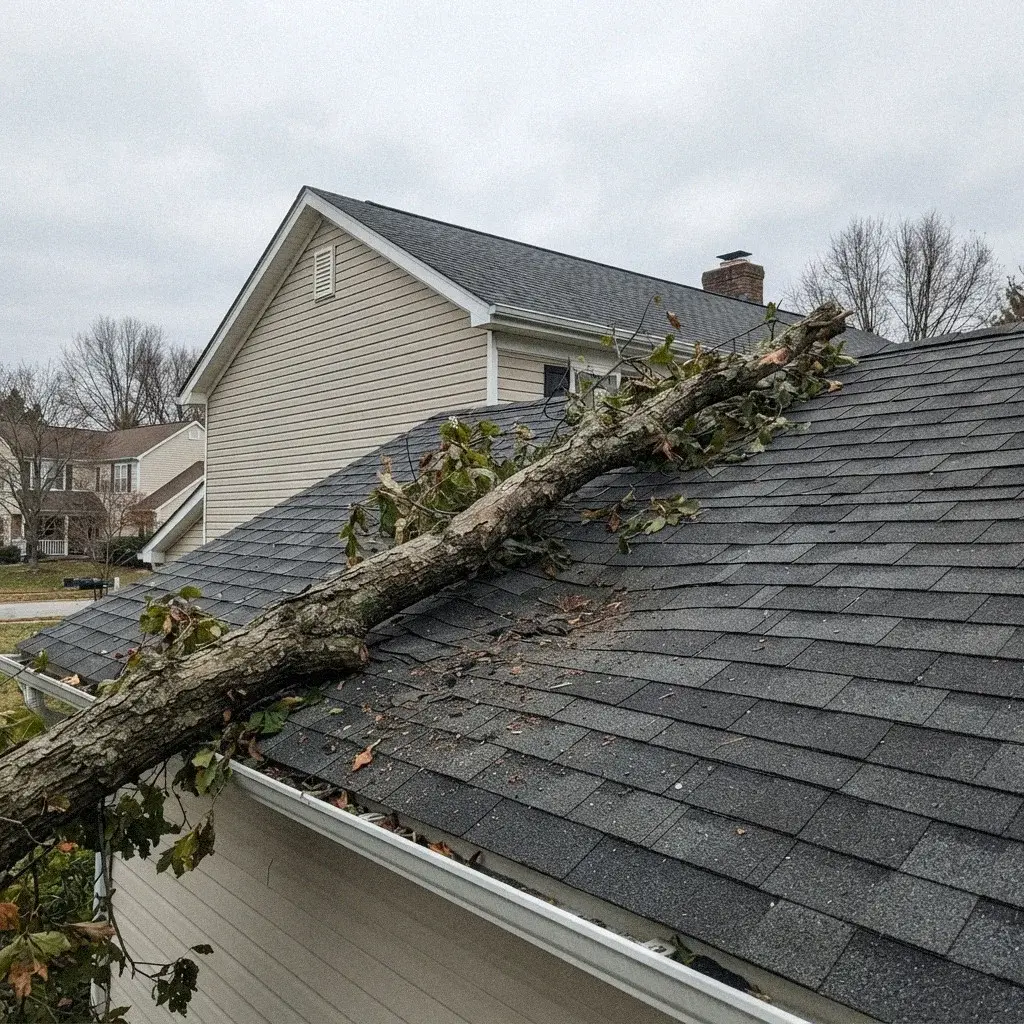
An overhanging limb from a mature Douglas fir or cedar is usually the direct source of a recurring debris problem on a given section of roof. Bellevue regulates tree removal and, on many steep-slope lots, even significant trimming falls under city review, so a homeowner living beneath one of these trees should expect the debris to keep coming rather than assume a single cleanup solves it long term.
When to Call in Help
A single-story roof with easy ground access is a reasonable weekend task for many homeowners, but steep pitches, multiple stories, or a roof already showing soft spots near a valley are a different situation. At that point, the licensed pros we connect you with can clear the debris and check the deck underneath for damage in the same visit, which is harder to judge safely from a ladder alone.
Dealing with this in your home?
Bellevue roofs age on their own schedule. Wooded lots near Bridle Trails and Somerset stay shaded long after storms pass, and conifer cover keeps surfaces from ever fully drying between fronts. Add a reroof window that tightens once summer ends, and small maintenance calls turn urgent fast. The sections below sort out timing, materials, and who actually answers for the work overhead.