Getting a Bellevue Roof Claim Paid
How coverage, inspection, and paperwork decide what a Bellevue insurer actually pays out.
A roof insurance claim in Bellevue starts with proving a covered peril caused sudden damage, not gradual wear. The insurer inspects, sets a scope of loss, pays replacement cost value minus your deductible, with depreciation held back until the roof is actually replaced.
What a Policy Actually Covers
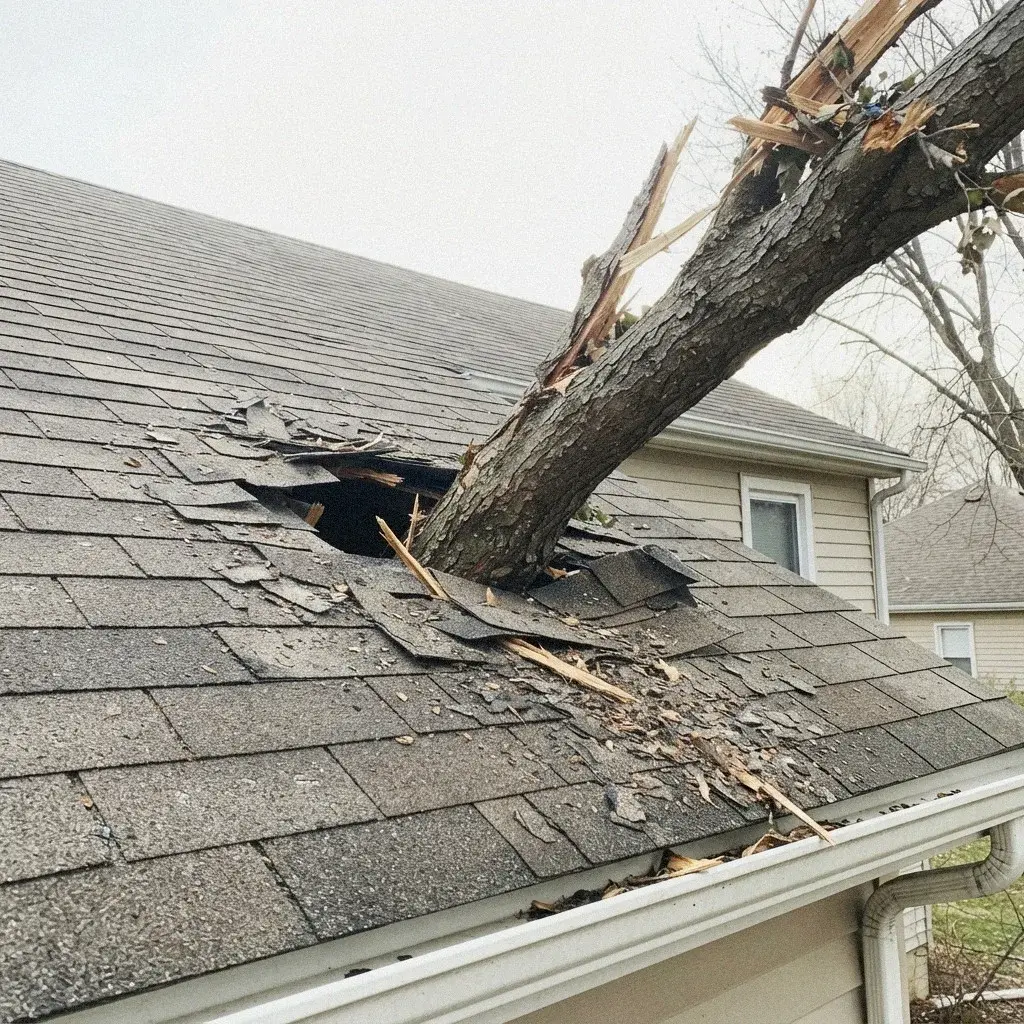
A roof insurance claim in Bellevue turns on one question: did a covered peril damage the roof, or did the roof simply wear out. Policies pay for sudden, accidental damage from a named peril, not for age, moss growth, or slow flashing failures that built up over years. Wind can tear off shingles and drop limbs across a roof slope, and that is usually covered. A roof that curled and lost granules over a decade of wet seasons usually is not. Understanding that line before filing shapes everything downstream, from documentation to whether the claim survives inspection.
A property policy in Bellevue typically pays on a replacement cost value basis, but many issue an actual cash value check first and hold back depreciation until the work is finished and proven. That gap between the two figures is the depreciation holdback, and it is separate from the deductible you owe regardless of which basis applies. Confusing actual cash value with the final settlement is one of the most common reasons a homeowner feels shorted before the job on their roof is even done.
The deductible applies before any of that math matters, and it works the same way on a roof claim as on any other property claim: the homeowner absorbs that amount, and the insurer pays the remainder up to the policy's valuation method. A claim for a small area of storm-torn shingles near Enatai Beach Park or a slope above Meydenbauer Bay can end up not worth filing if the repair cost sits near or under the deductible. Reading the declarations page for the deductible amount and the valuation method before calling the adjuster avoids surprises once the estimate arrives.
Documenting the Damage Before the Adjuster Arrives
Documentation starts the moment damage is found, ideally before any tarp or temporary repair changes what the roof looked like right after the event. Photos and video from the ground and, where safe, from a ladder should show the damaged area, the surrounding undamaged roof for comparison, and any debris involved, such as a fallen limb from a tree along a greenbelt lot near Coal Creek Natural Area or Mercer Slough Nature Park. Dated photos matter because insurers weigh whether damage looks fresh or long-standing. A homeowner should also keep any receipts for emergency tarping or debris removal, since those costs are often reimbursable separately.
The proof of loss is the sworn, itemized statement of the claim's value that the policy requires the homeowner to submit, and insurers in Washington must tell the claimant whether the claim is accepted or denied within a set number of working days after that proof of loss is complete. Missing or incomplete paperwork restarts that clock. A homeowner filing a claim for a roof over a home in Bridle Trails or Somerset should keep copies of every form submitted, note the date it was sent, and follow up in writing if a response deadline passes without word from the insurer.
- A covered peril is a specific cause of loss named in the policy, such as wind or a falling tree limb, that triggers coverage. Wear and tear, aging, and gradual moss lift are excluded almost everywhere, which is why the cause of the damage matters as much as the damage itself.
- Replacement cost value is what it costs today to install a comparable new roof, while actual cash value subtracts depreciation for age and condition. Most Bellevue homeowner policies pay actual cash value first, holding the depreciation difference until the roof is actually replaced.
- The deductible is the amount you pay before the insurer's payment starts, and it applies once per claim rather than per repair item. Depreciation holdback is separate from the deductible and is only released after the work is done and documented.
- A scope of loss is the adjuster's written breakdown of what's damaged and what it costs to fix, organized as a line item estimate. It becomes the basis for the payment, so errors or omissions in it directly shrink what gets paid.
- Proof of loss is a signed, itemized statement of the claim you submit to the insurer, and Washington's claim-handling timelines start running once it's fully completed. Missing or incomplete proof of loss paperwork is a common reason payment stalls.
- A mortgage endorsement means the claim check names both the homeowner and the mortgage lender, since the lender has a financial interest in the roof over the home securing its loan. The lender typically has to endorse the check before funds are released for repairs.
The Adjuster Inspection and Scope of Loss
The field adjuster's inspection is where the claim either holds together or starts to unravel. The adjuster walks the roof, photographs the damage, and writes a scope of loss describing what needs to be done and a line item estimate pricing each task, from tear-off to underlayment to flashing at valleys and penetrations. Homeowners are allowed to be present, and doing so matters on a roof with mixed conditions, such as a home near Lake Hills Greenbelt with a mostly sound comp shingle roof but a soft, moss-lifted section along one valley. Pointing out every affected area before the adjuster leaves is far easier than adding it later.
When the adjuster's scope of loss misses damage or underprices a repair, the fix is a supplement: a formal, written request to add line items or adjust pricing, usually backed by photos, a contractor's own estimate, or both. Supplements are common on roofs where damage extends past what was visible from the ground, such as decking softened by trapped moisture discovered only once tear-off begins near a home off Coal Creek Parkway. A supplement is not a complaint or an appeal; it is simply new information added to the same claim file, and insurers expect to receive them on roofing losses.
- Photograph the damage from the ground and, if it's safe, from a ladder, before anything is touched or covered. Wide shots showing the roof's overall condition matter as much as close-ups of the specific damaged area the adjuster will focus on.
- Note the date you first noticed the damage and any related event, such as a windstorm or a limb coming down, since insurers use this to judge whether the cause was sudden or gradual. Keep any correspondence with neighbors or the property owner if a shared tree was involved.
- Get a written estimate from the licensed pros we connect you with before the adjuster visits, if timing allows, so you have an independent line item estimate to compare against the insurer's scope of loss. Differences between the two are where supplements usually start.
- Keep receipts for any temporary repairs, like a tarp over an exposed section, since most policies require reasonable steps to prevent further damage and will reimburse those costs separately from the main claim payment.
Replacement Cost Versus Actual Cash Value
If a home carries a mortgage, the insurer typically names both the homeowner and the lender on the claim payment, producing a mortgage-endorsed check that requires the lender's signature or an escrow-style release process before funds can be used. Lenders do this to confirm repair work happens rather than the money going elsewhere while the roof stays damaged. That process can add real time to a claim on a home anywhere from Wilburton to West Bellevue, and homeowners should ask their loss payee's claims department early what documents it needs, such as a signed contract or proof of completed work, before assuming a check can be deposited and spent immediately.
A denied claim is not automatically the final word, and Washington gives homeowners more than one path forward without going straight to a lawsuit. A homeowner can request a reinspection if new damage is found or the first inspection seems incomplete, and some policies contain an appraisal clause that lets each side pick an appraiser, with a neutral umpire breaking a disagreement between them. Filing a complaint with the state Office of the Insurance Commissioner is also available at no cost and does not require an attorney. None of these paths guarantee a different outcome, but each one gives a homeowner near Crossroads or Factoria a documented, formal way to push back.
| Step | Who Acts | What It Produces |
|---|---|---|
| What it pays | Full cost to replace, no depreciation | Replacement cost minus depreciation |
| First check amount | Depreciation withheld until work done | Depreciated amount, often final payment |
| Second payment | Released after proof of completed work | Usually none, unless policy allows |
| Best for homeowner when | Roof will actually be replaced | Homeowner is not replacing the roof |
| Where it's found | Named on the policy's dwelling coverage | Named on the policy's dwelling coverage |
When the Claim Stalls or Gets Denied
A public adjuster is a licensed professional who represents the homeowner's interests in the claim, rather than the insurer's, typically working for a percentage of the settlement. Washington's Office of the Insurance Commissioner licenses public adjusters, and a homeowner considering hiring one for a roof claim in a higher-value claim, such as extensive damage to a home in Clyde Hill or Hunts Point, can verify that license through the OIC's lookup tool before signing an agreement. A public adjuster can be useful on a complex or disputed claim, but the fee comes out of the eventual payout, so it is worth weighing against the size and complexity of the roof damage itself.
The roofing contractor's role in a claim is technical, not adversarial: a contractor documents damage, writes an independent estimate for comparison against the adjuster's scope of loss, and performs the repair once payment and any permit questions are settled. A contractor does not represent the homeowner to the insurer the way a public adjuster does, and a homeowner should be cautious of any contractor who offers to handle the entire claim, waive the deductible, or guarantees a specific settlement amount before an adjuster has even inspected a roof near Bellevue Downtown Park or Newport Hills. The licensed pros a homeowner connects with should stick to the roof, not the negotiation.
Supplements, Reinspection, and Appeal Paths
Timing shapes outcomes as much as paperwork does. Washington's wet season runs long, and a claim filed in November for wind-torn shingles above Kelsey Creek Park can sit through weeks of additional rain before a contractor can even get on the roof for repair, let alone a full reroof. Temporary protection matters in that gap, and receipts for it belong in the claim file. The short dry-season window from late spring into early fall is when most reroof work actually happens, so a claim settled in winter often means a wait for weather and contractor availability before the job itself begins.
None of this process guarantees a specific dollar outcome, and nothing here should be read as legal advice about a particular policy or denial. What holds up across nearly every Bellevue roof claim is the same discipline: document early, understand covered peril versus wear and tear before filing, read the valuation method on the declarations page, attend the inspection if possible, and use supplements, reinspection, or an appraisal clause when the first answer looks wrong. A homeowner near Bellevue College or the Wilburton light rail station who follows that order gives a claim its best chance without needing to become an insurance expert first.
Where This Claim Can Stall
- Bellevue's claim-handling timelines run through the state Office of the Insurance Commissioner. An insurer must acknowledge a new claim within ten working days for an individual policy, and decide to accept or deny it within fifteen working days of receiving a complete proof of loss.
- WAC 284-30-380 gives the insurer fifteen working days after receiving a completed proof of loss to accept or deny a Bellevue roof claim. WAC 284-30-360 requires acknowledgment of the claim within ten working days. Miss either and the OIC can be asked to review the file directly.
- A public adjuster works for the homeowner, not the insurer, and charges a fee to help build and negotiate the claim. Washington licenses public adjusters, and that status is checkable through the state insurance regulator's lookup tool.
- The contractor's role in a claim is documentation and repair, not claim negotiation. The licensed pros we connect you with can supply photos, a written estimate, and technical detail, but the claim decision itself rests with the insurer and the adjuster.
- A supplement is a follow-up request to add items the original scope of loss missed, such as valley flashing tied to the same damage. It needs its own documentation and explanation, not just a request for more money.
- Depreciation holdback is the gap between actual cash value and replacement cost value that many policies withhold until repairs are complete. Submitting final invoices and photos from the licensed pros we connect you with is usually what releases it.
Frequently Asked Questions
What's the difference between RCV and ACV payouts?
Not automatically. A Bellevue insurer pays for sudden damage from a covered peril, such as a storm-broken branch tearing shingles, but not for a roof that simply reached the end of its life through age, moss, or gradual wear. The adjuster's inspection sorts which category applies, and that determination drives whether the claim is paid, and at what valuation.
Why did my adjuster only approve part of my roof?
A field adjuster inspects the roof, photographs damage, and writes a scope of loss with line item pricing for materials and labor. In Bellevue, adjusters weigh whether damage traces to a covered peril like a falling limb versus ordinary moss lift or age-related wear, which insurers treat differently.
Can I hire my own adjuster instead of the insurer's?
Replacement cost value pays what a new roof actually costs to install; actual cash value subtracts depreciation for the roof's age and condition first. Many Bellevue policies pay actual cash value upfront, then release the depreciation holdback once the licensed pros we connect you with finish the reroof and submit proof.
What happens if my roof claim gets denied?
Request the line item estimate in writing and compare it against a written bid from the licensed pros we connect you with. If items are missing, such as flashing at valleys or gutter work tied to the covered damage, submit a supplement with photos and a clear explanation before assuming the scope is final.
Do I get the depreciation money back later?
You can request reinspection, invoke the policy's appraisal clause if it has one, or file a complaint with the Office of the Insurance Commissioner. A public adjuster licensed in Washington can also review the file, though hiring one has its own cost and tradeoffs worth weighing first.
Want a Contractor's Eye on Your Scope?
Get a written scope from a licensed pro before you sign anything with your insurer or a public adjuster.
Call (425) 380-0932