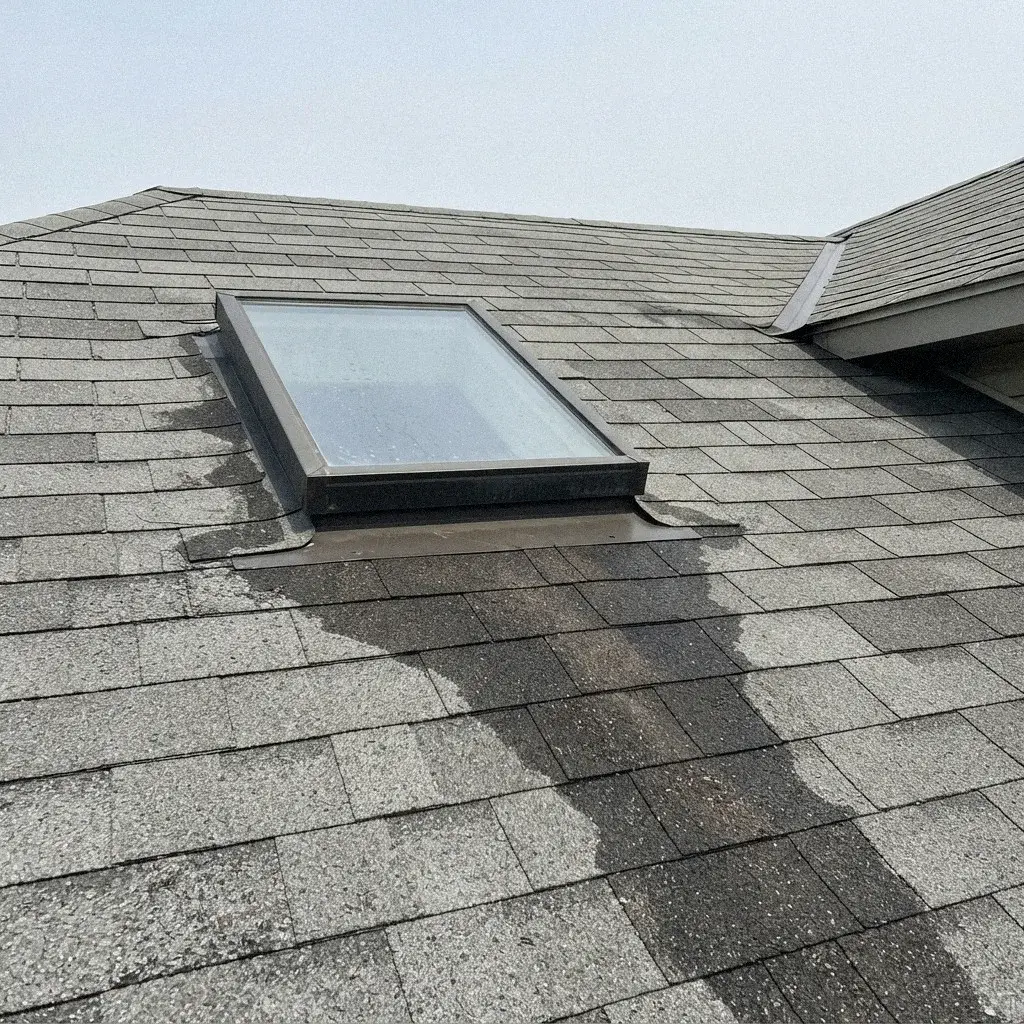
The Conditions Behind It
Bellevue's wet season keeps roof surfaces damp for long stretches, and a skylight curb sitting up out of the roof plane is exposed to that moisture from every side instead of one. Any weak point in the flashing or sealant around it gets tested by rain far more often here than in a drier climate.
Homes in heavily wooded neighborhoods like Bridle Trails or the Cougar Mountain and Lakemont area stay shaded and damp longer after each rain, and a nearby skylight often sits near a valley where runoff concentrates. That extra water crossing the roof puts more pressure on aging flashing and counterflashing.
Cedar shake still turns up on plenty of Bellevue roofs, and swapping it for composition shingle is a normal request, not a rare one. It changes the roof's weight and can mean rethinking the sheathing underneath, so it is worth a direct conversation with the pros we connect you with before signing anything.
The Short Version
- Location
- Around the skylight curb, at the flashing, counterflashing, and sealant joints where the unit meets the roof deck.
- Appearance
- Water staining on the ceiling below, or damp decking and a wet curb seen from inside the attic.
- Cause
- Failed flashing, cracked sealant, or underlayment that was never properly lapped around the curb.
- Progression
- Worsens steadily through each wet season as the gap widens and more rain finds its way through.
- Damage
- Ignored skylight leaks rot the surrounding decking and drywall, stain ceilings, and invite mold in the attic and living space below.
- Common Culprit
- The wet season is when a marginal skylight flashing job shows itself, since weeks of rain give water repeated chances to find any gap in the seal. Late spring into early fall, when Bellevue sees its driest stretch, is the practical window for getting flashing work done before the rain returns.
- Roof Age
- an estimated $400–$3600
What Waiting Adds to the Bill
Skylight leaks are often confused with valley leaks, since water tracks along rafters before showing up on a ceiling in Bellevue homes. The separator: check the skylight curb flashing and counterflashing directly. If those are dry and sealed, trace the stain toward the nearest valley instead. Both produce a ring of staining on the drywall around the skylight opening, so homeowners assume the unit is leaking. A pro checks whether the moisture appears only during storms, which points to failed flashing or sealant, or shows up in still, cold weather, which points to condensation from attic humidity instead.
The Repair, Step by Step
A real fix means removing the old flashing and counterflashing around the skylight curb, replacing any failed sealant, and confirming the underlayment beneath is properly lapped so water sheds away from the opening instead of toward it. This is roof work, and it belongs to the licensed pros connected through this site.
If the deck or framing around the curb has been wet long enough to soften, that substrate has to be replaced before new flashing goes on, otherwise the fasteners holding the flashing have nothing solid to grip. Skipping this step is why some skylight repairs fail again within a season.
Composition shingle covers most roofs in this area, though enough homes still carry their original cedar for that to be a normal conversation too. Either way, age shows up differently depending on slope, shade, and how the roof drains. Get a straight read on condition before deciding whether patching still makes sense or a full reroof is the smarter move.
Reroof or repair: how to tell which one you need
| What the roof is doing |
The sensible option |
|---|
| A leak rarely starts where the water shows up inside. Flashing, valleys, and the joints around anything that pokes through the roof are where wet-season water finds a way in, and gutters clogged with moss or debris just send more of it toward the edges. Tracing it back to the source is most of the actual work. | Most reroofs here start with moss lift, not storm damage. Once moss gets under a shingle edge it holds water against the surface and never lets it dry between rain spells. Left alone through a wet season, that damp edge curls, the granules wash thin, and a patch job turns into a full tear-off sooner than the shingle's age alone would suggest. |
| Getting a straight answer on roof condition shouldn't require guesswork. The licensed pros connected through this site look past the shingles at flashing, gutters, and attic ventilation to explain what's actually happening and what it would take to fix it, so a Bellevue homeowner can decide with real information instead of a sales pitch. | Roof problems here rarely announce themselves. Moss creeps under an edge, a valley holds water a season too long, a vent stays blocked through another wet stretch, and the deck underneath goes soft before anyone climbs up to look. A short visit from the licensed pros we connect you with turns that guesswork into a plain list: what is failing, what can wait, what cannot. |
| Roof problems in this region build slowly. Moisture works into flashing and valleys over many wet months before a ceiling stain gives it away. Waiting for a visible leak means the damage underneath is already older than it looks. Checking a roof before symptoms show costs far less than repairing what months of trapped water leave behind. | Flashing and valleys take the brunt of a long wet season, and they're usually the first thing to fail once sealant ages or metal shifts underneath shingles. The licensed pros in this area can check those spots, clear clogged gutters, and flag ventilation gaps before a small drip becomes a bigger repair bill. |
What You Can Safely Do Yourself
A homeowner can look up at the skylight curb with binoculars for cracked sealant or lifted counterflashing, and check the attic near Bear Creek-area homes for staining radiating from the unit. Confirming flashing condition and pipe boot integrity at the curb itself calls for the licensed pros we connect you with.
The Damp and Air Quality Side
Water sitting inside a ceiling cavity around a leaking skylight can lead to mold growth in the drywall and insulation, which is a health concern for anyone in the room below, not just a cosmetic stain. Left long enough, it can also mean replacing wet insulation rather than just wiping down the ceiling.
Want A Straight Answer On Your Roof?
A guide figure for skylight leaks locally is an estimated $400 to $3600, which is a band rather than a quote. Rot and soft decking here come from trapped moisture and poor attic ventilation, not insects, so pest treatment rarely belongs in a Bellevue reroof estimate. If the licensed pros we connect you with find soft sheathing near Bridle Trails or Somerset's shaded lots, expect a conversation about ventilation and skip sheathing, not a pest bill. pricing guide, and the service that handles this is Skylight Repair & Replacement.