What Causes It Around Here
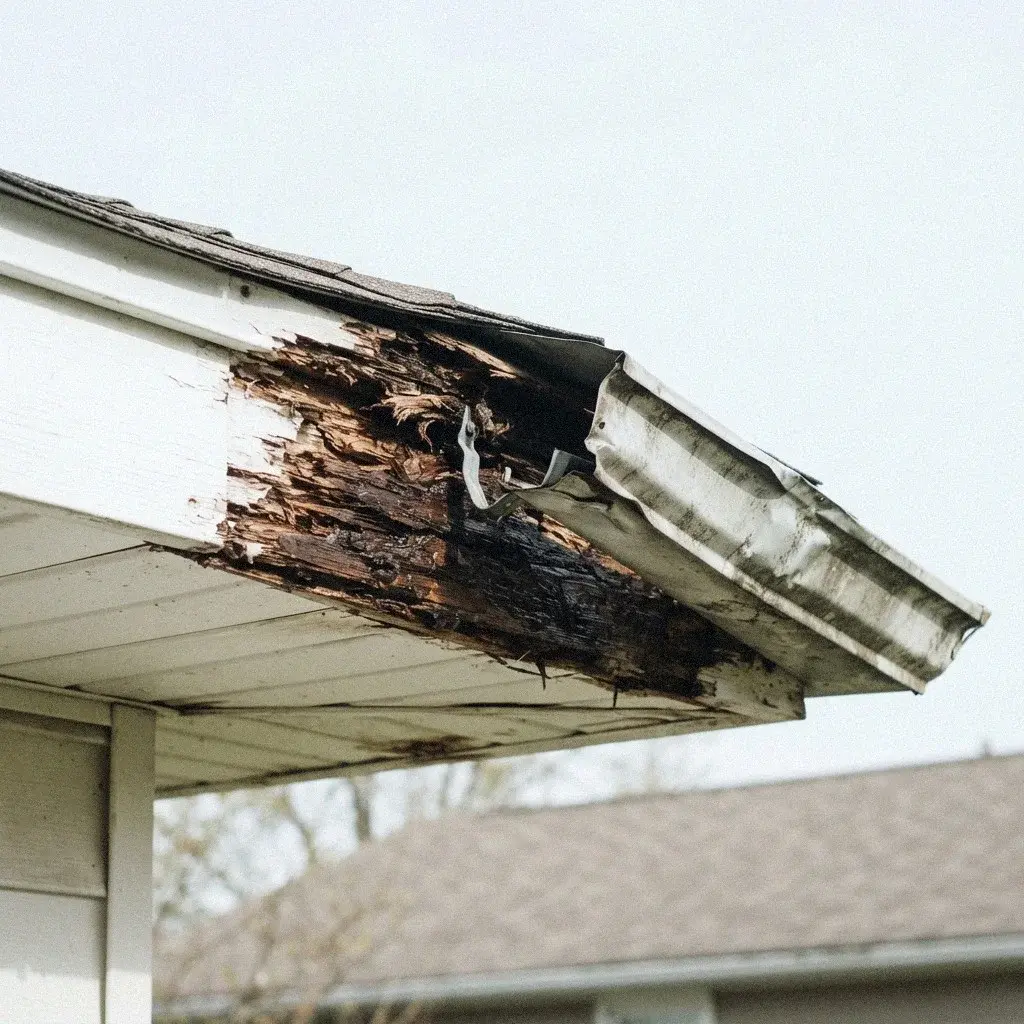
Rotted fascia and soffit shows along the roof edge in Bellevue: sagging or crumbling boards under the eave, dark streaking below gutters, and soft or stained wood visible from a ladder. Inside the attic, you'll see daylight gaps at the soffit or damp rafter tails where moisture has been sitting against the substrate for seasons.
Clogged gutters along the eave are the most common driver: overflow runs down the face of the fascia board instead of through the downspout, and that repeated soaking, not any pest, is what breaks down the wood in houses across Bellevue's older tree-covered blocks.
Bellevue homeowners tend to notice a roof problem in the wrong season, once the wet months have already set in. The licensed pros we connect you with can still inspect and patch through that stretch, but a full tear-off gets scheduled around drier weather whenever the job allows it.
Facts Worth Knowing
- Location
- Along the eave and rake edges of the roofline, most often where gutters overflow or soffit vents sit blocked behind them.
- Appearance
- Soft, spongy, or discolored wood at the fascia board and soffit panel, sometimes with visible sagging or gaps.
- Cause
- Trapped moisture from clogged gutters, blocked soffit vents, or a sealant failure at an old seam, not insects.
- Progression
- Worsens over weeks to months through Bellevue's wet season as the wood stays saturated with little drying time.
- Damage
- Left alone, rot spreads into rafter tails and roof decking, invites squirrels and wasps into the attic, and forces decking replacement instead of a simple fascia swap.
- Common Culprit
- Bellevue's wet season is when rot spreads fastest, since weeks of overcast days near Bridle Trails and Somerset keep fascia and soffit boards damp with no real drying window. Late spring through early fall is when replacement work gets scheduled, before the next stretch of soaked gutters and shaded eaves sets in again.
- Roof Age
- an estimated $600–$4500
What Waiting Adds to the Bill
Rotted fascia and soffit gets confused with a simple gutter overflow problem, since both show wet staining along the same eave line and both worsen in Bellevue's long wet season. The test is pressure and texture: press the fascia board and soffit panel directly. If they flex, crumble, or feel soft, wood is decaying, not just wet. A gutter overflow leaves staining on sound, firm wood; rot leaves soft, spongy wood the fastener will not hold in.
How It Gets Put Right
The fix is removing the rotted section of fascia or soffit down to sound wood, checking the rafter tails and roof edge decking behind it for water damage, and installing new boards with a drip edge and flashing detail that sheds water away from the wood going forward.
Painting or caulking over soft wood only hides the discoloration for a season; it does not restore strength to the board or stop water already inside it, and sealant applied over rot tends to trap moisture rather than block it, which speeds up decay underneath.
Composition shingle covers most roofs in this area, though enough homes still carry their original cedar for that to be a normal conversation too. Either way, age shows up differently depending on slope, shade, and how the roof drains. Get a straight read on condition before deciding whether patching still makes sense or a full reroof is the smarter move.
Reroof or repair: how to tell which one you need
| What the roof is doing |
The sensible option |
|---|
| A leak rarely starts where the water shows up inside. Flashing, valleys, and the joints around anything that pokes through the roof are where wet-season water finds a way in, and gutters clogged with moss or debris just send more of it toward the edges. Tracing it back to the source is most of the actual work. | Most reroofs here start with moss lift, not storm damage. Once moss gets under a shingle edge it holds water against the surface and never lets it dry between rain spells. Left alone through a wet season, that damp edge curls, the granules wash thin, and a patch job turns into a full tear-off sooner than the shingle's age alone would suggest. |
| Getting a straight answer on roof condition shouldn't require guesswork. The licensed pros connected through this site look past the shingles at flashing, gutters, and attic ventilation to explain what's actually happening and what it would take to fix it, so a Bellevue homeowner can decide with real information instead of a sales pitch. | Roof problems here rarely announce themselves. Moss creeps under an edge, a valley holds water a season too long, a vent stays blocked through another wet stretch, and the deck underneath goes soft before anyone climbs up to look. A short visit from the licensed pros we connect you with turns that guesswork into a plain list: what is failing, what can wait, what cannot. |
| Roof problems in this region build slowly. Moisture works into flashing and valleys over many wet months before a ceiling stain gives it away. Waiting for a visible leak means the damage underneath is already older than it looks. Checking a roof before symptoms show costs far less than repairing what months of trapped water leave behind. | Flashing and valleys take the brunt of a long wet season, and they're usually the first thing to fail once sealant ages or metal shifts underneath shingles. The licensed pros in this area can check those spots, clear clogged gutters, and flag ventilation gaps before a small drip becomes a bigger repair bill. |
What Is Worth Trying First
A homeowner can spot this from the ground: check for peeling paint, sagging fascia lines, or gutters pulling away near Kelsey Creek Park-area homes with heavy tree cover. Poking the wood or getting on the roof to check the decking underneath belongs to the licensed pros we connect you with, since soft substrate often means hidden damage.
The Damp and Air Quality Side
Rotted wood at the eave holds moisture against the house and can draw insects or nesting birds through the opening it creates. It is a decay and pest-entry concern more than a health hazard on its own, but a homeowner with mold sensitivity should have the attic side checked once staining reaches inside.
Want A Straight Answer On Your Roof?
A guide figure for rotted fascia and soffit locally is an estimated $600 to $4500, which is a band rather than a quote. Rot and soft decking here come from trapped moisture and poor attic ventilation, not insects, so pest treatment rarely belongs in a Bellevue reroof estimate. If the licensed pros we connect you with find soft sheathing near Bridle Trails or Somerset's shaded lots, expect a conversation about ventilation and skip sheathing, not a pest bill. pricing guide, and the service that handles this is Roof Decking & Sheathing Repair.