Offices & Storefronts
Commercial Roofing
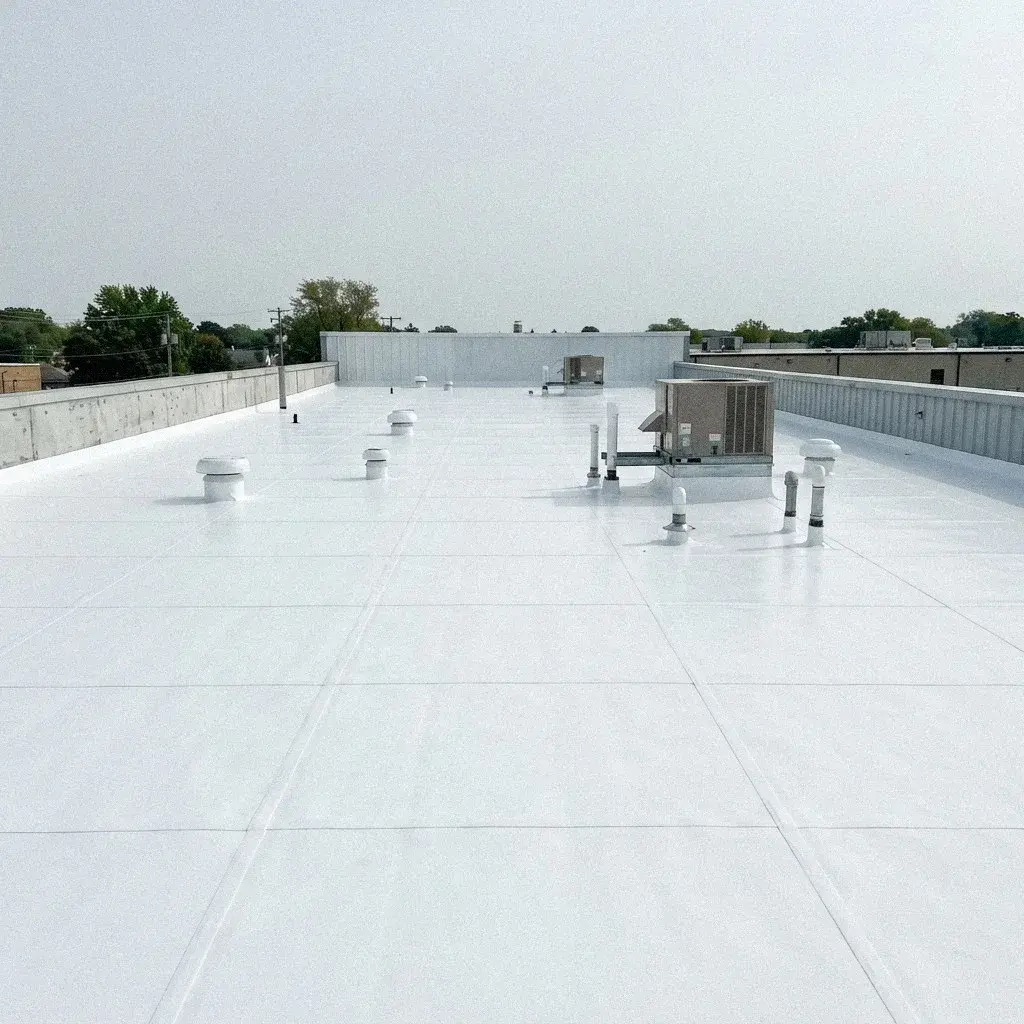
Phased, building-by-building roof work that keeps residents in place across the site.
A property manager schedules multifamily roof work building by building, not all at once, so most units stay occupied and livable. The licensed pros we connect you with sequence staging, parking, and resident notice around whichever building is active.
Apartment and multifamily properties in Bellevue carry a roofing problem single-family homes do not: every building has residents living under whatever work is happening above them. Along the 148th Avenue NE multifamily corridor and through neighborhoods like Lake Hills and Crossroads, property managers are balancing capital plans against occupied units, and a roof that starts failing does not wait for a convenient quarter. Moss holds water against shingles, valleys clog with fir and cedar needle debris, and on low-slope sections water finds seams instead of running off, all while tenants keep paying rent and expecting a dry unit.
A multi-building complex rarely fails all at once. One building near the breezeway develops a leak first, usually reported through a maintenance request rather than caught during a walk-through, and the property manager has to decide whether that is an isolated flashing failure or the leading edge of age catching up with the whole site. Bellevue's wet season, running long from October through the winter months, gives a damaged roof section weeks of standing exposure before anyone notices water staining a ceiling below. By the time a tenant calls it in, the interior leak report is often describing damage that started higher up months earlier.
What makes multifamily roofing different from a single house is scale without simplicity. A property might have roof area across six or eight buildings of varying age, each with its own history of patch work, cedar shake conversions, or partial reroofs, so no single answer covers the site. The licensed pros we connect you with can walk a property building by building, documenting which roofs are sound, which are close to the end of a reasonable service life, and which need attention now, so the capital plan reflects the real condition of each building rather than an average guess.
Sequencing work across an occupied multifamily site means treating each building as its own job with its own timeline, not one continuous project. Phased building-by-building sequencing lets residents in buildings not currently under work go on with normal life while another building gets a tear-off, and it lets the property manager stagger the capital cost instead of funding a full-site reroof in one billing cycle. The tradeoff is a longer overall project and more coordination, but for a property manager answering to residents and ownership, doing one building at a time is often the only version of the project that does not trigger a wave of complaints at once.
A multi-building apartment site rarely gets one crew across every roof at once. The licensed pros we connect you with sequence phased building-by-building work so residents in Bellevue complexes near the 148th Avenue NE multifamily corridor keep working breezeways, common corridors, and parking through the job. Resident notice goes out ahead of each building's turn, staging and dumpster placement shift as work moves, and the property manager gets a schedule tied to roof area per building rather than a single blanket completion date for the whole site.
| Stage | What Happens | Resident Impact |
|---|---|---|
| Who requests the work | One landlord, one tenant | Property manager, many residents |
| Sequencing plan | Single roof, one visit | Building by building, phased |
| Leak reports | Direct call to landlord | Maintenance request system |
| Staging and parking | Driveway, one household | Shared lot, resident parking plan |
| Notice needed | One tenant informed | Building-wide resident notice |
| Capital plan | One repair cost | Per-building capital plan |
| Common corridor and breezeway work | Flashing and trim tied into shared walkways | Temporary walkway pad rerouting |
| Final building walk-through | Property manager signs off before crew moves on | Parking and staging area returned to normal |
A multifamily site was not designed around a roofing project, so staging has to work around what the property already needs to keep running. A staging area for material and equipment competes with resident parking, especially on properties near Crossroads or Factoria where lots are already tight during the day. Dumpster placement is its own negotiation: it has to sit close enough to the building under work to be useful but far enough from walkway pads and building entries that residents are not navigating around it every time they leave for Bellevue College or a shift at a nearby employer.
Common corridors and breezeways complicate access in a way a detached house never does. Material has to move from the staging area up to the roof without blocking the path residents use to reach their own doors, and a walkway pad that is fine for foot traffic on a dry day turns slick fast once debris and moisture from a tear-off sit on it. Crews working an occupied building plan around when residents come and go, not just around daylight, because a blocked corridor at the wrong hour turns into a complaint before the day's work is even done.
The work-hour window on an occupied property is usually narrower than on a vacant commercial building, because nobody wants a tear-off starting before residents are awake or running past when people are trying to sleep. That window shrinks further once Bellevue's shorter daylight months arrive, which is one more reason phased scheduling across a multi-building site tends to stretch out. A property manager weighing bids should ask directly what work-hour window a crew plans to keep, because that answer affects how many days a single building realistically takes.
Interior leak reports on a multifamily property almost always arrive through the maintenance request system rather than through a resident calling to report roof damage directly, because most residents do not distinguish between a plumbing leak and a roof leak until someone looks. That means the property manager's first signal is often a stained ceiling tile or a wet patch of carpet, not a description of the roof itself. Recognizing that a pattern of maintenance requests across units on a top floor points to a roof problem, not isolated plumbing issues, is part of catching a failing section before it spreads.
Once a leak is traced to the roof, the property manager needs an inspection that answers a specific building's condition, not a generalized statement about the property. The licensed pros we connect you with can trace a leak from the interior report back to the likely point of entry, whether that is a flashing detail near a penetration, a clogged valley, or a low-slope section holding water longer than it should, and document what they find so it can be weighed against that building's place in the capital plan.
Capital planning for a multifamily property works building by building because roof area and roof age rarely line up evenly across a site built or added to in phases. A building from an earlier construction wave may be due for a full reroof while a newer building on the same property still has years of service life left, and lumping them into one line item on a capital plan either overspends on the healthy building or underfunds the one actually failing. Per-building assessment lets a property manager stage funding to match actual need rather than treating the whole complex as a single asset.
A property manager weighing a full reroof against a repair on a given building needs to know how much roof area is involved and what condition the decking is in underneath, because those numbers drive both cost and how long the work realistically takes with residents still in place. The licensed pros we connect you with can put a number on roof area and document decking condition per building so that a capital plan reflects real remaining life instead of a rough estimate carried forward from the last budget cycle.
None of this changes because the buildings sit in Bellevue rather than somewhere else, but the density of multifamily stock along corridors like 148th Avenue NE and the pressure to keep units rentable during work means timing and sequencing matter more here than on a single home. A property manager who plans phased work early, before a leak forces an emergency decision on one building, generally ends up spending less overall than one reacting building by building as maintenance requests pile up.
The questions worth asking before signing off on a multifamily roofing plan: which buildings on the site actually need work now versus later, what will resident notice and staging look like building by building, how will parking and dumpster placement be handled without cutting off access residents rely on, and how does the cost per building fit into the property's existing capital plan rather than sitting as a surprise. Those answers are what separate a plan that gets through a multi-building site smoothly from one that turns into a season of resident complaints.
Capital planning across a multifamily site works best building by building rather than as one lump sum. An owner or property manager in Bellevue can budget one roof area per building against a multi-year capital plan, timing tear-offs so occupied units in other buildings stay untouched that season. Phased building-by-building sequencing spreads cost, keeps disruption contained, and lets a property manager compare bids per building instead of guessing at a whole-complex number that overstates near-term cash needs.
Reroof timing in this area tends to bunch up around the same few dry months, so a property owner who waits until the wet season starts often waits weeks longer than expected for a crew. Booking ahead of that crunch, even before a roof is failing outright, keeps the choice of materials and timeline in your hands.Downtown Bellevue, West Bellevue / Enatai and Yarrow Point. Bellevue roofs don't fail the way people expect. It isn't one storm — it's months of low, steady drizzle that never fully dries between rounds, working into valleys and flashing until something gives. Moss adds to that by holding moisture against the shingle long after the rain stops. A roof here ages on that pattern, not on a single bad afternoon.
Two roofs with the same age and the same shingle can wear at completely different rates depending on shade, slope, and how much moss has taken hold. The licensed pros we connect you with size up those conditions on-site rather than quoting from a photo, so the estimate matches the roof, not a guess.Cost depends on what a roof actually needs, and that only shows up close up. A read on shingle condition near Bellevue Way or a shaded lot by Bridle Trails still means someone climbing the ladder. The licensed pros we connect you with can price a tear-off, a moss-heavy reroof, or a cedar-to-composition conversion once they've seen the deck itself, not a photo of it. pricing guide, and the commercial overview covers how a scheduled program works.
Commercial Roofing
Industrial Roofing
Food Service Roofing
Notice usually goes out through the property manager, not the roofing crew, with a letter or posted notice naming which building and which dates. Bellevue's wet season narrows the real work-hour window, so dates can shift with weather. Residents in that building should expect noise overhead, temporary parking changes, and a staging area or dumpster placement nearby for the duration of that building's work only.
Staging area and dumpster placement get worked out building by building, since a multi-building site in Bellevue rarely has room to stage for everything at once. Expect a stretch of resident parking near the affected building to be blocked off, walkway pads protected with plywood or matting, and breezeway or common corridor access kept open except for short windows during material drops.
An interior leak report from a resident should go to the property manager first through the normal maintenance request process, not directly to the roofing crew. The property manager can then flag which building and which roof area the report points to, which matters on a multi-building site where only one building may be mid-repair while others are untouched.
Low-slope sections over breezeways, covered parking, or connector roofs between buildings often fail before the steeper sloped roofs do, since flat water sits longer during Bellevue's long wet season. A property manager tracking interior leak reports by building can usually spot that pattern and move a low-slope section up the capital plan ahead of buildings with only sloped coverage.
Get a per-building quote that fits your capital plan and keeps residents in their units throughout the work.
Call (425) 380-0932