What Causes It Around Here
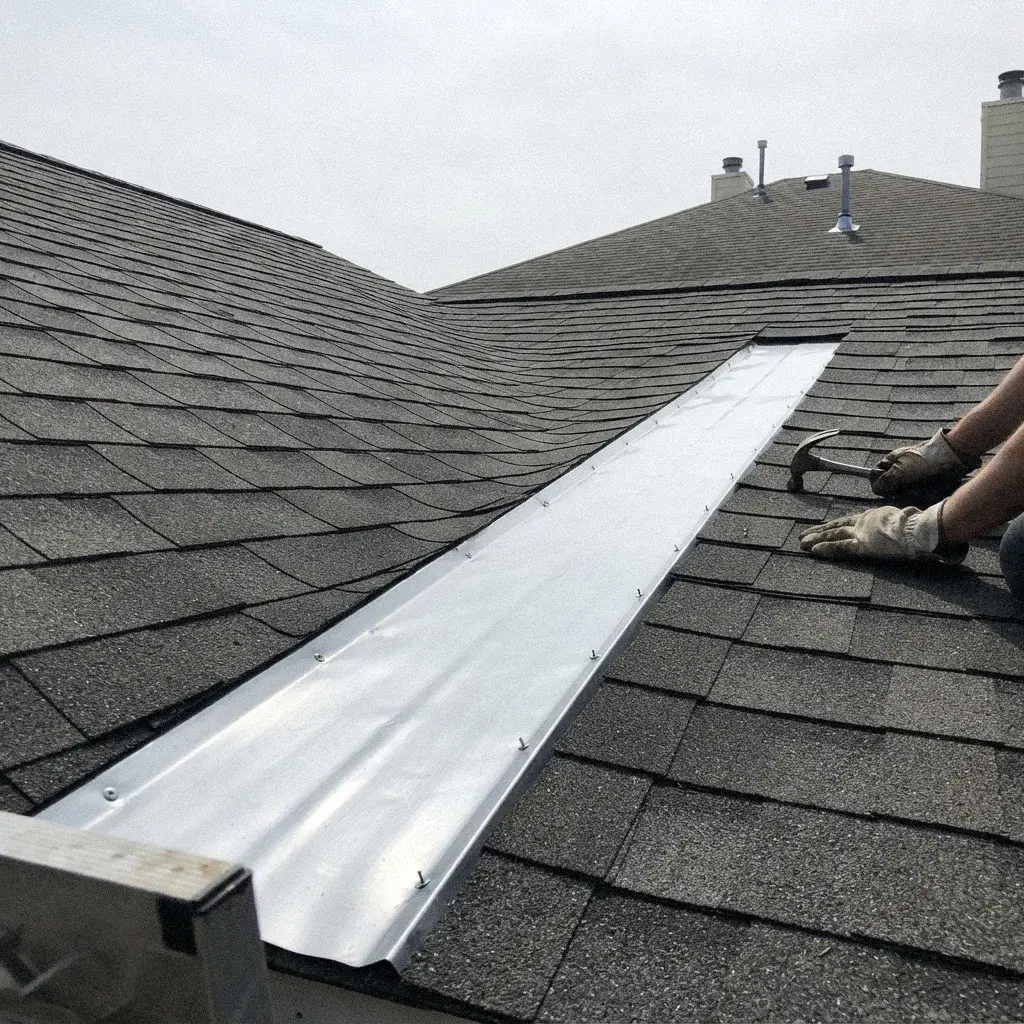
Valleys funnel the runoff from two separate roof planes into one channel, so they carry more water than any other part of the roof. In Bellevue's long wet season, that concentrated flow finds any gap in the flashing, fastener, or underlayment far faster than a flat roof plane would.
Valleys funnel roof runoff from two slopes into one channel, so any flashing gap or granule buildup shows up first as a leak here rather than on open field. Bellevue's tree cover near Kelsey Creek and Mercer Slough keeps valleys damp longer between storms, accelerating sealant failure and shortening the life of the metal underneath.
A quote for a Bellevue reroof should read as one number, not a number plus tax added later. Sales tax applies to labor as well as materials here, and a contractor cannot legally charge it on materials alone. Ask the pros we connect you with to show the tax separately so the total is not a surprise.
Quick Facts on This
- Location
- The diagonal channel where two roof slopes meet, running from ridge or hip down toward the eave.
- Appearance
- A diagonal ceiling stain, rusted or lifted valley metal, or moss and needle buildup pooling in the channel.
- Cause
- Clogged debris, corroded or undersized flashing, cracked underlayment, or sealant failure along the valley seam.
- Progression
- Moderate to fast; concentrated water flow finds gaps quickly, especially through Bellevue's long wet season.
- Damage
- Left unresolved a valley leak rots decking, stains ceilings below, and lets water track sideways into fascia and soffit framing.
- Best Window
- Valley leaks show up most during the long stretch of overcast, rainy weeks that make up Bellevue's wet season, when a valley never gets enough dry time between storms to reveal a slow leak until the ceiling stain finally appears.
- Roof Type
- an estimated $450–$2400
Why It Gets More Expensive
Valley leaks get mistaken for a failed pipe boot or other roof penetration, since both can show as a ceiling stain far from the obvious entry point. The test: trace the stain's high point. A penetration leak radiates from one fixed spot around a vent or pipe; a valley leak tracks along the diagonal line where two roof planes meet. From the attic, follow the water stain uphill. A penetration leak stops at a single pipe boot or vent collar. A valley leak follows the valley's diagonal seam toward the ridge or hip above it, and the staining widens after heavier rain rather than staying fixed at one point.
What Fixing It Involves
A real fix means opening the valley, replacing corroded or undersized flashing and any failed underlayment beneath it, and re-lacing the surrounding shingle or cedar shake so the valley sheds water cleanly again from ridge to eave.
Where decking has softened from long-term moisture, the substrate under the valley gets cut out and replaced before new flashing goes down. Skipping this step means new flashing over rotten sheathing, which fails again within a season or two.
Wet-season damage tends to hide in the details: a valley that channels water where it shouldn't, a vent boot gone brittle, moss holding moisture against the surface longer than it should sit there. None of that shows from the ground. A closer inspection catches it while a repair is still cheaper than waiting for it to spread underneath.
A vented attic against blocked vents: the signs of each
| Where you are now |
The usual recommendation |
|---|
| Comp shingle ages differently on a shaded slope than on one that catches sun most of the day. Moss holds moisture against the surface and lifts edges long before the shingle itself wears out, which is why two roofs of the same age can need very different work. A pro who looks at yours in person can tell which stage you're actually at. | Wet-season damage rarely announces itself. Water works into flashings and valleys over weeks of overcast weather, moss lifts shingle edges, and gutters clogged by fall debris back up against the roofline. The pros we connect you with check attic ventilation and decking condition, not just the surface, before pricing any repair or reroof. |
| Shade and moisture do more damage than age alone in this climate. A roof under heavy tree cover can wear out years before an identical one in open sun, simply because it never fully dries between rains. The licensed pros we connect you with know how to read that difference on sight. | What shortens a Bellevue roof isn't one storm but the slow accumulation of wet weeks with no real drying time between them. Moss lifts shingle edges, valleys clog, flashing works loose, and the damage compounds quietly for years before a homeowner sees a stain on the ceiling. Catching that pattern early is the whole point of a routine roof check. |
| Moss is not just an appearance problem. It holds water against shingles, lifts edges, and shortens the life of a roof that would otherwise last for years. Left alone through several wet seasons, it turns a simple cleaning job into a full section of damaged decking. Catching it early keeps the fix small. | Every roof problem has a cause, not just a symptom. Trapped moisture, blocked ventilation, and shaded surfaces that never fully dry all shorten a roof's life in their own way. The licensed pros we connect you with trace the actual source before proposing work, so a repair addresses what's happening under the surface, not just the spot that's visibly failing. |
What Is Worth Trying First
From the ground, a homeowner can watch for a ceiling stain that tracks diagonally and check downspouts for granule buildup after storms. Confirming rusted flashing, soft decking, or a cracked valley liner requires someone on the roof, which belongs to the licensed pros we connect you with.
How It Affects the Rooms Below
Standing water and trapped needle debris in a clogged valley keep the decking underneath damp for weeks at a time. That sustained dampness is what drives sheathing rot and mold growth in the attic below, not any single storm.
Curious What A Reroof Would Cost You?
Expect an estimated $450 to $2400 for valley leaks here, with the pitch, the access and how much decking is sound doing most of the moving. Rot and soft decking here come from trapped moisture and poor attic ventilation, not insects, so pest treatment rarely belongs in a Bellevue reroof estimate. If the licensed pros we connect you with find soft sheathing near Bridle Trails or Somerset's shaded lots, expect a conversation about ventilation and skip sheathing, not a pest bill. pricing guide, and the service that handles this is Roof Leak Repair.