Bellevue homes spend most of the winter under low, steady rain rather than hard storms, and that pattern shows up on a roof in quiet ways. By the time the sky dries out in spring, moss has had months to spread, gutters have filled and emptied a hundred times, and any small gap in flashing has had every chance to let water in. A spring walkaround is just a homeowner looking at what those months actually did, before the dry season arrives.
Why Spring Is the Window
Spring matters less because the roof is suddenly at risk and more because it is finally dry enough to look closely and dry enough to fix what is found. Reroofing and repair crews around Bellevue fill up once the reliable dry stretch starts, so a homeowner who walks the roof and attic in spring has time to get on a schedule before that window gets tight. Waiting until summer often means waiting behind everyone else.
Start With Missing Shingles
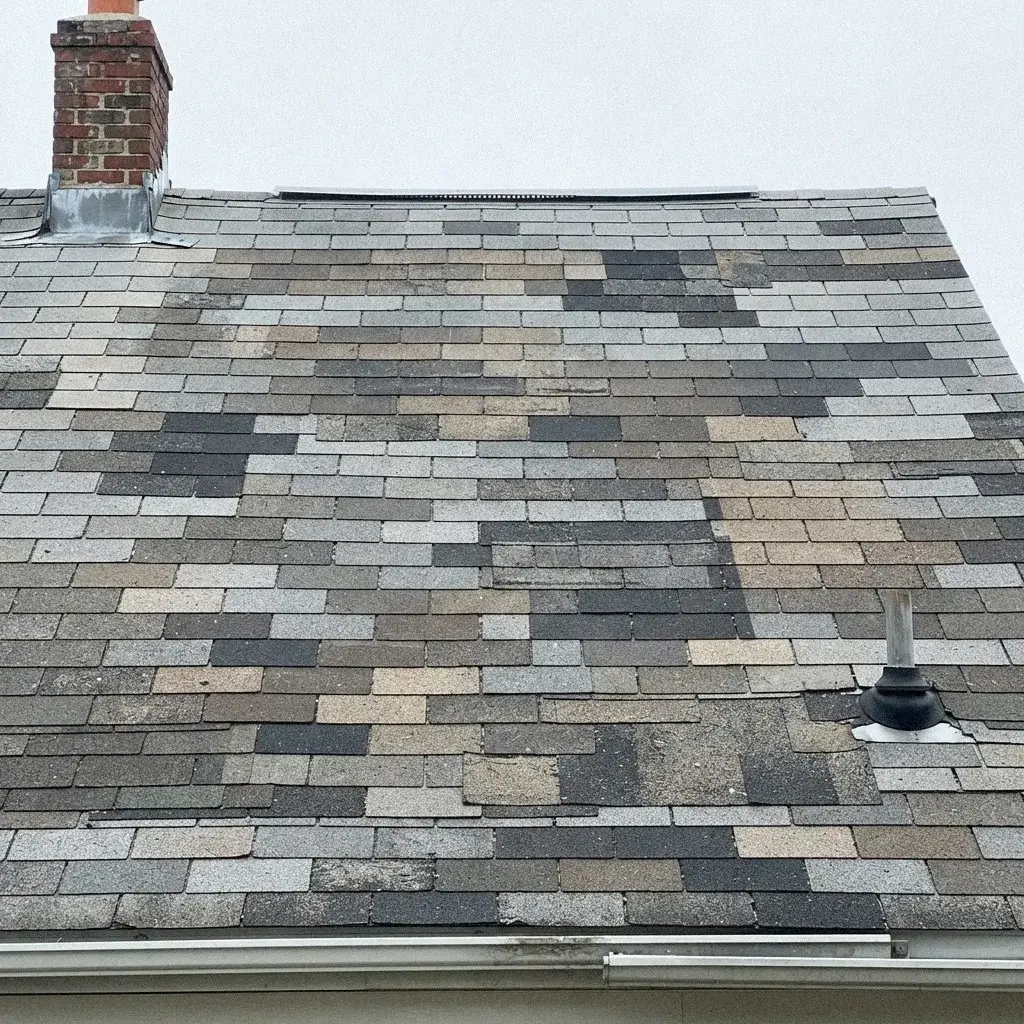
From the ground, with binoculars or just a careful eye, look for shingles that are missing outright, curled up at the edges, or noticeably darker than the shingles around them. Winter wind off the south and southwest, sometimes carrying a falling branch from a nearby conifer, is the more common cause of a missing shingle here rather than any dramatic storm. A gap where one shingle should be is an easy fix in spring and a bigger one if it sits through another wet season.
Moss and Debris Buildup
A spring walkaround starts at the ground in Bellevue, looking up rather than climbing up. Winter damage often shows before you're near the roof at all: a missing shingle caught in the gutter, granules collecting at downspout outlets, or a streak of moss reaching down from the ridge cap. Walk the perimeter near Bellevue Way or through a Bridle Trails lot shaded by conifers, and check where branches have dropped, since Bellevue's tree cover means debris removal is a recurring spring task rather than a one-time chore.
Checking Flashing and Valleys
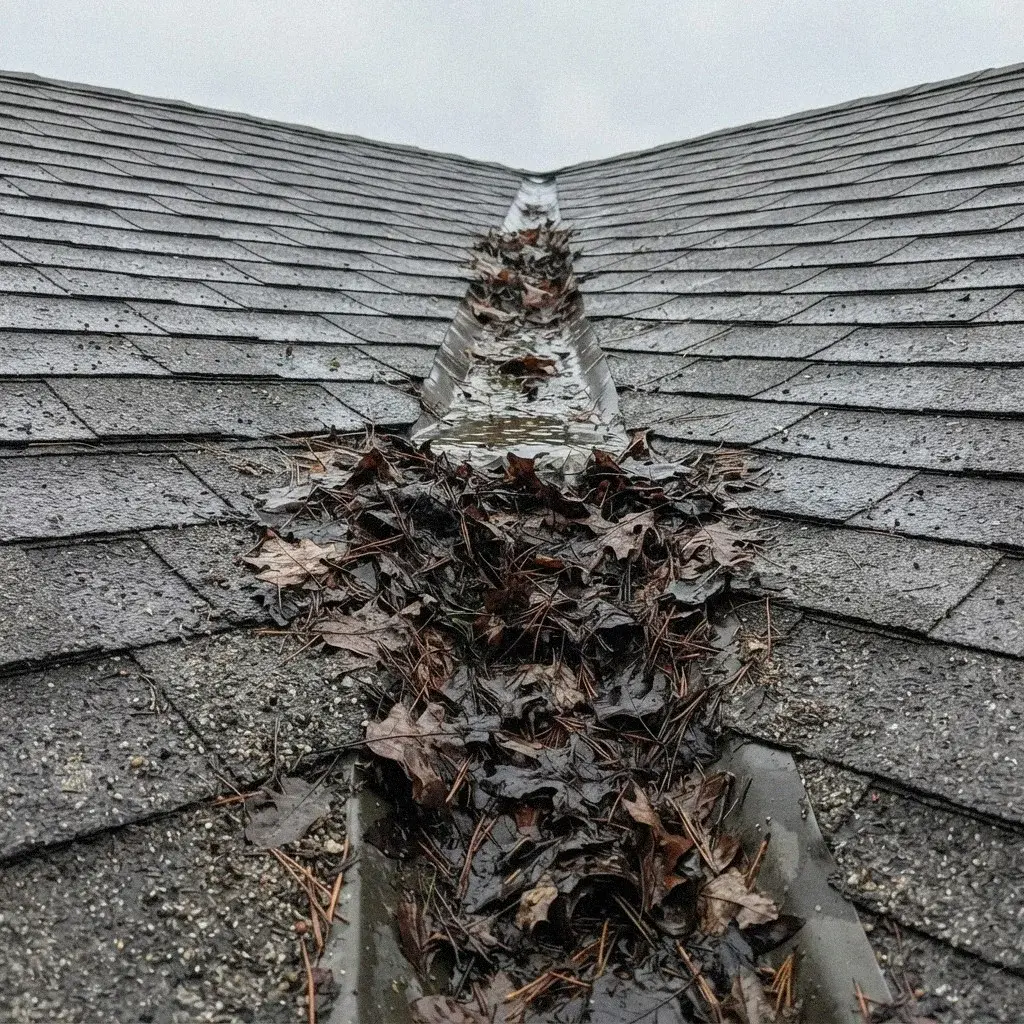
Loose flashing rarely announces itself from the driveway, so look at valleys, chimneys, and pipe boot seals where winter's weeks of rain do the most damage. A gutter check matters just as much: packed needles near a Somerset or Lakemont hillside home slow downspout flow, and standing water at the fascia line is a sign worth noting before summer. If sealant around a vent pipe looks cracked or pulled away, that's a sealant inspection item, not yet a repair.
Gutter and Downspout Flow
A gutter check after winter usually turns up sagging sections, granule buildup, or a downspout that is only trickling instead of running clear. Poor downspout flow sends water straight down the side of the house instead of away from the foundation, which matters more on a sloped lot than people realize. Clearing gutters and confirming each downspout actually discharges water away from the house is a basic spring task that prevents bigger problems later.
Ridge Cap and Roof Edges
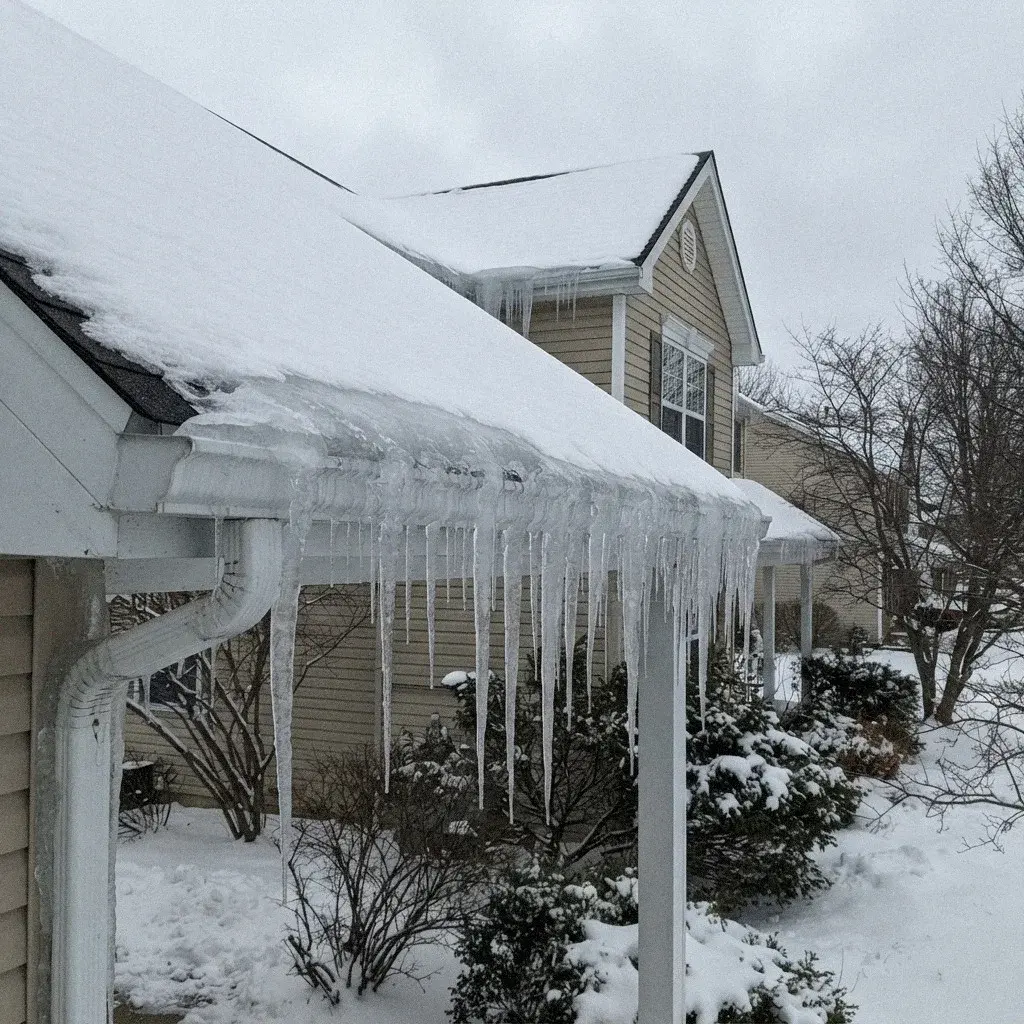
The ridge cap, the row of shingles capping the peak of the roof, takes constant wind and rain exposure and is worth a close look each spring. Lifted or cracked ridge cap shingles let water travel further into the roof system than a homeowner might expect from such a small gap. The same goes for roof edges near gutters, where repeated wetting can curl shingles faster than on the rest of the roof.
Moving Into the Attic
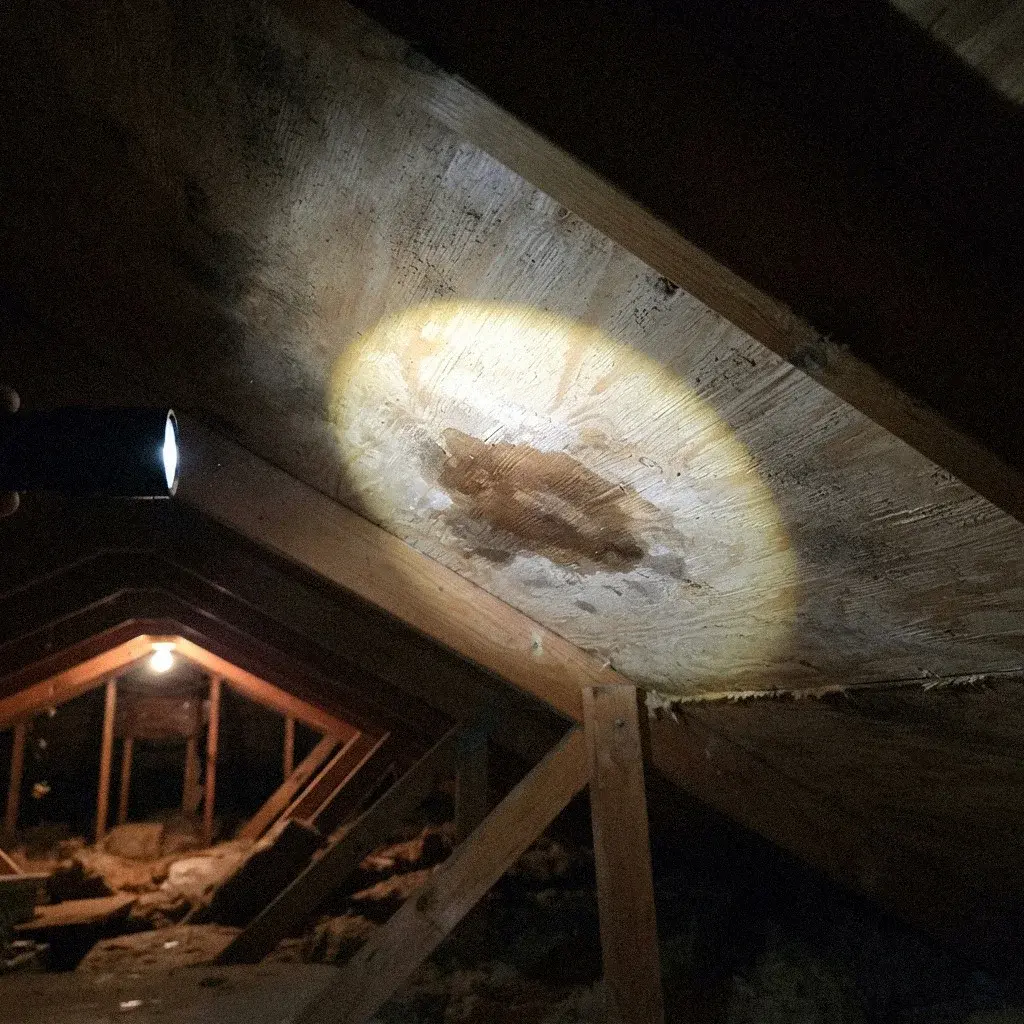
An attic inspection rounds out the walkaround, and it takes only a flashlight. Look for dark staining on the underside of the sheathing near valleys or penetrations, a stain check that often catches slow leaks before they reach the ceiling below. Check that soffit vents aren't blocked and that daylight doesn't show through the roof deck. Homes near Coal Creek Parkway or Cougar Mountain, where lots sit shaded and damp longer into spring, tend to hold moisture in the attic a bit longer than open, sunnier lots elsewhere in Bellevue.
What a Stain Check Reveals
A stain check means looking for discoloration on the attic sheathing, rafters, or insulation, not waiting for a ceiling stain to show up downstairs. A dark ring around a nail point, a streak running down from a roof penetration, or matted insulation are all signs that water has been getting in somewhere above. Catching this in the attic in spring is far cheaper than catching it later as a soft spot in the drywall.
Ventilation and Condensation Signs
Regional building-science reporting points to blocked soffit vents and bathroom or dryer vents that dead-end in the attic instead of outside as common causes of attic condensation in this area. A spring look at the attic is a chance to confirm vents are clear and that nothing is exhausting moist air where it shouldn't. Musty smells or visible mold on the underside of the roof deck are signs that ventilation, not just the roof surface, needs attention.
Sealant and Penetration Points
A sealant inspection covers every place something passes through the roof: vent pipes, skylight edges, satellite mounts, anything with a fastener in it. Sealant that has cracked, shrunk, or pulled away over the winter is a small thing to fix and an easy thing to miss from the ground. Checking these points in spring, alongside the flashing and valleys, closes out most of the places a Bellevue roof tends to let water through.
Building your spring punch list
What a homeowner finds during this walkaround becomes a punch list, not necessarily an emergency. Some items, like a cracked pipe boot or a sagging gutter section, are worth scheduling before the dry season fills the calendar. Others might just need watching through another season. Either way, walking the roof and attic once the rain lets up gives a Bellevue homeowner an honest read on where the house actually stands.
Dealing with this in your home?
Bellevue roofs age on their own schedule. Wooded lots near Bridle Trails and Somerset stay shaded long after storms pass, and conifer cover keeps surfaces from ever fully drying between fronts. Add a reroof window that tightens once summer ends, and small maintenance calls turn urgent fast. The sections below sort out timing, materials, and who actually answers for the work overhead.