Bellevue does not see winters as harsh as places east of the mountains, but a hard freeze still arrives most years, usually behind a cold snap that follows the wet season. The roof over a house near Lake Washington or up in Cougar Mountain does not react to that freeze the way people expect. It is not the cold itself that causes trouble. It is what the cold does to a roof surface that has spent months soaked, then suddenly stops draining and starts contracting.
What a Hard Freeze Means
A hard freeze is a stretch of temperatures low enough, long enough, to freeze standing water and saturate roofing materials solid. In Bellevue that usually means a night or several nights near or below freezing, often with a clear sky after a run of rain. The roof deck, shingles, and anything holding moisture from the wet season go from damp and pliable to rigid within hours. That shift, not the raw temperature, is what stresses a roof that was fine the week before.
The Freeze-Thaw Cycle
Composition shingle roofs in Bellevue spend the wet season absorbing moisture at seams, nail penetrations, and any spot where the surface has already worn thin. When a freeze hits, that trapped water expands as it turns to ice, and it presses outward against material that is not built to flex under that kind of force. As temperatures rise again and the ice thaws, the material relaxes back, only to repeat the cycle at the next freeze. Each round of this freeze-thaw cycle widens whatever weakness was already there.
Hairline Cracks Get Worse
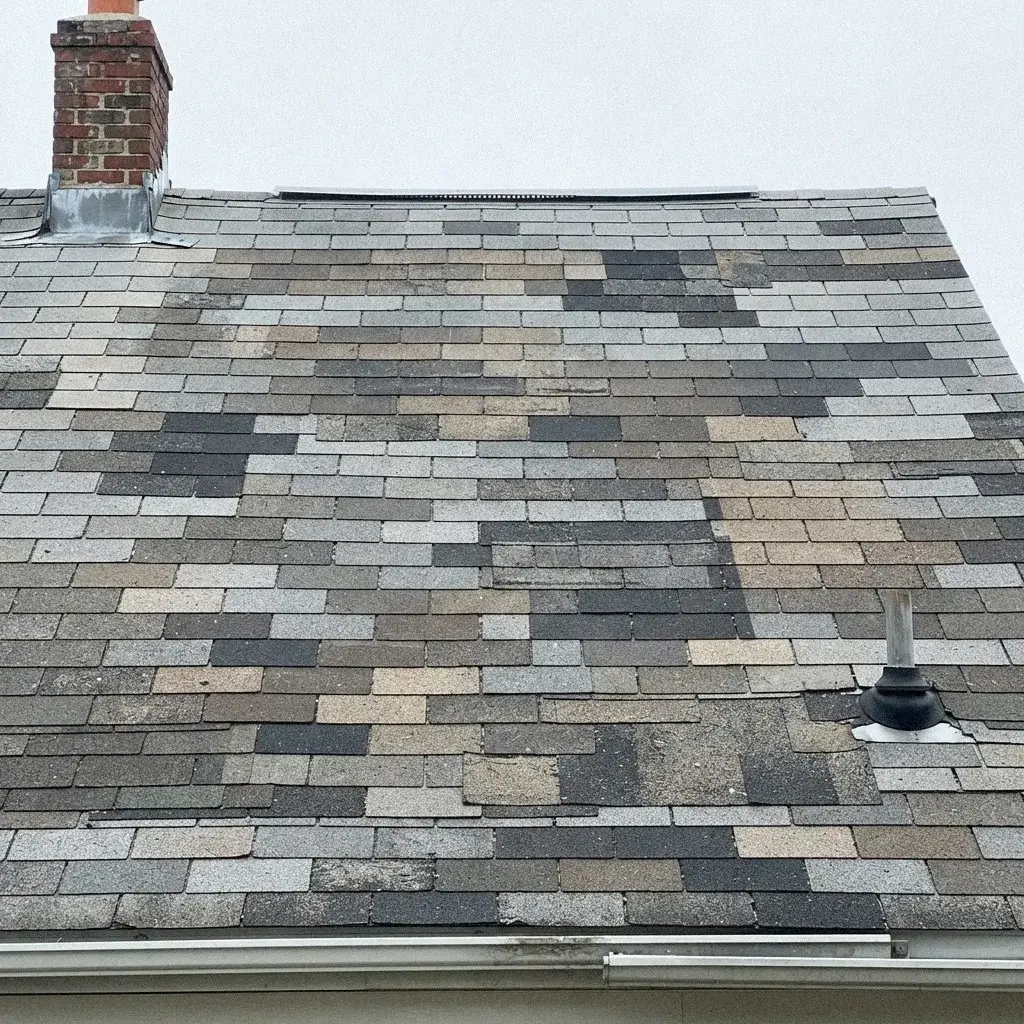
A hairline crack in a shingle, a pipe boot, or a bead of sealant rarely starts as a hard freeze problem. It starts as ordinary wear, sun exposure over years, or a shingle edge lifted by moss. The freeze is what turns that small crack into a real opening. Ice forming inside a hairline crack pushes the edges apart with more force than the material can absorb, and once the crack opens wider, more water gets in during the next rain, ready to freeze again at the next cold snap.
Shingles Turn Brittle Cold
Composition shingles are flexible in mild weather, which is part of how they shed water and survive being walked on during a repair. Cold changes that. Below freezing, the asphalt base of a comp shingle stiffens, and a brittle shingle that would normally bend under light pressure can crack instead. This is a form of thermal shock: the material was fine at 45 degrees and is not fine at 25, and the shift happens too fast for the shingle to adjust gradually.
Sealant Failure in Cold Air
Every roof has sealant somewhere, around vent pipes, at flashing edges, along skylight curbs. Most sealants used on Bellevue roofs are rated for a working temperature range, and a hard freeze can push conditions below that range. A cold-weather sealant failure looks like a bead that has gone stiff, pulled away from the surface it was bonded to, or cracked along its length. Once that bond breaks, the sealant is no longer doing the one job it had, keeping water out at a seam.
Split Pipe Boots at Vents
The rubber boot around a plumbing vent pipe is one of the more failure-prone parts of any Bellevue roof, and cold makes it worse. Rubber stiffens in low temperatures the same way asphalt does, and a boot that already had a few seasons of UV wear can split along the collar where it grips the pipe. A split pipe boot does not always show water damage right away, since the opening may only widen fully once the material moves through several freeze-thaw cycles.
Frozen Gutters and Downspouts
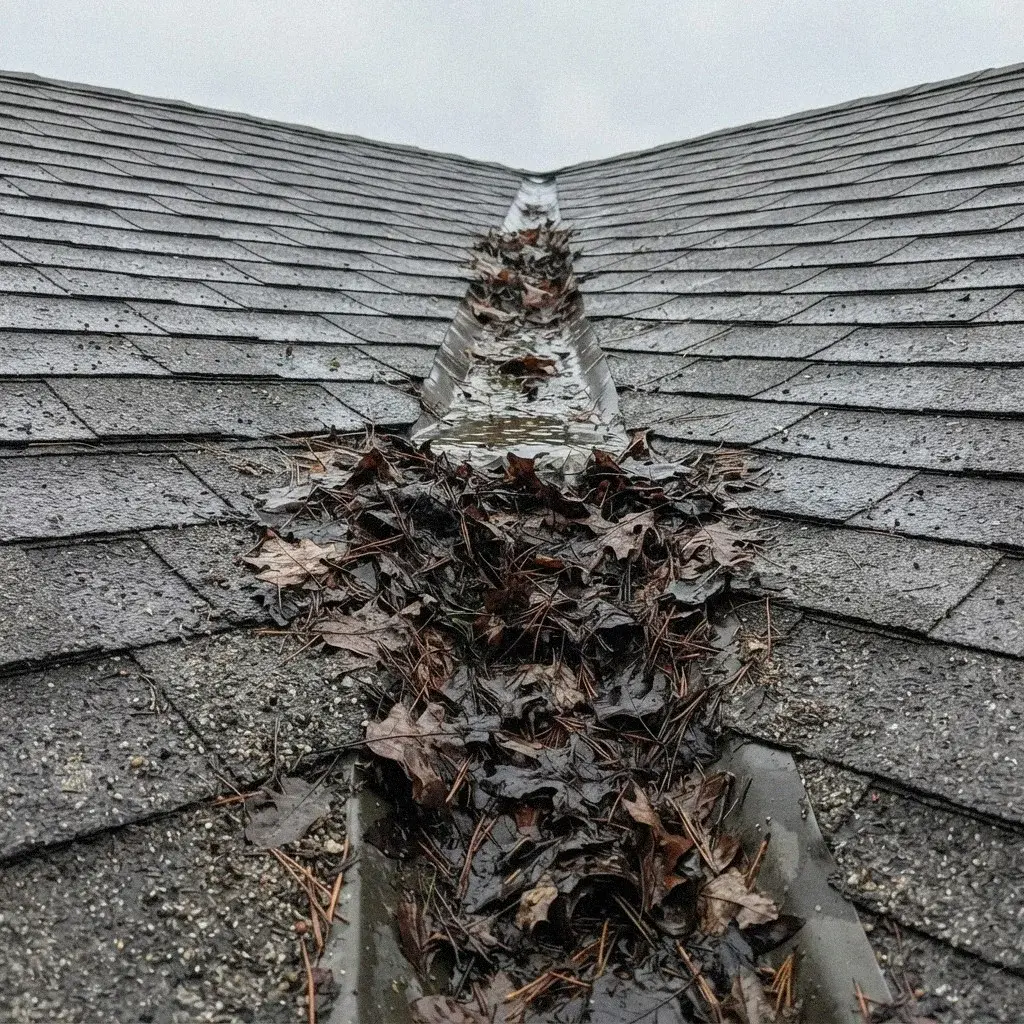
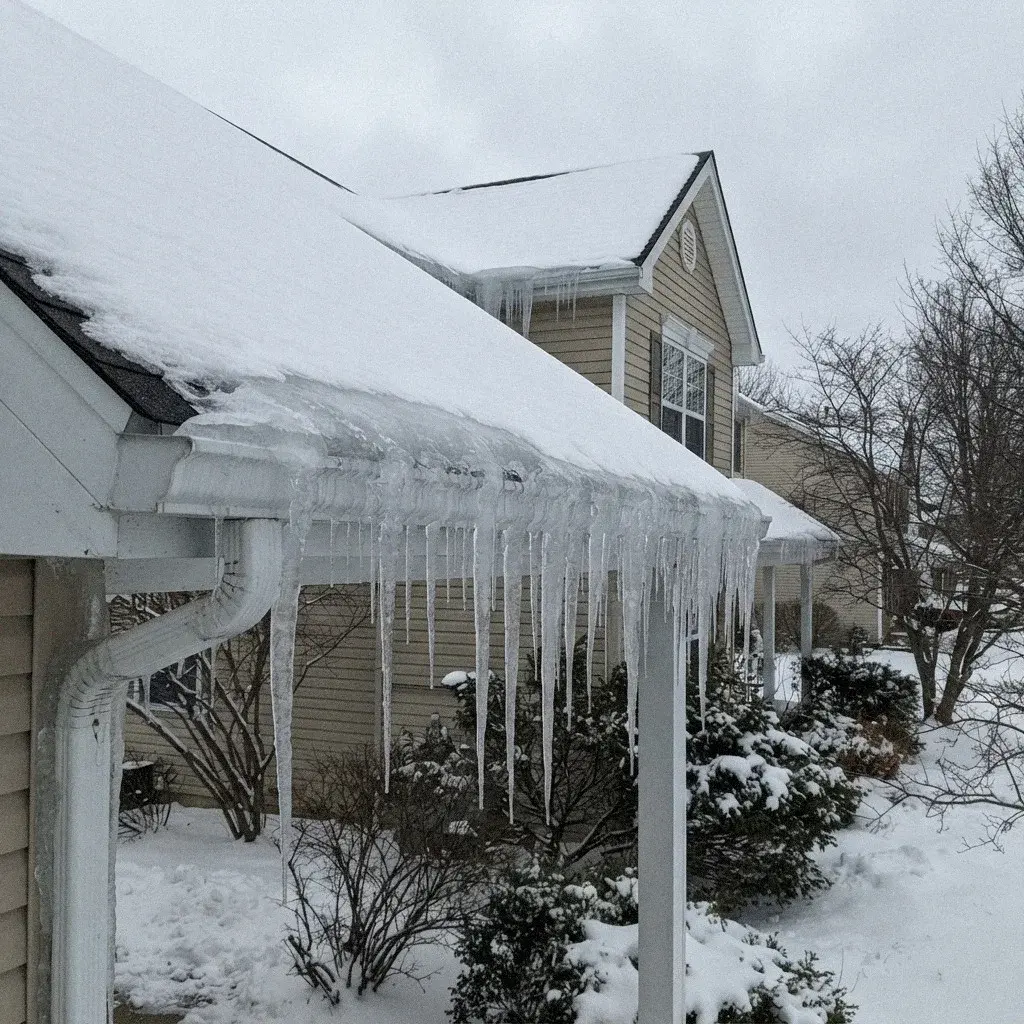
Gutters and downspouts around Bellevue homes carry a steady load of runoff through the wet season, and a hard freeze can lock that water in place. A frozen downspout stops draining entirely, so meltwater backs up along the gutter run with nowhere to go. Gutter ice adds weight to the fascia and hangers, and on homes near heavy conifer canopy, needles and debris already narrowing the channel make it easier for ice to form a solid plug rather than a thin skin.
Ice Forming at the Eave
The eave, the lower edge of the roof where it overhangs the wall, is where ice tends to show up first after a freeze. Meltwater running down from higher on the roof reaches the cooler eave and can refreeze there even while the rest of the roof is shedding water normally. This is not the full ice dam buildup seen in heavier snow climates, but even a modest ice ridge at the eave can force water sideways under shingles that were never meant to handle standing water.
Why Roof Traffic Is Risky
A frozen roof is not a safe place to stand, and this matters more in Bellevue than the mild climate suggests, because homeowners do not expect it. Roof traffic damage happens when weight on a frozen shingle cracks material that would have flexed under the same foot in warmer weather. Add any icy patch near a valley or eave and the footing itself becomes unreliable. Whatever needs a look after a freeze, a downspout, a boot, a lifted shingle, is safer assessed from the ground or a ladder.
What Shows Up After Thaw
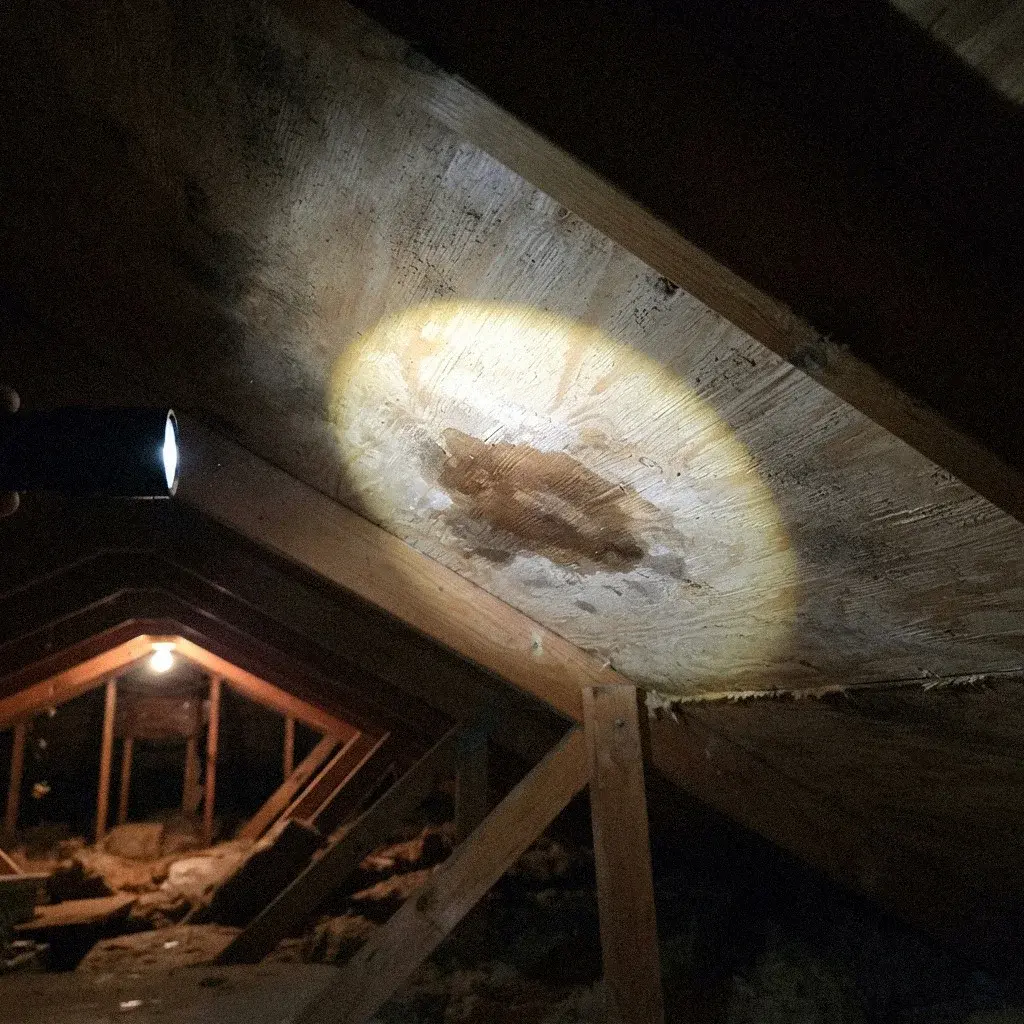
The damage from a hard freeze often is not visible until the thaw, when meltwater finds every opening the cold created. A ceiling stain that appears days after a cold snap, a damp patch near a chimney, or water at a light fixture usually traces back to a crack or sealant failure that opened during the freeze and only leaked once things warmed enough to move water again. Homes near Bellevue Way or up toward Somerset see this the same way homes near the lake do, since the mechanism has nothing to do with elevation.
Checking a Roof After Cold
After a hard freeze passes, a look at the roof from the ground, the gutters, the visible shingle courses, and the base of any vent pipe tells most of what needs telling. Cracked shingles, sagging gutter sections, or sealant that looks chalky and pulled away are worth noting even if nothing is leaking yet. The licensed pros we connect you with can take it from there if something needs a closer look, but the first read on a Bellevue roof after a freeze rarely requires climbing onto it.
Dealing with this in your home?
Bellevue roofs age on their own schedule. Wooded lots near Bridle Trails and Somerset stay shaded long after storms pass, and conifer cover keeps surfaces from ever fully drying between fronts. Add a reroof window that tightens once summer ends, and small maintenance calls turn urgent fast. The sections below sort out timing, materials, and who actually answers for the work overhead.