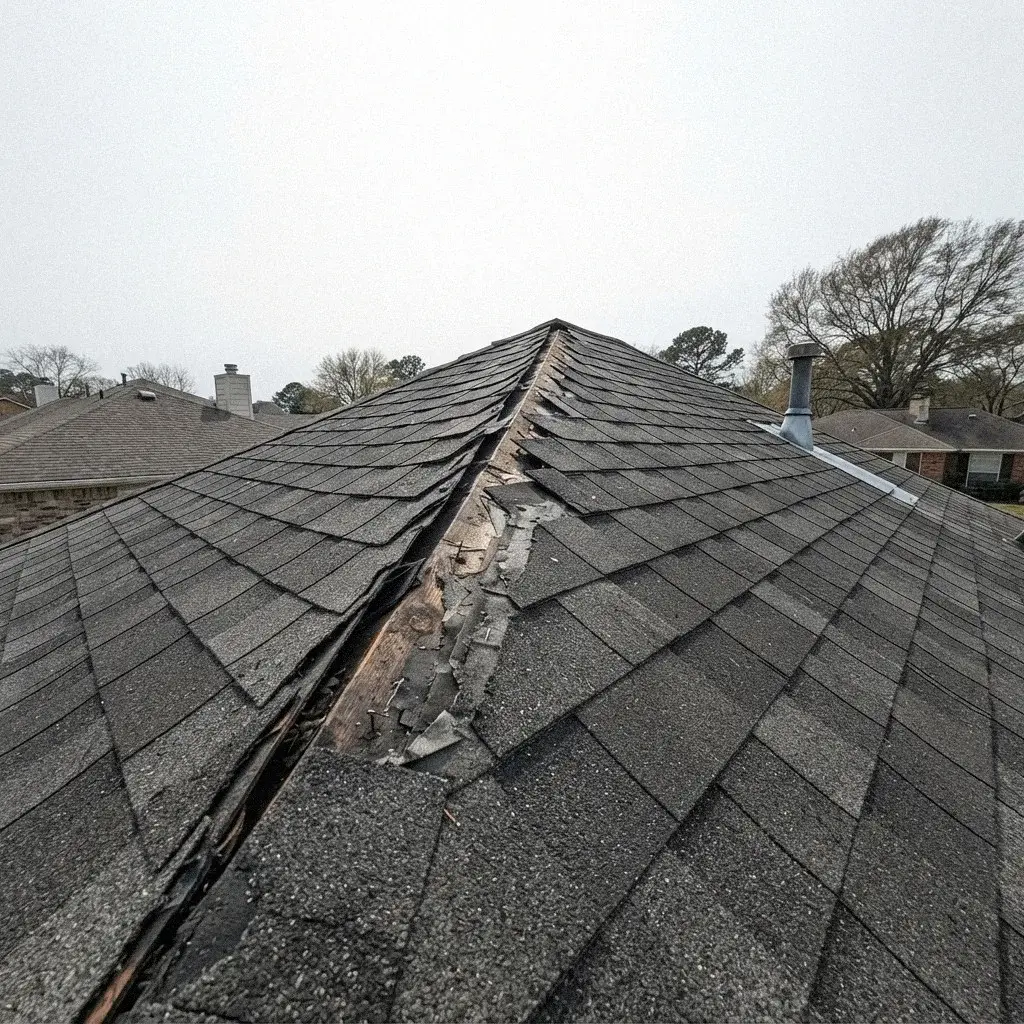
Why This Happens on Bellevue Roofs
Bellevue's ridge lines take the brunt of winter wind because they sit exposed above the roof plane while the rest of the surface is sheltered by pitch. Repeated Pacific frontal systems flex the cap fasteners over years, and once one fastener backs out, the cap next to it takes more load and follows.
Homes near Kelsey Creek Park and other older Bellevue neighborhoods often have ridge caps installed decades ago with sealant that has simply reached the end of its working life. Newer sealant products handle the region's long wet stretches better, but a home due for its first reroof still carries the original ridge detailing.
A quote for a Bellevue reroof should read as one number, not a number plus tax added later. Sales tax applies to labor as well as materials here, and a contractor cannot legally charge it on materials alone. Ask the pros we connect you with to show the tax separately so the total is not a surprise.
Quick Facts on This
- Location
- Along the ridge or hip line, at the very top of the roof plane where two slopes meet.
- Appearance
- Cap pieces standing up, rocking, or showing daylight at the seams instead of lying flat against the ridge.
- Cause
- Backed-out fasteners and sealant failure at the ridge, often after years of wind and repeated wet seasons.
- Progression
- Worsens gradually at first, then quickly once one cap lifts and neighboring caps lose their support.
- If Ignored
- Left alone, wind works under the loose caps, strips more each storm, and exposes the ridge nailing line to open water entry.
- Typical Response
- Ridge repairs need a dry roof surface for sealant to bond and cure, so the workable stretch sits in the warmer, drier part of the year before Bellevue's rains return in earnest and booking a crew gets harder.
- Slope Access
- an estimated $400–$2200
What Another Wet Season Would Do
Lifted ridge caps get mistaken for hip and ridge flashing failure, since both sit along the top edges of a roof and both let water in from above. The difference is what is actually loose: caps are the shingles or boards themselves pulling up at the seam, while flashing failure means the metal underneath has rusted through or separated from the substrate. Have the roofer press gently along the ridge line from a ladder. If individual cap pieces flex and show daylight at their seams, that is lifted caps. If the caps look seated but water still tracks in below them, the roofer needs to pull a cap and check the metal or underlayment underneath for corrosion or gaps.
What Fixing It Involves
A licensed roofer removes the loose cap pieces, checks the ridge board and decking underneath for softness, and reseats the caps with fresh fasteners and sealant rated for this climate rather than a bead applied over old cracked sealant.
Where more than a short run of caps has failed, replacing the whole ridge cap course, tying in properly at the rake and hip intersections, holds up longer than spot-patching individual pieces one at a time along the same ridge.
A roof here fails slowly. Wet-season weeks keep shingles from ever fully drying, and moss takes hold before anyone notices a problem. The licensed pros we connect you with check flashing, valleys, and gutters for the slow leaks that show up as a stain long after the water first got in.
Tear-off or recover: weight, cost, and when each applies
| What you have |
Usually the right call |
|---|
| Cedar shake still shows up on plenty of older homes, and swapping it for composition shingle changes more than the look of the roof. Skip sheathing under shake behaves differently than solid decking under comp, and attic ventilation often needs a second look once the switch is made. It's a real job, not a simple swap. | A reroof quote should read as one number, not materials plus tax plus a surprise later. Sales tax applies to the whole job here, labor included, at the rate for where the roof sits, and a contractor cannot legally tax only the materials. Ask for that total in writing before signing anything. |
| Moss lift and worn flashing tend to show up gradually, not overnight. Bellevue's shaded, tree-covered lots keep roof surfaces damp long after storms pass, and that steady moisture works into valleys and seams before anyone notices a leak. Catching those early signs before the next wet stretch is what keeps a small repair from turning into a full reroof. | Moss on a shaded roof section isn't a look to tolerate until reroofing time. Left alone it holds moisture against the shingle and speeds up wear that would otherwise take years. The licensed pros we connect you with clear it carefully rather than pressure-washing granules loose, then look at what kept that section damp long enough for moss to take hold in the first place. |
| Getting quotes from several contractors is worth the extra hour it takes. Prices vary more than most homeowners expect, and so does what's actually included — cleanup, disposal, flashing work, warranty terms. A written estimate that spells out materials and scope protects you later, especially if a dispute over the work ever comes up. | Moss doesn't just sit on top of a roof, it holds moisture against the surface long after the rest of the neighborhood has dried out. That trapped water works into seams, lifts edges, and turns a small weak spot into a slow leak nobody notices until a ceiling stain shows up. Catching it early is cheaper than replacing sheathing later. |
The Homeowner Side of This
A homeowner can scan the ridge line with binoculars from the yard for obvious gaps or shifted caps, and check the attic underside near the ridge board for damp wood or staining. Anything involving lifting a cap, checking fastener grip, or resealing belongs to the licensed pros we connect you with.
What It Does Indoors
Moisture that gets past a lifted ridge cap travels down the underlayment toward the nearest valley or penetration before it shows as a stain, so a small ridge problem can quietly wet insulation and framing well before anyone notices it from inside the house.
Time To Stop Guessing About That Roof?
Putting right lifted ridge caps usually runs an estimated $400 to $2200. That is a budgeting figure, not a price. Rot and soft decking here come from trapped moisture and poor attic ventilation, not insects, so pest treatment rarely belongs in a Bellevue reroof estimate. If the licensed pros we connect you with find soft sheathing near Bridle Trails or Somerset's shaded lots, expect a conversation about ventilation and skip sheathing, not a pest bill. pricing guide, and the service that handles this is Roof Repair.