Most Bellevue homeowners never get on their roof, and most never need to. A slow walk around the house, with a look up each roof plane from a few different angles, catches the signs that matter. This isn't a substitute for a real inspection. It's a way to know whether one is worth calling for. Start across the street where you can see the whole roofline at once, then move closer for the details near the eaves.
Start Across the Street
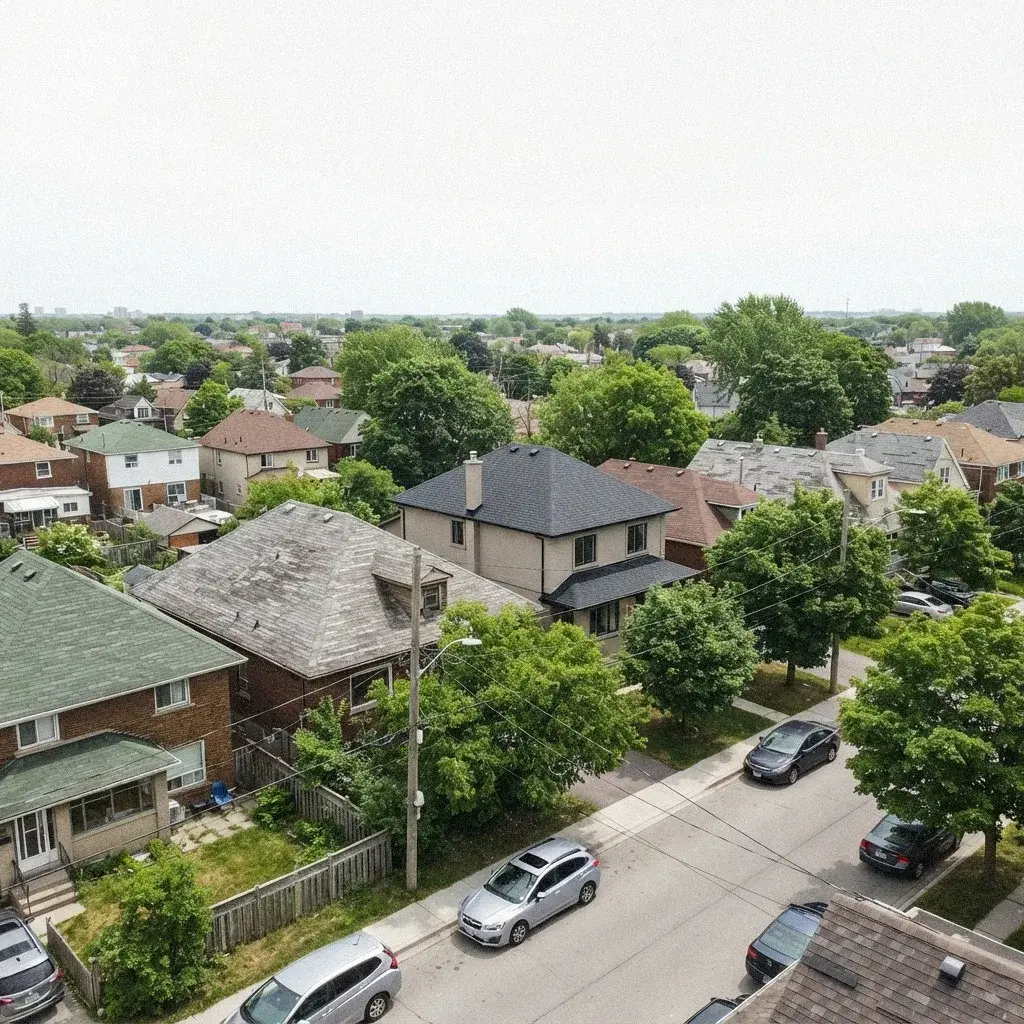
Back up far enough to see the ridge line against the sky. A straight ridge holds its line; a sagging one dips or waves, especially over the middle of the house. Compare the two slopes on either side of the ridge — they should mirror each other. On older Bellevue ramblers and split-levels, a slight sag near a chimney or valley is common enough to note, but a wave running the length of the roof is worth a closer look.
Shingle Course Lines
Each row of shingles, or course, should run in a straight, even band across the roof plane. From the sidewalk, look for a course that suddenly rises, dips, or looks thinner than the ones around it — that's often where water has been getting underneath. Bellevue's mix of composition shingle and cedar shake both show this the same way: a broken rhythm in an otherwise even pattern is the tell, more than any single missing piece.
Sightline Down Each Plane
Move to a spot where you can sight down the roof plane at a low angle, almost like looking down a fence line. Cupping shows up as shingle edges curling upward, catching shadow at the tips. Clawing is the opposite and worse — edges curling down while the middle stays raised, which usually means the shingle has been wet and drying out repeatedly. Either pattern reads as texture and shadow from the ground, not color.
Bald Spots and Granule Loss
A bald spot is a patch where the shingle's protective granules have worn or washed away, leaving darker, smoother asphalt showing through. From the ground it looks like a shadow that doesn't move with the sun. In Bellevue's wet season, granule loss tends to show up first on south and west-facing planes that take the most direct weather, though moss growth elsewhere on the roof can be doing more damage than a bald spot ever will.
Streaking and Moss Lines
Dark streaks running down a north-facing slope are usually algae, not dirt, and they follow water flow down the shingle course. Moss is different — it shows as raised, green or gray patches, often starting at the shaded edge near a tree line. Under heavy Douglas fir and cedar canopy common around Bellevue neighborhoods, moss lifts shingle edges as it grows, which is why a mossy patch often looks slightly puffed compared to the flat shingle around it.
Gutter and Downspout Outlets
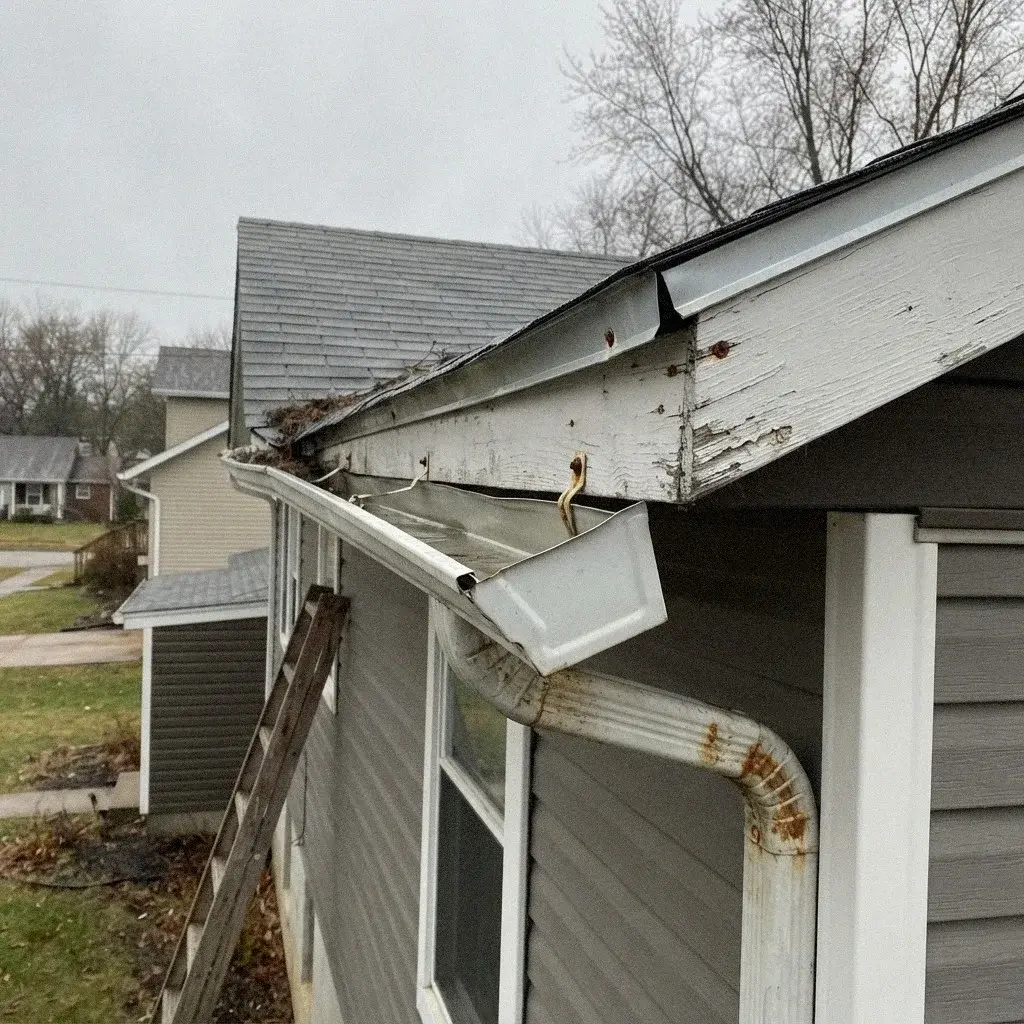
Walk the fascia line and look at where each downspout empties. A dry outlet during a rainy stretch means water isn't reaching it — check the gutter itself for a sag or a clog. Needle and cone debris from conifer cover is a routine sight in gutters here, and a gutter packed with it will overflow behind the fascia instead of into the downspout, which is a maintenance problem before it's ever a roof problem.
Staining on Siding and Soffit
Look just below the roofline at the soffit and the top courses of siding. A rust-colored or dark streak running down from the gutter apron usually means water is overshooting the gutter or leaking at a seam. Staining that shows up directly under a valley or a roof-to-wall junction, rather than under a flat gutter run, points toward the flashing at that junction rather than the gutters themselves.
Debris and Growth at the Drip Edge
The drip edge is the metal strip along the roof's lower border, and from the ground you're checking what's collecting against it, not the metal itself. A buildup of moss, needles, or granule grit sitting right at that edge holds moisture against the shingle longer than the rest of the roof, which is often why the first curling or bald spots on a roof show up along the eaves rather than higher up the plane.
A Pair of Binoculars Helps
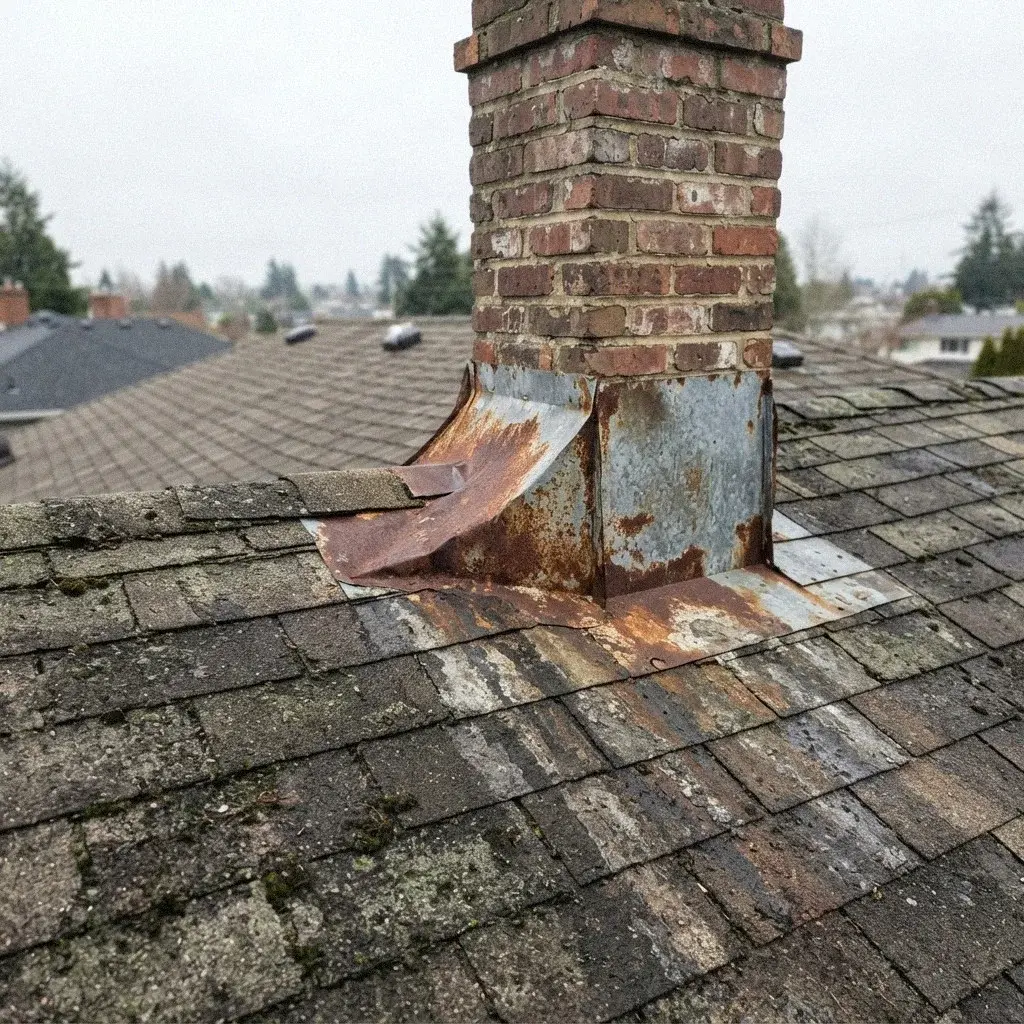
A basic binoculars check from the driveway or across the street resolves a lot of guesswork that the naked eye can't. It brings the shingle course lines, flashing seams around a chimney or skylight, and the ridge cap into focus without a ladder. It won't tell you what's happening on the underside of the deck, but it turns a vague impression of "something looks off" into a specific plane, a specific corner, worth describing to someone who inspects roofs for a living.
What Ground Signs Can't Tell You
Everything above is triage, not diagnosis. A clean-looking roof from the street can still have a soft spot under a valley, and a roof with a few bald spots might have years of life left. Ground signs tell you where to point an inspection, not whether a roof needs work or how much. That distinction matters more in a place like Bellevue, where wet-season moisture does most of the damage slowly and out of sight.
Getting an Answer, Not a Guess
If something you've spotted — a wavy ridge, a streaked slope, a stained soffit near Bellevue Way or out toward the Cougar Mountain hillside lots — doesn't sit right, the next step is a proper look, not a second guess from the driveway. We connect homeowners with licensed pros who inspect what you've flagged and tell you plainly what it means, so the decision about what happens next is based on more than a shadow line seen from the sidewalk.
Dealing with this in your home?
Bellevue roofs age on their own schedule. Wooded lots near Bridle Trails and Somerset stay shaded long after storms pass, and conifer cover keeps surfaces from ever fully drying between fronts. Add a reroof window that tightens once summer ends, and small maintenance calls turn urgent fast. The sections below sort out timing, materials, and who actually answers for the work overhead.