A water stain on a ceiling is a record, not just a mark. In a Bellevue house that's been through one or two wet seasons, the drywall has already told a story about where water traveled and how long it sat there. Before assuming the roof itself has failed, it helps to read what's actually in front of you: the color, the shape, whether the edge is sharp or soft, and whether the mark has changed since you first noticed it.
Color tells you the age
A fresh water stain is usually pale yellow to light brown, sometimes almost tan. Darker brown, especially with a ring that looks layered like a tide line, means the same spot has gotten wet more than once. Each wetting deposits a little more residue as it dries, so a stain with several visible rings is a dormant stain from repeated events, not necessarily an active leak happening right now in your Bellevue home.
What a tide line tells you
That ringed edge, the tide line, marks where water paused and evaporated before soaking further. A single ring usually means one wetting event that dried out. Multiple concentric rings mean water has reached that same boundary repeatedly, which points to a recurring entry point rather than a one-time event like a spilled bathtub or a burst line somewhere above the ceiling.
Touch it to check for growth
Press the drywall gently near the stain, away from its center. If it feels soft, spongy, or gives slightly, water is likely still present or was recently. A dry, firm surface with a stain but no give usually means the source has stopped, at least for now. A moisture meter, if you have access to one, gives a clearer reading than touch alone, but a careful hand can tell you a lot.
Dry stains versus damp stains
A dormant stain stays the same size visit after visit and feels dry to the touch. An active leak stain grows, darkens at the edges, or feels cool and damp even on a day without rain. If you've had a stretch of dry weather in Bellevue and the stain still feels damp, that points to something other than roof leakage, like condensation, though that's a separate question from what the stain itself is showing you.
Position relative to the walls
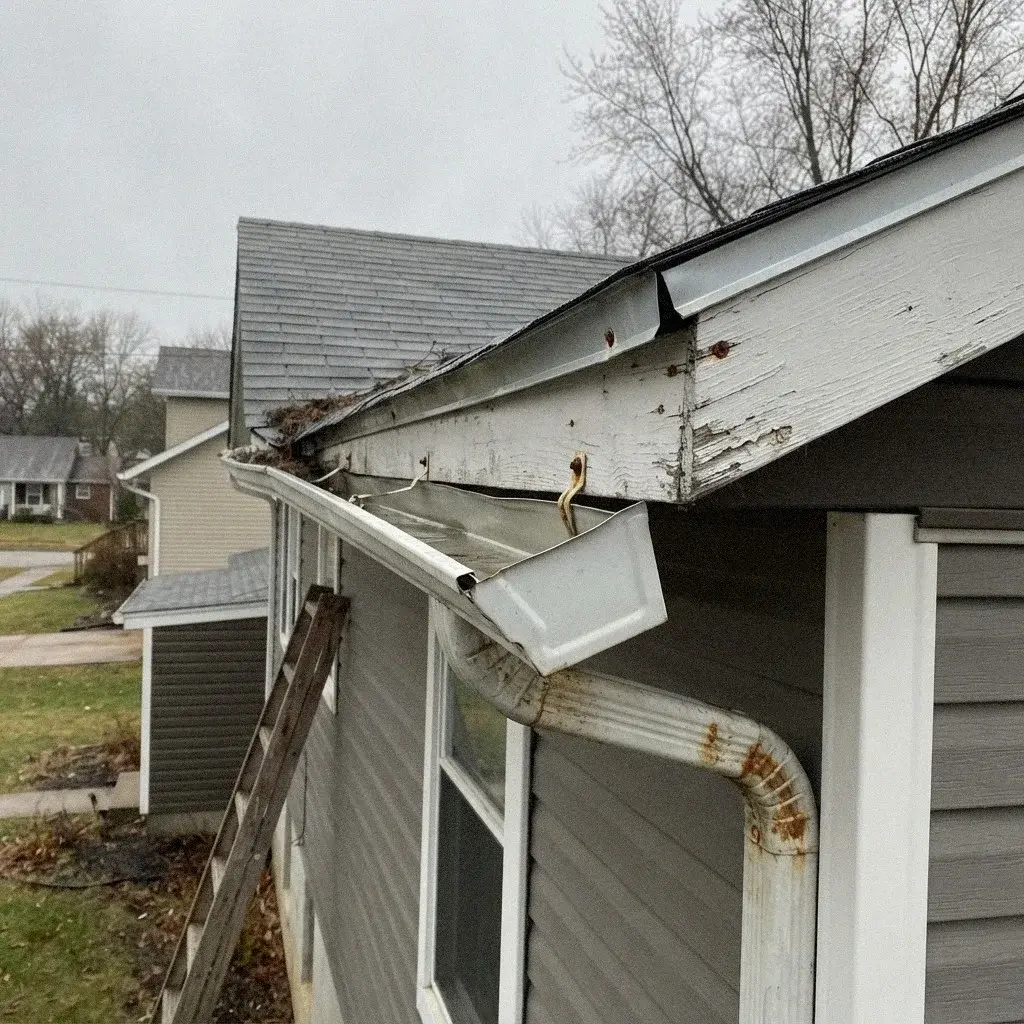
Where the stain sits on the ceiling matters. A stain near an exterior wall often traces back to a gutter, fascia, or flashing problem along that wall line. A stain out in the middle of a room, far from any wall, usually means water traveled some distance from its entry point, following the rafter run or resting on a low spot in the insulation matting before it soaked through.
Why the source sits uphill
Water doesn't fall straight down through a roof assembly. It travels along whatever surface it lands on, following the slope of the rafter run, until it hits an obstruction or a low point where it pools and finally soaks through the ceiling drywall. That means the actual opening in the roof, whether at a penetration or a flashing seam, is almost always higher up the slope than the stain below it.
How penetrations factor in
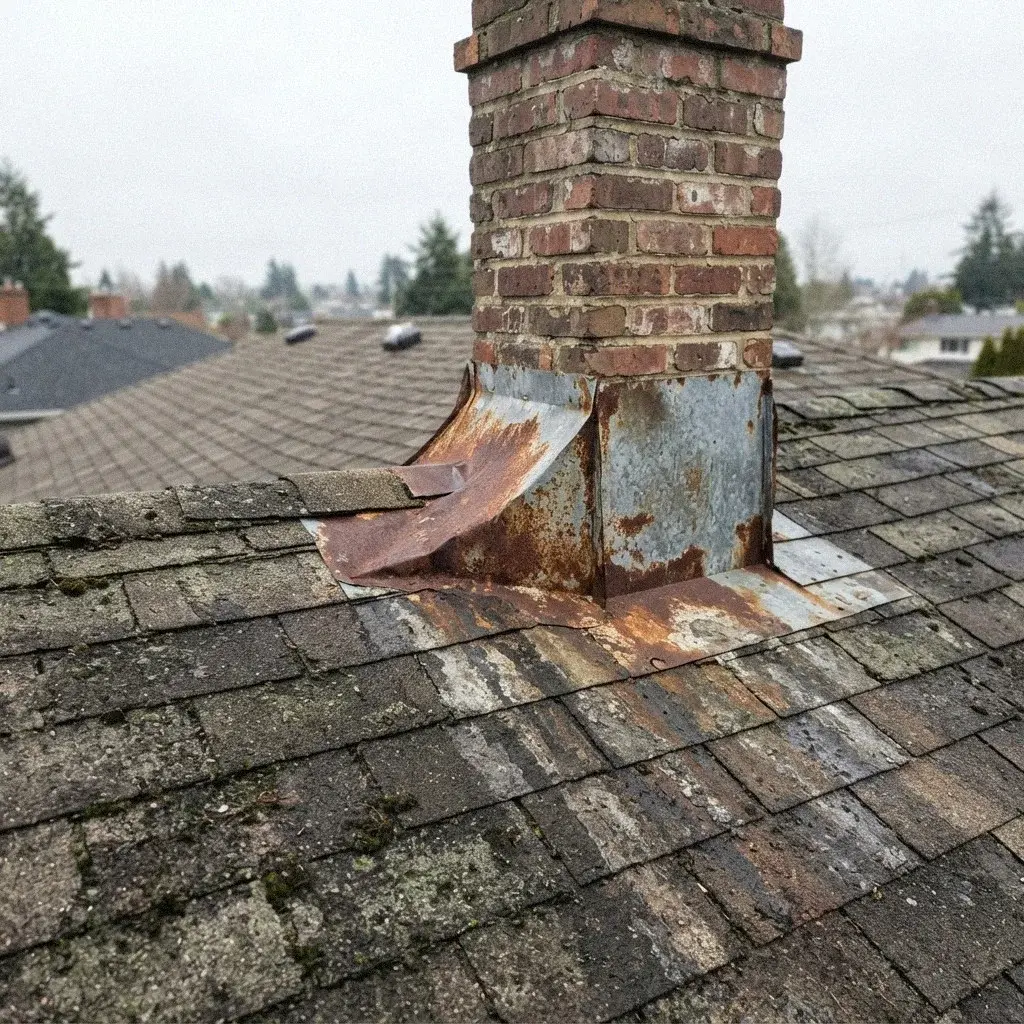
Plumbing vents, chimneys, and skylights are all penetrations through the roof deck, and each one is a seam where flashing has to do its job perfectly. A stain that lines up roughly under one of these features, even a few feet off, is worth noting. Capillary travel along framing members can carry water sideways before it drops, so the stain won't always sit in a perfectly straight line beneath the penetration.
Bubbling paint as a clue
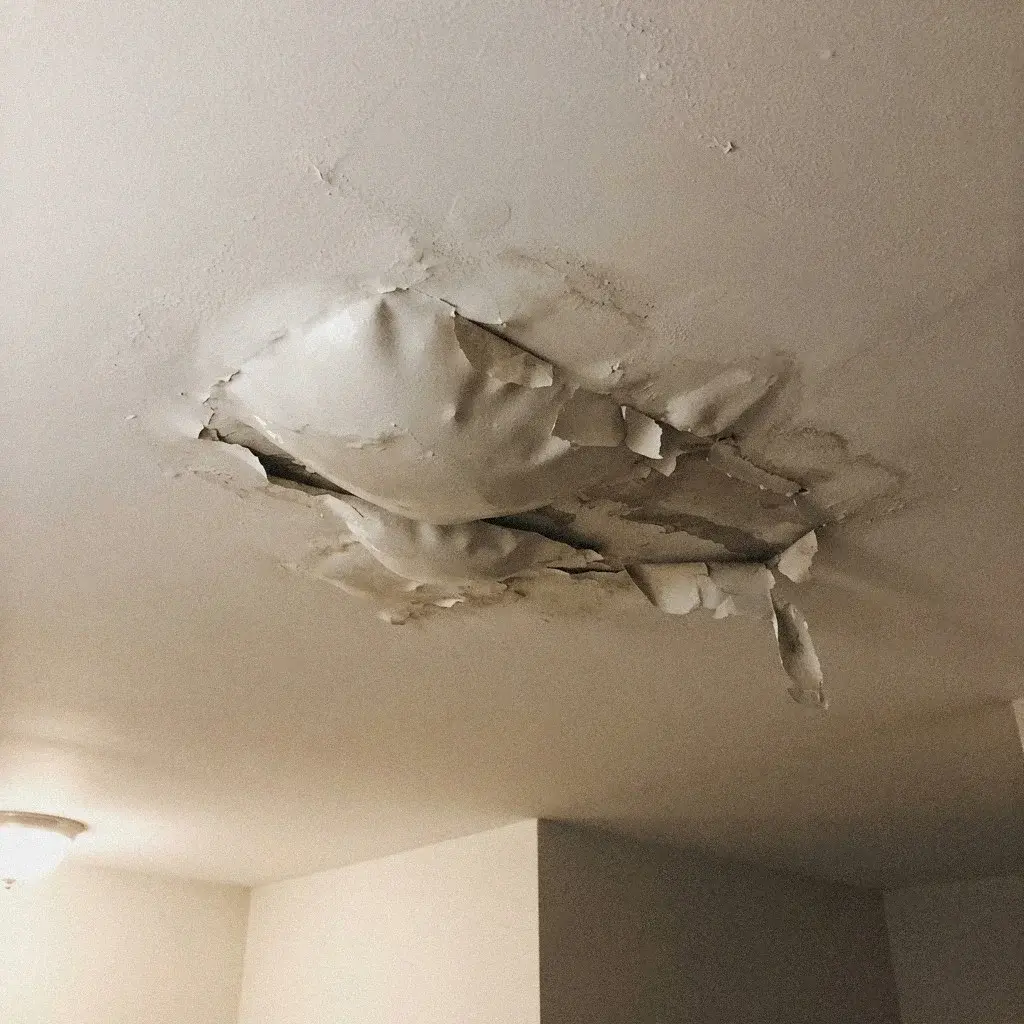
If the ceiling paint is bubbling or peeling rather than just discolored, that usually means water accumulated behind it faster than the drywall could absorb and dry. Bubbling paint often shows up before a visible stain spreads much, since the paint film traps moisture against the surface. It's a sign of a more active or higher-volume leak than a simple flat stain by itself.
When sagging changes things
A stain that's accompanied by a sagging ceiling, even a slight dip you can see by sighting along the surface, means the drywall or insulation matting above it has absorbed enough water to add real weight. This is a different situation than a flat, dry, cosmetic stain. Sagging suggests a longer-running or larger leak than the stain's size alone would suggest.
What attic access can confirm
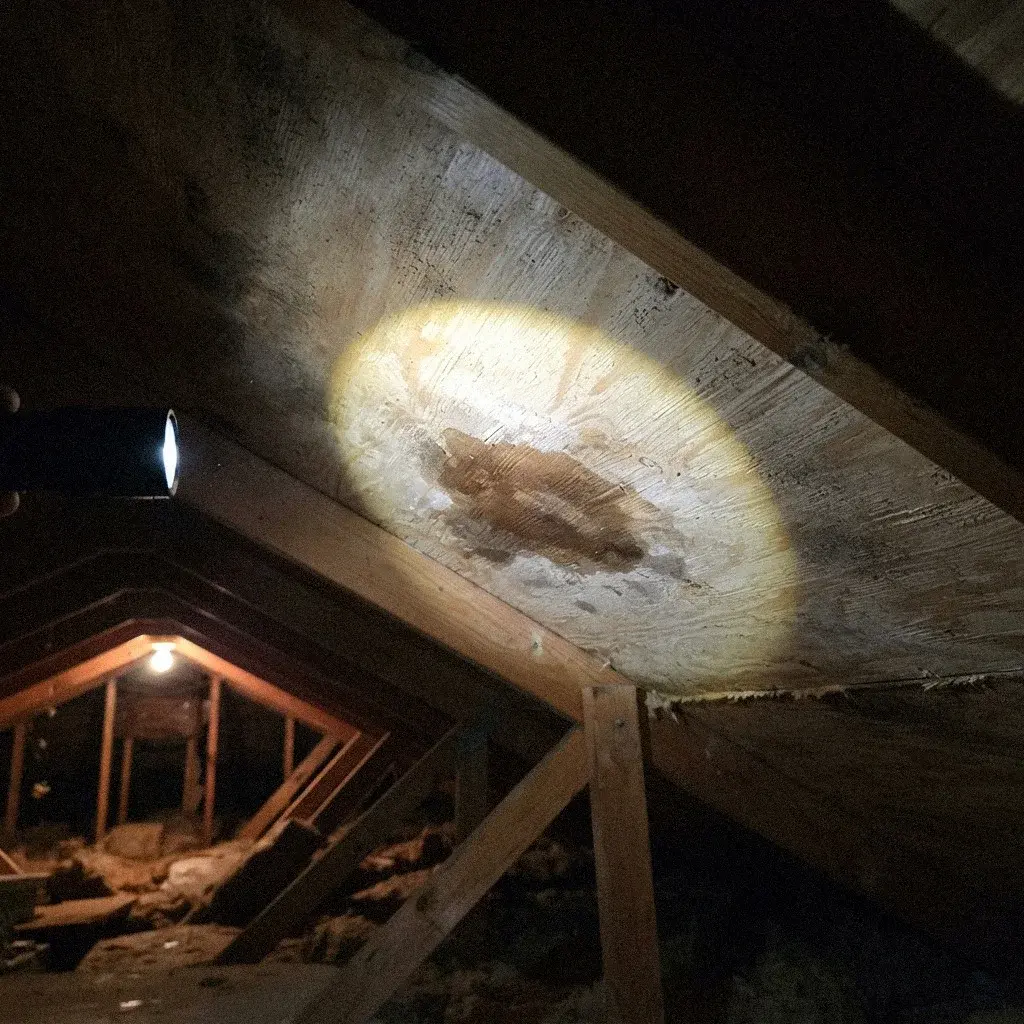
If your Bellevue home has attic access near the stained area, looking at the attic sheathing and insulation from above can confirm what the ceiling is suggesting. Dark staining on the sheathing, damp insulation matting, or visible daylight around a penetration all support what the ceiling mark is telling you. Homes without easy attic access are limited to reading the ceiling itself.
What the stain doesn't tell you
A stain tells you that water crossed a boundary it shouldn't have, and gives clues about timing and rough location. It doesn't tell you the cause on its own, and it won't tell you whether the fix is a resealed flashing, a cleared valley, or something further up the roof. That's a separate assessment, but the stain is where an accurate one usually starts.
Dealing with this in your home?
Bellevue roofs age on their own schedule. Wooded lots near Bridle Trails and Somerset stay shaded long after storms pass, and conifer cover keeps surfaces from ever fully drying between fronts. Add a reroof window that tightens once summer ends, and small maintenance calls turn urgent fast. The sections below sort out timing, materials, and who actually answers for the work overhead.